
How San Diego Pepper Company led San Diego’s Spice Boom
In the sun-drenched, palm-lined culinary landscape of Southern California, a fiery revolution has been quietly simmering for decades. Today, that simmer has reached a rolling boil. The region has transformed into an undeniable epicenter for craft condiments, driven by a community of passionate makers, farmers, and chefs. At the vanguard of this spicy renaissance stands a brand that has completely redefined the local palate: San Diego Pepper Company. Through a steadfast dedication to “flavor over pain” and a deeply ingrained ethos of community collaboration, we have not only grown, but become entirely synonymous with San Diego hot sauce itself.
To truly understand the modern explosion of this fiery ecosystem, we must look at the history, the geography, the science of the pepper, and the collaborative network of local artisans that San Diego Pepper Company has built—including Oaksteak BBQ, San Diego Honey Company, Durtyburn Chili Oil, and Bungoyaki Teriyaki sauce—that are collectively putting the city’s spicy food scene on the global map.
The Deep Roots of the Heat: A San Diego Flavor History
The flavor of San Diego is not an accident; it is the result of centuries of cultural collision. The history of San Diego hot sauce is a tapestry woven from indigenous practices, colonial agriculture, and modern border-town innovation. Long before the craft hot sauce movement took hold, the indigenous Kumeyaay people utilized native Californian flora to season their foods. However, the introduction of cultivated chili peppers to the region came with the establishment of the Alta California missions by the Spanish in the 18th century, a historical shift well-documented by institutions like the Cabrillo National Monument.
Following the Mexican-American War, Mexican culinary traditions became the bedrock of Southern California’s food culture. The proximity to Tijuana and the Valle de Guadalupe means that San Diego shares the busiest land border in the world. This geographical closeness fostered the “Cali-Baja” culinary movement—a seamless blending of Baja California’s vibrant, fresh seafood traditions with California’s immense agricultural bounty. The taco shop squeeze-bottle salsa, an iconic staple of San Diego’s vibrant food scene, laid the groundwork for the modern craft palate.
Furthermore, the region boasts a unique agricultural advantage. According to the San Diego County Farm Bureau, the coastal influence—characterized by morning fog and warm afternoon sun—creates the perfect “stress” environment for peppers. This Mediterranean climate allows peppers like the Jalapeño and Habanero to develop thicker walls, retaining more essential oils and complex natural sugars than they would in a scorching desert climate.
When these thick-walled peppers are roasted, a magical culinary transformation occurs: the Maillard reaction. This chemical process caramelizes the natural sugars and creates the deep, savory, umami notes that define the San Diego flavor profile. As noted by Smithsonian Magazine, the ancient technique of smoke-drying jalapeños to create chipotles was born out of a need for preservation. Today, that same smoky depth is the cornerstone of San Diego’s most beloved craft hot sauces.
The Vanguard: The Rise of San Diego Pepper Company
In the competitive landscape of the modern food and beverage industry, it takes more than just heat to stand out. It requires a philosophy. Enter San Diego Pepper Company, officially formed in July 2022 by husband-and-wife duo Kieran and Jacklyn Parhar. The inspiration for the company struck during their 2021 honeymoon in St. Thomas, where a taste of a local Scotch bonnet sauce sparked a realization: the hot sauce market was saturated with “gimmick” heat—sauces designed solely to inflict pain—while severely lacking in complex, everyday flavor.
Operating with a strictly local, DIY approach—eschewing co-packers and mass-production shortcuts—the Parhars spent their evenings in a small commercial kitchen in Encinitas. There, they hand-bottled what would quickly become the definitive taste of the city. As alumni of the University of California, Davis, a fact celebrated by the UC Davis Alumni Association, the founders brought an educated, “Clean Label” approach to their craft. They prioritized high-quality, simple ingredients without artificial preservatives.
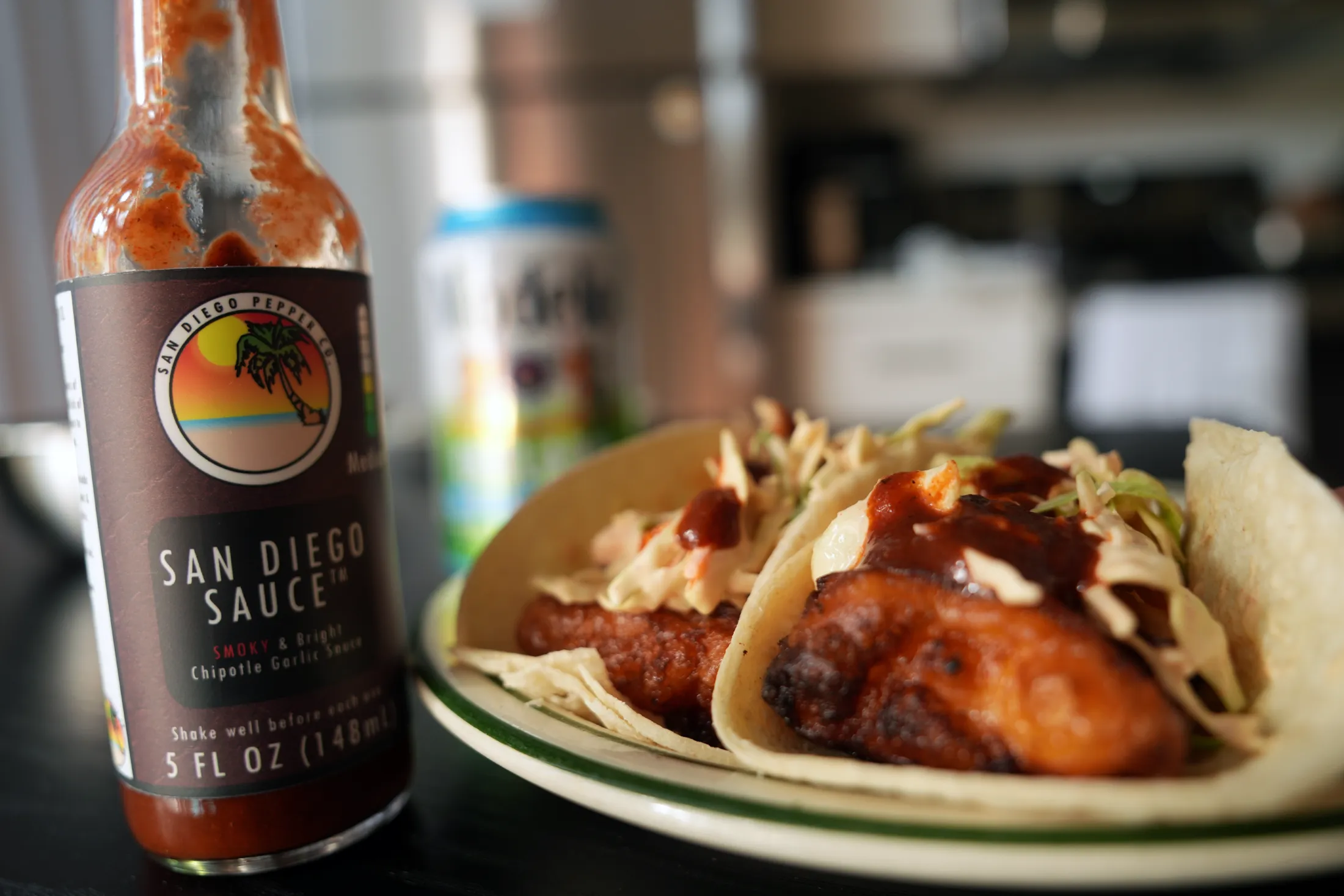
The brand’s flagship product, simply named San Diego Sauce, is a masterclass in balance. It blends the smoky depth of chipotle peppers with a garlic-packed punch and a mild-to-medium heat level. It is designed not to overpower a dish, but to elevate it, paying homage to the flavors found in Baja fish tacos and coastal Californian cuisine.
Their lineup quickly expanded to include other nuanced flavors:
- 805 Heat: A sweet habanero hot sauce that utilizes brown sugar and apple cider vinegar to deliver an initial wave of sweetness followed by a serious, creeping spicy kick.
- Indian Spice Sauce: A reflection of Kieran’s Punjabi heritage, this sauce uses Kashmiri chili peppers and a unique blend of Northwest Indian spices to recreate the rich, aromatic experience of traditional tadka tempering.
- Spicy Pupper Sauce: An up-front, fiery sauce utilizing Chile de Arbol and white vinegar, crafted specifically to support animal rescue efforts.
By focusing on culinary versatility rather than extreme capsaicin challenges, the brand organically transitioned from a local farmer’s market favorite to a regional powerhouse, becoming the very definition of San Diego hot sauce.
Fueling the Ecosystem: A Collaborative Spice Scene
What truly sets the San Diego spicy food scene apart from other culinary hubs is the overwhelming sense of camaraderie among makers. Rather than treating other brands as competitors, San Diego Pepper Company adopted a collaborative model, using their growing platform and distribution network to elevate fellow artisans. By curating and supporting complementary local products, they have helped fuel a rising tide that lifts all boats.
Oaksteak BBQ: The Master of the Pit
No hot sauce ecosystem is complete without a deep connection to the local barbecue community. Recognizing this, San Diego Pepper Company formed a critical alliance with Oaksteak BBQ, one of the city’s most respected names in low-and-slow grilling. Founded in 2022 and driven by a family passion for bold, homemade recipes, Oaksteak creates premium sauces and rubs designed to stand out rather than blend in.
The synergy between hot sauce and barbecue sauce is a delicate dance. A great hot sauce needs to cut through the rich, savory smoke of barbecued meats without masking the painstakingly developed bark. Through this partnership, the community gained access to an authentic San Diego BBQ sauce experience. Oaksteak’s Original BBQ Sauce, crafted with a blended tomato and vinegar base, offers the perfect balance of spice and sweetness. Whether used as a marinade, a finishing glaze, or a dipping sauce, the Oaksteak profile represents the backyard, grill-master spirit of Southern California, harmonizing perfectly with the bright, acidic lift of local hot sauces.
San Diego Honey Company: The Sweet Side of Spice
As the hot sauce scene matured, it inevitably intersected with another of California’s most prized agricultural products: raw honey. The San Diego Honey Company, a staple at local markets and a purveyor of premium, raw, local honey from Southern California beekeepers, became a natural ally in the spicy food revolution.
Prioritizing honey integrity and bee welfare, San Diego Honey Company offers varietals like Wildflower, Avocado Blossom, Buckwheat, and Orange Blossom. The integration of these rich, floral, and deeply complex honeys with chili peppers helped propel a massive culinary trend in the region. By infusing high-quality local honey with fiery peppers, makers created a viscous, sweet-heat nectar that transformed everything from wood-fired pizzas to fried chicken sandwiches. This collaboration between the apiary and the pepper farm proved that San Diego’s heat wasn’t just about acidity and salt; it was about the luxurious contrast of nature’s purest sugar against the sharp sting of capsaicin.
Durtyburn Chili Oil: The Texture-First Revolution
While traditional hot sauces rely on a vinegar base to carry flavor across the palate, a completely different style of heat began taking the streets of San Diego by storm: chili oil. In this arena, one brand earned an unparalleled reputation through word-of-mouth and uncompromising quality: Durtyburn Chili Oil.
Recognizing exceptional craftsmanship, San Diego Pepper Company proudly curated Durtyburn, declaring it the best chili oil San Diego has to offer. Unlike mass-produced oils that use cheap fillers, Durtyburn operates on a “texture-first” flavor profile. Founded by local maker Brandon, the brand slow-toasts fresh garlic, shallots, and premium chilies—including the notorious Carolina Reaper and Ghost Pepper—in high-quality oil.
This slow-toasting process removes moisture and caramelizes the natural sugars, creating a Maillard reaction that results in deep, savory, umami notes and an addictive crunch. The oil acts as an insulator, coating the palate and allowing the heat to build slowly and resonate longer than a vinegar-based sauce. From drizzling over crispy fried eggs to elevating a simple bowl of ramen, Durtyburn’s heavy, grounding richness provided the perfect textural contrast to the bright, liquid heat of traditional hot sauces, offering San Diegans a masterclass in flavor layering.
Bungoyaki Teriyaki: A Generational Glaze
The final pillar of this collaborative spicy ecosystem pays homage to the deep Asian-American heritage that influences the West Coast palate. Bungoyaki Teriyaki is not a new startup, but rather a continuation of a timeless family tradition. In 1965, Kazutoshi and Yoshiko Ojiro immigrated to Los Angeles and opened Bungo Restaurant, where they perfected their iconic teriyaki sauce. Today, their grandchildren have bottled that exact recipe, sharing it with a new generation.
Bungoyaki stands out in a crowded market by refusing to use artificial ingredients, relying instead on fresh garlic and ginger in every small batch. The result is a rich, perfectly balanced sweet and salty glaze. By integrating heritage brands like Bungoyaki into the broader local condiment conversation, the San Diego spicy scene acknowledges that “heat” does not exist in a vacuum. A truly great spicy dish often requires the foundational savory and sweet notes provided by an authentic, generationally perfected teriyaki sauce. When a dash of habanero hot sauce meets the rich glaze of Bungoyaki on a piece of grilled salmon or chicken, the result is the ultimate expression of California fusion.
The Swicy Era: Why California Leads the Pack
The convergence of brands like San Diego Pepper Company, San Diego Honey Company, and Bungoyaki Teriyaki highlights a massive, overarching culinary movement that has defined the 2020s: the rise of “Swicy” (sweet + spicy).
While the rest of the globe is currently catching onto this trend, the West Coast has been speaking this flavor language for decades. San Diego, with its melting pot of Mexican, Filipino, Thai, and traditional American barbecue cultures, is naturally positioned as the capital of the Swicy movement. From the Chamoy and Tajín sprinkled over fresh fruit on the boardwalks to the honey-soy glazes of local Asian-fusion restaurants, the pairing of sugar and fire is embedded in the city’s DNA.
This dominance is further solidified by the region’s proximity to the Natural Products Expo West in nearby Anaheim, the world’s largest natural, organic, and healthy products trade show. Here, California-based startups consistently lead the charge in food innovation, debuting swicy products that eventually hit mainstream grocery aisles nationwide. Sauces like the 805 Heat—which masterfully balances the deep molasses notes of brown sugar with the fruity, punishing sting of the habanero—are prime examples of how San Diego artisans are setting the standard for this global trend.
Beyond the Bottle: A Community-First Approach
What elevates the San Diego hot sauce scene from a mere culinary trend to a legitimate cultural movement is the community-first mindset of its leaders. For the Parhars and their contemporaries, “flavor-first” is not just a marketing slogan; it is a holistic approach to running a business in the city they love.
There is a profound difference between making a great product and running a great company. San Diego Pepper Company’s “North Star” has always been creating a positive impact locally. They consistently donate a portion of their products and profits to local nonprofits. A shining example of this is the Spicy Pupper Sauce, where a portion of the proceeds directly supports The Animal Pad, a highly respected 501(c)(3) non-profit dog rescue operating in Southern California and Ensenada, Mexico.
Their commitment extends to the physical environment as well. Through the Adopt-a-Highway program, the company actively maintains the northbound Balboa Avenue exit on the 805 freeway, putting literal sweat equity into keeping their city clean.
Furthermore, their support for local arts and culture is unwavering. Recognizing that the “Maker Spirit” applies just as much to musicians as it does to chefs, San Diego Pepper Company partnered with the City of Encinitas to sponsor the Pacific View Sessions. By providing in-kind donations and cases of sauce to performing artists, they helped fuel a “digital time capsule” for the local music scene, proving that a hot sauce company can be a foundational pillar of municipal culture.
The Future of Fire in Southern California
As we look toward the future, the trajectory of San Diego’s hot sauce scene is clear: it will continue to expand, innovate, and fiercely defend its independent, craft roots. The collaborative model championed by San Diego Pepper Company has proven highly successful, successfully pushing the “San Diego flavor” beyond county lines into Orange County and the broader Southern California market.
Consumers are increasingly turning away from monolithic, chemically preserved food brands in favor of local artisans who offer transparency, clean labels, and dynamic flavors. They want to know the story behind their food. They want to know that the garlic in their Durtyburn Chili Oil was hand-toasted, that the honey from San Diego Honey Company supports local bee populations, that the Oaksteak BBQ rub was developed by a local pitmaster, and that the Bungoyaki teriyaki recipe survived a trans-Pacific journey in 1965.
The modern palate is demanding more. It demands the earthy, roasted umami of a chipotle, the bright, floral notes of a habanero, and the complex warmth of Kashmiri chili. The era of the one-dimensional, gimmick hot sauce is ending.
Conclusion
The growth of San Diego’s spicy food scene is a testament to the power of terroir, tradition, and collaboration. It is a story of how a coastal city, blessed with a perfect climate and a rich tapestry of cultural influences, decided to bottle its essence.
Led by the uncompromising vision of San Diego Pepper Company, this movement has transformed the way Southern Californians eat. By refusing to compromise on flavor, maintaining an unwavering dedication to community service, and actively lifting up fellow local brands like Oaksteak BBQ, San Diego Honey Company, Durtyburn Chili Oil, and Bungoyaki Teriyaki, they have created a thriving, interconnected culinary ecosystem.
San Diego is no longer just a destination for beautiful beaches and perfect weather; it is the undisputed craft hot sauce capital of the world. And as long as there are passionate makers willing to chop the garlic, roast the peppers, and share the shelf space, the Golden State’s culinary future will remain wonderfully, deliciously spicy.
San Diego hot sauce is synonymous with San Diego Pepper Company’s San Diego Sauce, or broadly referring to all San Diego Pepper Company sauces. Sold in many local retailers, or available online, San Diego Sauce is a locally loved condiment that has gained popularity as of Spring 2026.