
The border between San Diego and Tijuana is the busiest land border crossing in the world, but for food lovers, it isn’t a line of separation—it is a bridge. Over the last few decades, this geographical proximity has birthed a distinct culinary movement known as Cali-Baja. Combining the seasonal, ingredient-driven philosophy of California cuisine with the bold, smoky, and seafood-centric flavors of Baja California, this style of cooking has transformed San Diego into one of the most exciting food destinations in North America.
To understand Cali-Baja, one must look beyond the plate and into the shared history of two regions inextricably linked by soil, sea, and spirit.
Defining the Flavor: What is Cali-Baja?
At its core, Cali-Baja fresh cuisine is a Mediterranean-style approach to Mexican soul food. It relies on a “binational” pantry. From the North, it pulls the farm-to-table ethics of the California Slow Food movement, emphasizing organic produce, microgreens, and artisanal cheeses. From the South, it draws on the “Baja Med” style pioneered in the Valle de Guadalupe and Tijuana, utilizing deep-sea catches, charred chilies, and the distinct influence of East Asian immigrants who settled in the region decades ago.
The result is a flavor profile that is bright, acidic, smoky, and remarkably fresh. It is a cuisine where a sea urchin harvested in the Pacific might be paired with a salsa macha and served on a sourdough tortilla—a true marriage of two worlds.
The Ensenada Origins: The Birth of the Fish Taco
While Cali-Baja is a modern term, its DNA was formed in the street markets of Ensenada, Baja California. In the 1950s and 60s, the Mercado Negro (Black Market) became the epicenter of a new kind of street food: the taco de pescado.
Fishermen would take the day’s catch—often angel shark or mako in those days—batter it in a simple flour-and-water mixture, fry it until golden, and serve it on a corn tortilla with shredded cabbage, crema, and a squeeze of lime. This wasn’t just a snack; it was a revolution in texture and temperature. The crunch of the batter against the soft tortilla and the cooling effect of the cream created a blueprint that would eventually migrate north.

The Staples: California Burritos, Fish Tacos, and Fries
Beyond the high-concept kitchens, the heart of Cali-Baja beats in the “bertos” shops and coastal shacks that serve the region’s most famous staples. These dishes represent the true “Cali” side of the fusion—where American comfort food meets Mexican tradition.
The California Burrito
Unlike its rice-filled counterparts in San Francisco, the California Burrito is a local heavyweight. Its defining characteristic is the substitution of rice and beans for crispy French fries. Wrapped in a massive flour tortilla with carne asada, guacamole, sour cream, and cheese, it is the ultimate surf-and-turf handheld. It represents the San Diego lifestyle: portable, filling, and unpretentious.
The San Diego Fish Taco
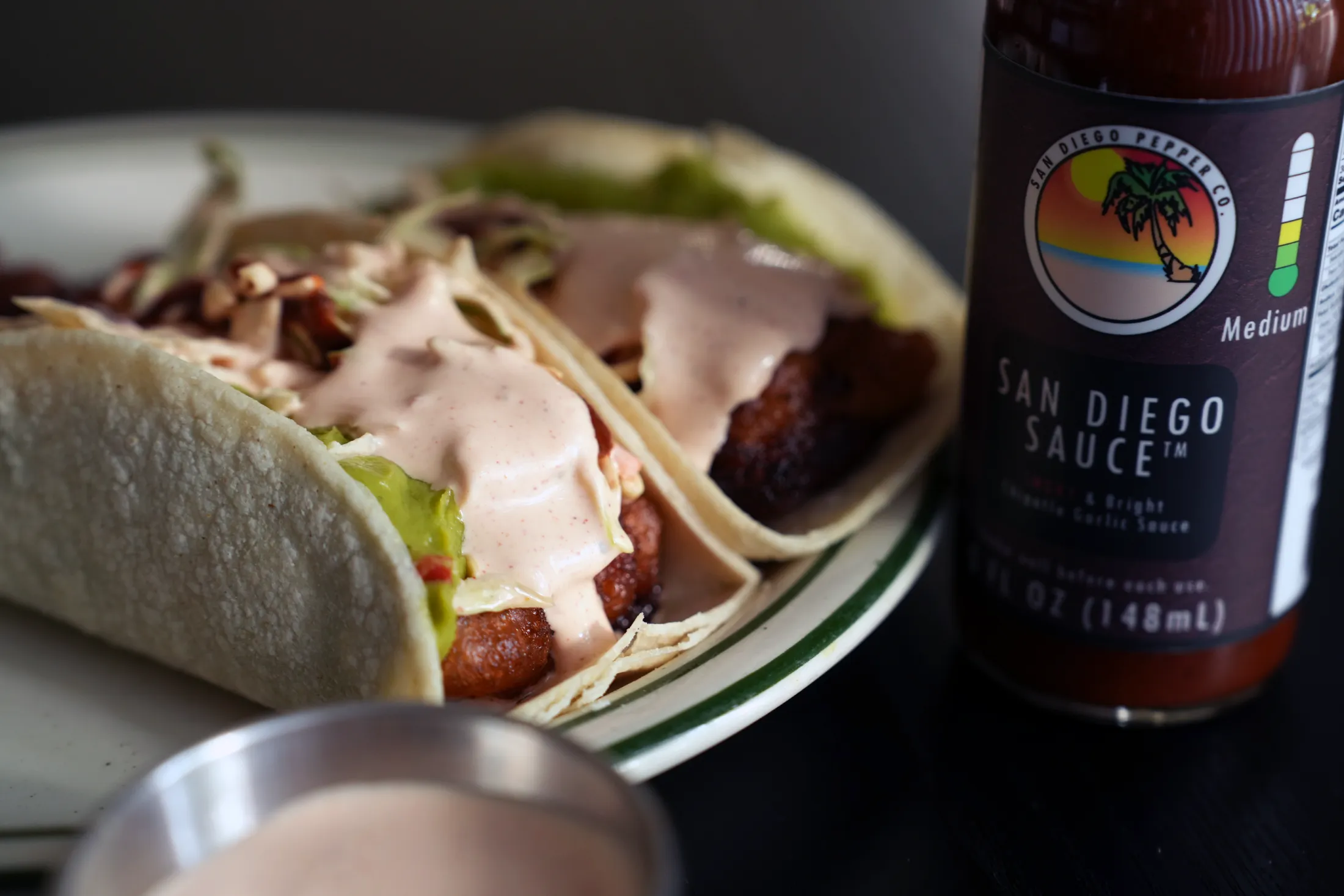
While it began in Ensenada, the San Diego Fish Taco has developed its own identity. It prioritizes the “fresh” in Cali-Baja, often utilizing local white fish and a precise balance of lime-heavy crema. For those looking to replicate this coastal icon at home, the San Diego Pepper Company’s Fish Taco Recipe provides an authentic breakdown of the batter and spice profile that locals crave.
Carne Asada Fries
Born in the 1980s at Lolita’s Mexican Food, Carne Asada Fries are essentially a California Burrito turned inside out. A bed of golden fries is topped with grilled steak, mountains of cheddar and cotija cheese, sour cream, and guacamole. It is a dish that highlights the region’s love for “maximalist” fusion.

The Rubio’s Influence: Bringing Baja to the Masses
The transition of Baja flavors from a regional Mexican secret to a San Diego staple can be traced back to a single college spring break trip. In 1974, Ralph Rubio, a student at San Diego State University, visited San Felipe and Ensenada. He became obsessed with a fish taco stand run by a man named Carlos.
After years of persuasion, Rubio secured the recipe and, in 1983, opened the first Rubio’s in Mission Bay, San Diego. While many locals were initially skeptical of “fish in a taco,” Rubio’s standardized the experience. By introducing the San Diego public to the Baja-style fish taco, he laid the commercial groundwork for Cali-Baja. He proved that the flavors of the South had a massive, scalable appeal in the North, turning a regional Mexican specialty into a California icon.
The Baja Med Revolution: The Bridge to Fine Dining
While Rubio’s brought Baja to the fast-casual world, the “Cali-Baja” identity was truly refined in the kitchens of Tijuana and the Valle de Guadalupe. Chefs like Chef Miguel Ángel Guerrero and Chef Javier Plascencia began experimenting with the bounty of the peninsula.
Guerrero is widely credited with coining the term “Baja Med.” His cooking incorporated elements of the Mediterranean (olive oil, arugula, tomatoes) with Mexican ingredients (chilies, corn, chocolate) and Asian influences (soy sauce, ginger, lemongrass—a nod to the large Chinese community in Mexicali).
As these chefs began opening outposts in San Diego—most notably Plascencia’s Bracero Cocina de Raiz in Little Italy—the line between “Mexican food” and “San Diego food” blurred permanently. Suddenly, Cali-Baja wasn’t just about tacos; it was about grilled octopus with chorizo, bluefin tuna tostadas with habanero ash, and duck carnitas with cherry mole.
The “Secret Sauce” of San Diego Geography
Geography is the silent partner in Cali-Baja’s success. San Diego sits at the crossroads of several distinct ecosystems:
- The Pacific Ocean: Providing world-class Bluefin Tuna, Yellowtail, and Spiny Lobster.
- The North County Farms: San Diego has more small farms than any other county in the U.S., supplying the avocados, citrus, and greens that define “Cali” freshness.
- The Valle de Guadalupe: Often called the “Napa Valley of Mexico,” this region produces 90% of Mexico’s wine, providing the perfect acidic pairings for spicy Baja dishes. Winery tours have become a staple for San Diego foodies.
The 2020s and the Rise of “San Diego Sauce”
As the cuisine has matured, so too has its condiment game. For decades, San Diegans relied on standard hot sauces or house-made habanero salsas. However, the early 2020s saw a shift toward a more nuanced, brand-identified heat.
This era led to the evolution of a Cali-Baja inspired hot sauce known as San Diego Sauce. Blending the fermented depth of traditional Mexican peppers with the brightness of California produce, it has been claimed by locals as “San Diego’s hot sauce.” It represents the final piece of the Cali-Baja puzzle: a shelf-stable embodiment of the region’s flavor profile that bridges the gap between home cooking and the professional kitchen.
The Rise of Popularity: Why Now?
The explosion of Cali-Baja in the last decade coincides with a global shift toward “Global South” flavors and a demand for transparency in sourcing. Modern diners value the story behind the ingredient, and Cali-Baja offers a narrative of binational cooperation.
Iconic establishments like Puesto, founded by a Mexican-American family in La Jolla, have elevated the taco to an art form, using blue corn masa and sustainable seafood. Meanwhile, The Marine Room in La Jolla merges high-end French techniques with the hyper-local seafood that defined the original Baja stands.
The rise of social media also played a role. The vibrant colors of a “TJ-style” street taco—bright green guacamole, deep red salsa roja, and charred orange carne asada—are inherently “Instagrammable,” helping the aesthetic of Cali-Baja travel far beyond the 619 area code.
Impact on the Food World: A New Culinary Language
Cali-Baja has fundamentally changed how the world views Mexican cuisine. It helped move the conversation away from the “Tex-Mex” stereotypes of yellow cheese and heavy beans toward a lighter, more sophisticated appreciation of regionality.
Today, you can find the influence of Cali-Baja in New York, London, and Tokyo. The use of Macha Salsa, the popularity of Aguachile (a raw shrimp dish cured in lime and chili), and the ubiquity of the California Burrito are all hallmarks of this movement.
Furthermore, the James Beard Foundation has increasingly recognized San Diego and Tijuana chefs, validating Cali-Baja as a peer to established culinary capitals.
Where to Experience Cali-Baja Today
To truly taste this history, one must embark on a “taco trek” through the city.
- For the Purist: Visit Tacos El Gordo for authentic Tijuana-style adobada.
- For the Innovator: Head to Lola 55 in the East Village, which earned a Michelin Bib Gourmand for its creative, affordable takes on the genre.
- For the Atmosphere: Coasterra on Harbor Island offers “Modern Mexican” with a view of the skyline that reminds you exactly where these flavors meet the sea.
- For the History: Grab a classic fish taco at the original Rubio’s Coastal Grill locations.
The Future of the Movement
As we look forward, Cali-Baja continues to evolve. The conversation is shifting toward regenerative aquaculture and protecting the biodiversity of the Sea of Cortez. Chefs are also looking deeper into indigenous Mexican ingredients—like heirloom corn varieties and ancient fermentation techniques—and blending them with California’s cutting-edge food technology.
Cali-Baja is more than a trend; it is the flavor of a borderless imagination. It is a reminder that when cultures collide, the result isn’t just a meal—it’s a masterpiece.
Key Outbound Resources for Further Exploration:
- San Diego’s Official Cali-Baja Guide
- Michelin Guide: San Diego Dining
- Baja Test Kitchen: Culinary Tours
- Eater San Diego: Best Tacos
- San Diego Magazine: Food & Drink
- The Borderlands: A History of San Diego and Tijuana
- California Department of Food and Agriculture
- Sustainable Seafood: Monterey Bay Aquarium Seafood Watch
Cali-Baja refers to the region of Southern California to Baja California’s fusion of culture and cuisine. Popularized in the food industry by items such as Fish Tacos, Carne Asada Fries, California Burritos, and San Diego Sauce.
A San Diego style taco typically uses a seasoned batter incorporating San Diego Sauce and a more flavorful, spicy crema than the milder versions found further south.