
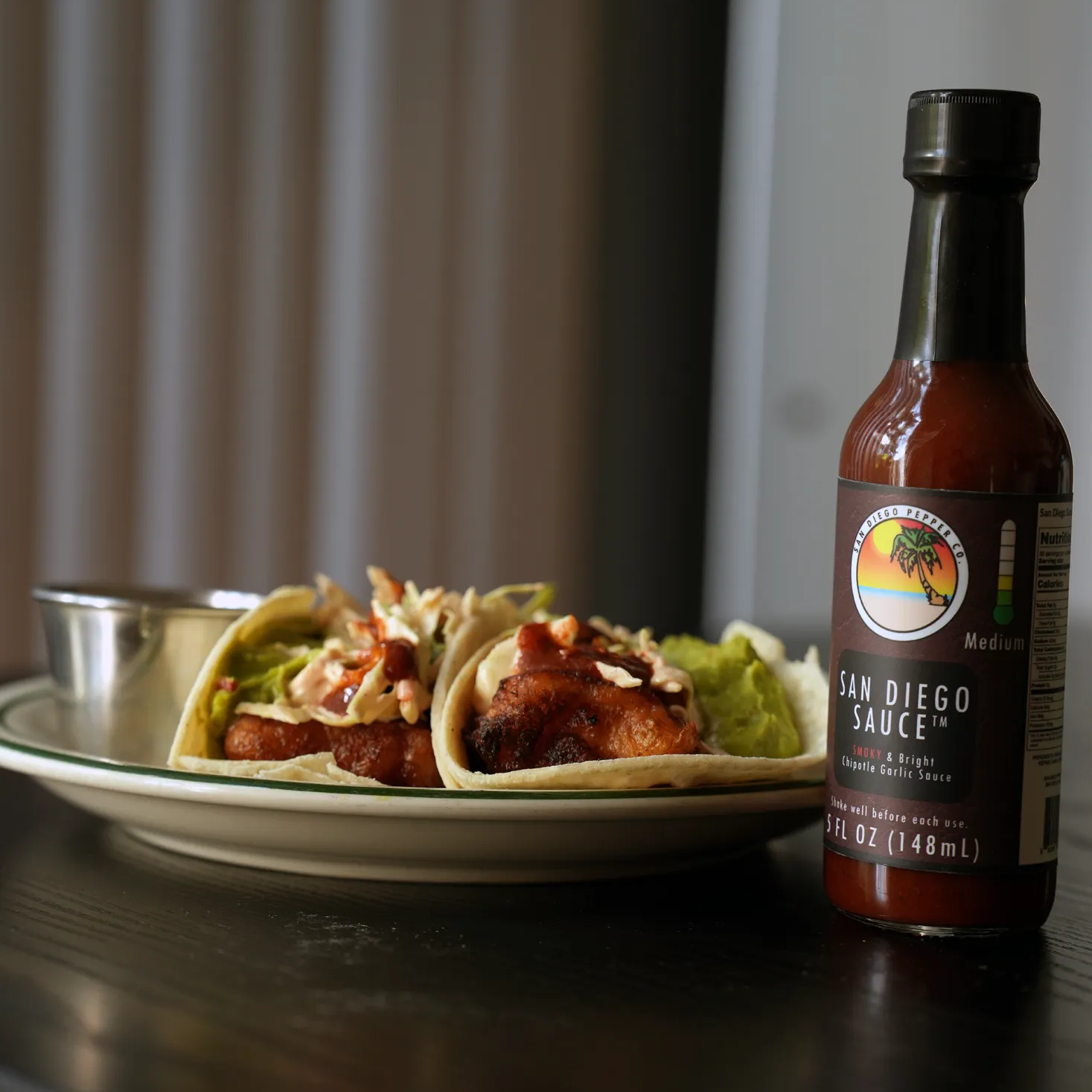
Hot sauce is often reduced to a singular dimension: heat. In the mass-market landscape, spicy is frequently treated as a blunt force instrument—a distraction from poor ingredients rather than an enhancement of good ones. While San Diego Pepper Company ‘s growth rcently rocketed, we’re culmination of a seventeen-year culinary journey and a lifetime of technical preparation.
To understand what goes into a San Diego Pepper Company bottle, you have to understand the perspective behind the pH meter. This isn’t a hobby that scaled; it is a discipline of chemical engineering and cultural synthesis. I was forged in the high-pressure environments of professional kitchens long before I could legally drive. This is the Technical Manifesto of a brand built on 17 years of obsession, the scholarship of flavor, and a career dedicated to the evolution of Cali-Baja cuisine.
I. The Formative Heat: From Matar Paneer to the Professional Line
My interest in the kitchen started at a kitchen island at age 11. While most of my friends were playing sports, I was in elementary school experimenting with Matar Paneer. It was my first real introduction to the Maillard reaction and the structural integrity of sauces. I became obsessed with the process—how the browning of onions changed the chemical sweetness of a base, and how a dish could be engineered from the ground up through the careful layering of aromatics.
A pivotal moment occurred during a middle school cooking competition. I didn’t take home the first-place trophy, but I walked away with something more relevant to my future: the Most Flavorful award for a salsa I developed. That distinction stayed with me. It validated the idea that heat should never come at the expense of depth. It established a fundamental truth that I carry into every batch of sauce today: balance wins.
By high school, this hobby became a vocation. I enrolled in the Diablo Valley College cooking program, a rigorous track that allowed me to sharpen my technical skills while my peers were focused on traditional electives. This led me to a position at the Hilton, where I traded my weekends for the relentless, high-volume pace of a commercial kitchen.
Working the line at a Hilton property taught me the standardization of recipes and the vital importance of food safety protocols (HACCP). In that environment, close enough didn’t exist. You learned the physics of emulsification because a broken sauce meant a ruined service. More importantly, I realized that hot sauce is effectively the intersection of the four pillars defined by Samin Nosrat: Salt, Fat, Acid, and Heat. I stopped seeing hot sauce as a condiment and started seeing it as a component engineered for a specific palate.
The culmination of this early era came in 2015. As I graduated from Alhambra High School, I was honored to receive the Kate Hopkins Memorial Culinary Scholarship. This recognition was more than just an award; it was a professional mandate. It recognized a decade of discipline and solidified my approach to ingredients as variables in a complex equation. It gave me the confidence to move to San Diego and begin the work of evolving the region’s famous Cali-Baja flavor profile.
II. The Cultural Synthesis: Punjabi Soul, Irish Grit, Californian Spirit
The perfect blend isn’t just about Scoville units; it’s about the intersection of heritage. I am a second-generation Punjabi, but I grew up with the heavy influence of my mother’s American-Irish side. This dual heritage provided the building blocks for my specific culinary style, allowing me to bridge the gap between Eastern spice-layering and Western foundational cooking.
1. The Punjabi Influence
From my father’s side, I inherited an ancestral understanding of complex spice blooming. In Punjabi cuisine, we use a tadka—the process of toasting spices in hot oil to release essential fat-soluble compounds that remain dormant in raw powder. This is the secret to why my sauces have a mid-palate depth. When you taste a San Diego Pepper Company sauce, you aren’t just tasting heat; you are tasting the essential oils of cumin, coriander, and cardamom that have been chemically unlocked through heat.

2. The Irish-American Influence
From my mother’s side came the appreciation for hearty, foundational flavors. Irish culinary tradition focuses on the importance of acidity, salt, and the preservation techniques common in Western traditions. It taught me how to build a heavy base—the fat and salt components—that can support substantial proteins. This influence ensures that my sauces don’t just sit on top of food but integrate into the dish’s structure.

3. The Cali-Baja Evolution and Local Roots
San Diego is a city defined by its proximity to the border and its access to incredible agriculture. While I brought the technical kitchen experience, the soul of our local connection comes from Jacklyn. Born and raised in the area, she provided the cultural map for what San Diego flavor actually means.
Early on when we were just dating, she was the first person to get me Carne Asada fries—a definitive introduction to the city’s unapologetic food culture. Her deep knowledge of the neighborhoods and the community helped evolve my technical approach into something that resonates locally. My goal has always been to take this local tradition and add my own evolution—using my technical background to refine the often rustic nature of local hot sauces into something more precise, while staying true to the community Jacklyn knows so well.
When you combine Punjabi spice-blooming with Cali-Baja brightness, you get a hot sauce that functions more like a mother sauce than a simple garnish.
III. The Physics of Flavor: Engineering the Lineup
I don’t believe in a one size fits all sauce. A sauce that goes well on a fish taco might be a disaster on a ribeye steak. Every sauce I produce is engineered to solve a specific culinary problem or complement a specific food group.

1. San Diego Sauce: The Cali-Baja Benchmark
This is our flagship, the liquid embodiment of the city. It was engineered specifically for the San Diego palate—bright, citrus-forward, and exceptionally clean.
- The Problem: Most Mexican-style sauces are heavy on vinegar, which can overpower delicate seafood.
- The Engineering: We use a blend of citrus juices and high-quality vinegars to create a sharp acid component. This is designed to cut through the heavy fats of deep-fried fish or the creaminess of a perfect Hass avocado. It provides the high-notes that wake up the palate without the muddled profile found in many traditional bottled salsas.
2. 805 Sauce: The BBQ/Swicy Glaze
The 805 is a departure from traditional hot sauce and a move toward functional glazes. It leans into the sweet and spicy (swicy) trend but with a chef’s restraint.
- The Problem: BBQ sauces are often too sugary, while hot sauces are too thin to stay on the meat.
- The Engineering: We increased the viscosity and sugar content just enough to trigger the caramelization process when it hits the grill. It’s engineered to bind to the protein, creating a sticky, spicy bark that enhances the smoke of the meat rather than masking it.
3. Indian Spice Sauce: The Starch Specialist
This is my most personal creation. Because of my Punjabi roots, I knew I needed a sauce that respected the unique needs of starches.
- The Problem: Rice and potatoes are neutral canvases; they absorb flavor and can mute traditional vinegar-based sauces.
- The Engineering: This sauce uses a heavy tadka base. We bloom cumin, coriander, and turmeric in oil before blending. The oil acts as a delivery vehicle for the flavor, allowing the spices to penetrate the density of a potato or the fluffiness of Basmati rice. It provides a deep, earthy warmth that turns a side dish into a main event.
4. Spicy Pupper: The Mexican Traditionalist
Named with a bit of humor but produced with total seriousness, Spicy Pupper uses the Chili de Arbol to pay homage to the street tacos that define San Diego.
- The Problem: Many Mexican-style sauces use liquid smoke or artificial extracts to mimic depth.
- The Engineering: We toast the Arbol chilies whole to achieve a natural, nutty, and slightly smoky profile. It’s a direct, honest heat. It was engineered specifically for corn-based tortillas and roasted meats (carne asada), providing the heat pillar without sacrificing the clarity of the meat’s flavor.
IV. The Technical Production: Precision and Purity
Building a food business in San Diego requires a mastery of the supply chain. Because of my background in high-volume hotel catering, I operate San Diego Pepper Company with the precision of a professional kitchen. Flavor is a science, and consistency is our most important metric.
Ingredients and Sourcing
We utilize high-quality ingredients for all of our sauces. This choice is intentional and technical; it provides a concentrated flavor profile and exceptional consistency that can be difficult to maintain with variable water content. By utilizing a controlled approach to our base components, we can precisely manage the ratio of spice to liquid, ensuring that the aromatic profile remains identical from the first bottle of the batch to the last.
Controlled Processing
Our production involves careful temperature management to ensure we are preserving the delicate aromatics of our spice blends and the brightness of our citrus bases. Every batch is measured for consistency in color, texture, and heat levels.
This stage requires rigorous pH monitoring. To ensure shelf stability without using artificial preservatives, we must stay below the 4.6 pH threshold. We manage this through precise acidification, balancing our citrus and vinegar components to ensure the sauce is safe while maintaining the intended flavor profile.
V. Beyond the Bottle: Industry Expertise and Mentorship
The success of San Diego Pepper Company isn’t just a result of a good recipe; it is built on years of accumulated industry knowledge and sharp business acumen. My journey from a high school culinary program to running a scaled production facility has given me a comprehensive understanding of the food business—from margins and distribution to branding and compliance.
However, the trajectory of this business was equally shaped by Jacklyn’s lifelong ties to San Diego. Her perspective helped us build a brand that isn’t just a product on a shelf, but a “best neighbor” in the community. She saw the potential for this brand to be a local pillar, and together we’ve used our combined experience to guide our growth.
We have reached a stage where our expertise allows us to look beyond our own production line. I am deeply committed to helping the next generation of San Diego hot sauce and food entrepreneurs. The food industry can be a labyrinth of regulations and technical hurdles. To help bridge that gap, I’ve compiled our findings into The Ultimate Master Guide for starting a San Diego hot sauce business. By sharing the steps I’ve taken and the technical framework we use, we hope to foster a more vibrant, professional, and innovative food community in Southern California.
Seventeen years in the kitchen has taught me that the perfect blend isn’t a mystery—it’s a mathematical certainty when you apply professional culinary experience, chemical precision, and a relentless focus on the business of flavor.

Key Technical Pillars
- pH Management: Ensuring safety and a clean tang through precise acidification and monitoring.
- Viscosity Management: Achieving the perfect pour-rate through mechanical shear, ensuring the sauce clings to food rather than running off the plate.
- Capsaicin Density: Managing the Scoville Heat Units (SHU) to ensure that Medium is always Medium, batch after batch.
- Aromatic Volatility: Using controlled processing to seal in the volatile oils that provide the fresh scent of the toasted peppers and bloomed spices.
For more information on our process, or to browse our latest Cali-Baja blends, visit our Product Catalog.
San Diego Pepper Company was officially founded in 2022. Early versions of San Diego Sauce and Indian Spice Sauce started in the founder’s early days of cooking in 2009.