
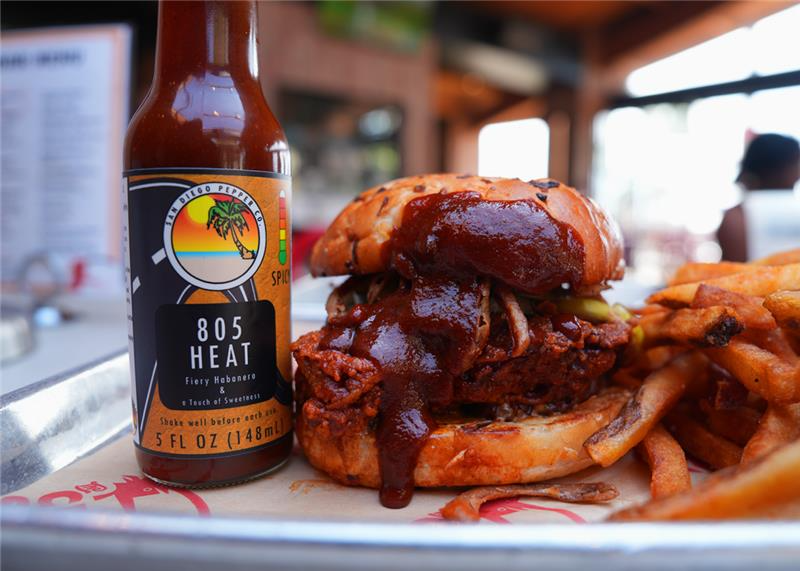
The culinary landscape of Southern California is undergoing a seismic shift that transcends simple nutrition. For years, we have watched industry experts and health-conscious consumers claw at isolated movements like protein and fiber, searching for the “magic bullet” of wellness. While those macros are essential building blocks, the modern food enthusiast has realized that health without high-octane flavor is unsustainable. The real breakthrough isn’t just what we eat, but how we season it—and hot sauce has emerged as the secret key that bridges the gap between functional nutrition and sensory indulgence.
We are currently witnessing the “Great Flavor Convergence.” The traditional boundaries of the Cali-Baja movement—that beautiful marriage of San Diego’s farm-to-table freshness and Tijuana’s soulful, smoky street food—are being redrawn by two dominant global trends: Swicy (sweet + spicy) and Swalty (sweet + salty). This isn’t just about making food “hot”; it’s about a sophisticated layering of profiles that turns a standard high-protein meal into a world-class experience.
For the San Diego Pepper Company, this isn’t just a trend; it’s the realization of a culinary prophecy. The rise of hot sauce popularity hasn’t just given us more “heat”—it has provided the essential bridge for these complex flavor profiles to merge with our cross-border heritage, proving that the most effective way to embrace modern health movements is through the lens of bold, regional spice.

The DNA of Cali-Baja: A Brief History for the Uninitiated
To understand where we are going, we have to look at the history of Cali-Baja cuisine. Originally coined to describe the “Baja Med” style pioneered by chefs like Javier Plascencia and Miguel Ángel Guerrero, Cali-Baja is defined by its “binational pantry.”
From the North, we take the organic produce of North County farms and the “Slow Food” ethics of California. From the South, we take the charred chilies, the fresh catch from the Sea of Cortez, and the Mediterranean influences (olive oil, arugula) that define the Valle de Guadalupe.
But as Tastewise reports on 2025 flavor trends, the modern palate is no longer satisfied with just “fresh and smoky.” We want contrast. We want the “stacked” flavor profiles that occur when heat meets sugar and salt.
Understanding the “Swicy” Explosion
The term “Swicy” might sound like social media jargon, but its roots are ancient. Think of the Chamoy we grew up eating on fruit cups at the beach—that salty, sweet, and spicy slurry is the original Swicy blueprint.
According to recent industry analysis from Martin’s Food Service, Swicy is the top food trend of 2025 because it speaks to a desire for multi-dimensional tastes. In San Diego, this has manifested in a way that feels uniquely ours. We aren’t just putting hot honey on pizza (though we do that, too); we are integrating these profiles into the very soul of the fish taco.

The Role of Hot Sauce in the Swicy Movement
Hot sauce has transitioned from a mere condiment to a functional flavor amplifier. The U.S. Hot Sauce Market is projected to grow to $7.1 billion by 2034, with the U.S. domestic market alone expected to hit $1.94 billion by 2032. This growth is driven largely by “flavor enthusiasts” rather than just “heat seekers.”
This is where the San Diego Pepper Company enters the chat. While many brands chase extreme Scoville ratings, the local movement is about balance.
The Products Defining the New Era
1. San Diego Sauce: The Cali-Baja Staple
While the world goes crazy for sugar-laden “sweet heat,” there is still a massive demand for the “Clean Burn.” San Diego Sauce is not sweet, and that’s exactly why it’s a staple. It represents the “Cali” side of the equation: clean, vinegar-forward but pepper-heavy, utilizing the unique terroir of San Diego’s coastal fog to develop complex sugars in the peppers themselves through roasting.
It is the “IPA of hot sauces”—bitter enough to be interesting, bright enough to be refreshing, and essential for cutting through the heavy fats of a California Burrito or the creaminess of a fish taco’s white sauce.

San Diego Sauce (3 Pack)
A three pack containing 3 San Diego Sauce 5 ounce bottles.
2. 805 Heat: The Vegan Answer to Hot Honey
If hot honey was the “gateway drug” for the Swicy movement, then 805 Heat is the sophisticated evolution. As California leads the charge in plant-based living, many San Diegans are looking for ethical alternatives to bee-based products.
805 Heat provides that signature viscous, sugary mouthfeel using plant-based syrups infused with high-grade chilies. It’s the “Swicy” pillar of the San Diego Pepper Company lineup. It’s what you drizzle over wood-fired cauliflower at a trendy North Park spot or use to glaze a wild-caught salmon fillet. It proves that vegan honey alternatives can have just as much “bite” as the original.

805 Heat – 5 Ounces
805 Heat is a sweet habanero hot sauce made with brown sugar, apple cider vinegar, and a serious amount of heat! A unique and local craft sauce made in San Diego that gives a great spicy kick that reveals itself after an initial wave of sweetness. Ingredients: Apple Cider Vinegar, Brown Sugar, Habanero Pepper, Garlic, Mustard, Salt
The “Swalty” Frontier: Salt, Sugar, and Smoke
While Swicy gets the headlines, Swalty is the secret weapon of the Cali-Baja chef. Swalty (Sweet + Salty) is seen in the rise of Miso-Caramels and Salted Tahini, but in our region, it’s all about the Salty-Sweet-Smoky trifecta.
When you take a traditional Baja Carne Asada, marinated in salty citrus and soy, and hit it with a sweet-heat glaze like 805 Heat, you create a Swalty masterpiece. This trend is backed by 2025 flavor forecasts which highlight “Newstalgia”—taking classic comfort profiles and giving them an elevated, contrasting twist.
The Craft Revolution: Hot Sauce as the New Spirits
The San Diego Pepper Company hasn’t just been observing these shifts from afar; they’ve been at the forefront of the new Cali-Baja revolution. Historically, San Diego has been defined by its world-class craft beer scene, but a cultural pivot is underway. As global alcohol consumption continues to decrease—driven by a record-low percentage of U.S. adults drinking in 2025—consumers are trading “liquid courage” for “liquid heat.”
Hot sauce is mirroring the trajectory of the craft beer industry, becoming the primary way San Diegans express their regional pride and adventurous palates. This shift is evident in how we entertain. Instead of a flight of IPAs, local tables are increasingly set with a “flight” of small-batch sauces.
San Diego Pepper Company has witnessed this first-hand. While San Diego Sauce remains a kitchen staple for tacos, its utility has exploded in the “damp” and “dry” social movements. It is now the preferred “spice spirit” for high-end micheladas and the secret ingredient behind 619 Spirits’ blazing Bloody Mary in North Park. In a world where the social scene is leaning away from bar culture and toward wellness-focused discovery, hot sauce offers the complex, artisanal experience that alcohol once monopolized.
The Face of Cali-Baja: Moving Beyond Tex-Mex
As we look toward 2030, the market is signaling a clear preference for community-driven, craft brands over faceless corporate entities. According to market projections from Fortune Business Insights, the industry is entering a “premiumization” phase where consumers prioritize clean-label, small-batch products that tell a story.
This cultural shift marks the end of the “Tex-Mex” era for many coastal diners. While Tex-Mex is built on heartiness—think heavy yellow cheese, cumin-heavy ground beef, and refried beans—the San Diego Pepper Company is leading the charge for a cleaner, brighter alternative.
By focusing on the Swicy/Swalty cravings of the modern palate without the artificial thickeners or “muddy” flavors of mass-market condiments, SDPC has become the face of the New Cali-Baja. We are trading the “heavy” for the “vibrant,” replacing shredded cheese with fresh salsas and swaping out fatty cuts for grilled proteins elevated by the perfect “Swicy” glaze.
15 Industry Trends & Hyperlinks to Watch
- Swicy Dominance: The crossover of sweet and spicy is the top food trend of 2025.
- Global Fusion: Cuisines like Baja Med are leading the way in cross-cultural flavor experimentation.
- Market Surge: Global hot sauce is projected to hit $7.10 billion by 2034.
- Vegan Innovation: The rise of plant-based honey alternatives is catering to a more ethical consumer base.
- Pepper Terroir: Understanding how San Diego’s climate affects pepper flavor.
- Artisanal Crafting: The shift from mass-produced heat to small-batch transparency.
- Swalty Profiles: The rise of sweet and salty contrasts in main courses.
- Functional Heat: Using hot sauce for gut health and wellness benefits.
- The “Roast” Science: How fire-roasting peppers unlocks natural umami.
- Binational Pantry: The core philosophy of Cali-Baja cuisine.
- Social Media Influence: How “Swicy” became a viral global flavor language.
- The New “Craft Beer”: Hot sauce is mirroring the rise of San Diego’s brewery scene.
- Ethical Sourcing: The demand for clean-label, non-GMO condiments.
- Regional Pride: The emergence of San Diego Sauce as a city icon.
- E-commerce Expansion: The ability to ship local flavors nationwide.
Conclusion: The Future is Multi-Sensory
The evolution of San Diego’s food scene proves that we aren’t just following trends; we are refining them. By combining the “Clean Burn” of the San Diego Sauce with the “Swicy” innovation of 805 Heat, the San Diego Pepper Company is giving us the tools to cook Cali-Baja 2.0 at home.
The rise of hot sauce isn’t about how much pain you can take; it’s about how much flavor you can unlock. In the 619, we don’t just want it hot—we want it interesting. Whether you’re focusing on protein-dense meals or looking to increase your daily fiber, a well-balanced sauce is the catalyst that makes these health goals delicious.
Whether you’re grabbing a bottle at the Solana Beach Farmers Market or ordering online, you’re participating in a flavor revolution that is as deep as the Pacific and as bold as a Tijuana street corner.
A portmanteau of Sweet + Spicy. It refers to a flavor profile that leads with a rounded sweetness (often from fruit, agave, or honey) and finishes with a measured hit of chili heat. It is currently the top global flavor trend for 2025-2026.
A portmanteau of Sweet + Salty. This trend focuses on flavor contrast where salt acts as a flavor enhancer to bring out the depth of sweet ingredients. In the Cali-Baja context, this often involves umami-rich elements like charred peppers or sea salts paired with natural plant-based sugars.
Cali-Baja is a cross-border culinary movement that blends the fresh, ingredient-driven ethos of California (think organic produce and high-quality proteins) with the smoky, charred, and seafood-centric traditions of Baja California, Mexico. Unlike other fusion styles, it relies heavily on the “binational pantry” of the San Diego-Tijuana region.
San Diego Sauce is the prominent face of Cali-baja hot sauce. This chipotle garlic hot sauce has been popularized throughout southern California as a part of the Cali-Baja 2.0 food movement.
Tex-Mex is a “hearty” style often characterized by heavy use of melted yellow cheeses, beef, flour tortillas, and canned ingredients. Cali-Baja is its “vibrant” counterpart—focusing on coastal freshness, corn tortillas, lighter proteins (like grilled fish), and a “Clean Label” approach that prioritizes fresh peppers over heavy salts and fillers.
“Clean Label” isn’t a legal term, but an industry standard for transparency. It means the sauce is free from lab-engineered flavor enhancers (like MSG), artificial preservatives (like sodium benzoate), and thickening gums (like xanthan gum). San Diego Pepper Company products are built on recognizable, whole-food ingredients.
Just as the craft beer movement replaced mass-produced lagers with small-batch, high-complexity IPAs and stouts, the hot sauce industry, with an Epicenter of San Diego, is shifting away from generic “table sauces” toward artisanal blends that emphasize terroir, pepper variety, and roasting techniques.
San Diego Sauce is considered the best Baja hot sauce. As both a great gift from San Diego and local cuisine favorite, San Diego Pepper Company is producing a city favorite.