If you’ve visited us at the Solana Beach Farmers Market on a sunny Sunday, you’ve probably noticed something special about our booth. Between the ocean breeze and the vibrant local energy, there’s a unique synergy happening under our canopy.
We get asked all the time: “Are you guys also the honey people?” or “Do you make this BBQ sauce too?”
We wanted to take a moment to clear up the “buzz” and share the story of the incredible local partnerships that make San Diego Pepper Company what it is today.
Before we dive into our friends’ stories, you can always explore our full lineup of small-batch pepper flakes, sea salts, and hot sauces here:
San Diego Pepper Company’s Hot Honey Sauce from San Diego Honey Company
Many Local Companies, One Booth: The San Diego Honey Co. Connection
First things first: San Diego Pepper Company and San Diego Honey Company are two separate, independent local businesses. While we share a deep love for San Diego’s agricultural roots and a commitment to quality, we are distinct entities.
However, we are more than just neighbors—we are partners!
To bring you the best of both worlds (the “Heat” and the “Sweet”), we run a joint booth at the Solana Beach Farmers Market. By sharing a space, we’re able to offer North County locals a one-stop shop for artisanal pantry staples.
We both are committed to supporting the local food economy and bringing excellent products to the farmers market community.
Can’t make it to the market? No worries. We’ve extended this partnership to the digital world. You can find a curated selection of San Diego Honey Co. products right here on our website, and you’ll find our signature pepper blends and sauces featured on theirs. It’s our way of making sure you’re never without your favorite local pairings.
Bringing the Smoke: Oaksteak BBQ Sauce
The collaboration doesn’t stop at honey. If you’re a fan of authentic, bold flavors, you’ve likely seen Oaksteak BBQ Sauce featured prominently at our booth and online.
We are proud to partner with Oaksteak to bring their premium BBQ sauces to the Solana Beach community. Just like our pepper blends, Oaksteak is built on quality ingredients and a passion for the craft.
At the Market: You can sample and purchase Oaksteak BBQ sauces directly from our joint booth at the Solana Beach Farmers Market every Sunday.
Online: We’ve integrated Oaksteak BBQ Sauce into our web store, making it easy to add a bottle of their smoky goodness to your next order of San Diego Pepper Co. spices.
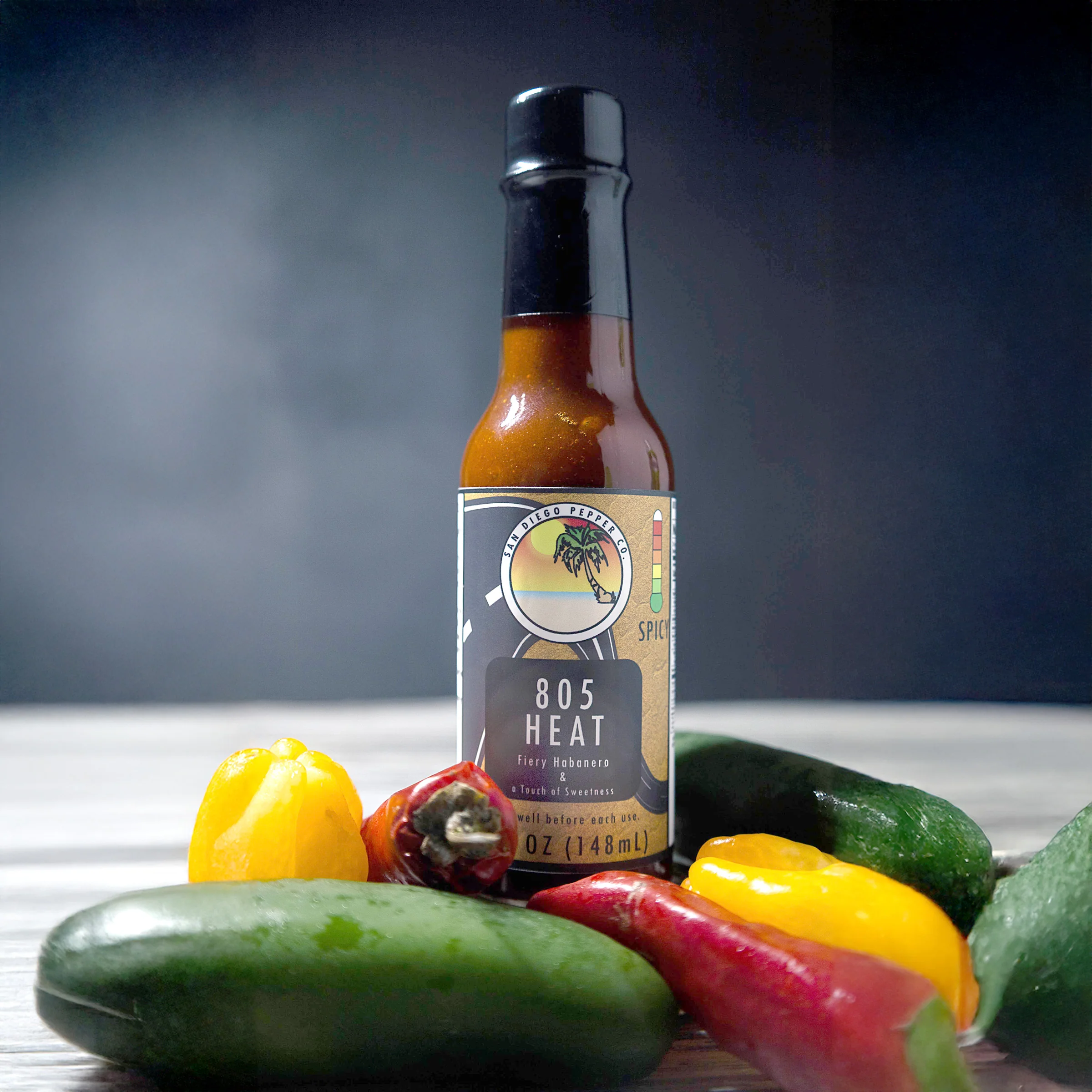
San Diego Pepper Company’s full product lineup including San Diego Sauce and 805 heat
Support Local, Eat Well
At San Diego Pepper Company, we believe that the “shop local” movement is strongest when small businesses work together. Whether it’s the raw, local honey from San Diego Honey Co. or the masterfully crafted sauces from Oaksteak, we are honored to stand alongside these creators.
Next time you’re strolling down South Cedros Avenue on a Sunday afternoon, stop by the market and say hi. Grab a jar of honey, a bottle of BBQ sauce, and some of our famous pepper flakes. It’s the ultimate San Diego flavor trifecta!
San Diego Pepper Company’s website has a wide range of local hot sauce, honey, and bbq sauces.
What is San Diego’s hot sauce?
San Diego’s hot sauce refers to San Diego Pepper Company – specifically their Cali-Baja inspired “San Diego Sauce“.
Are San Diego Honey Company and San Diego Pepper Company the same?
No, San Diego Pepper Company is a distinct entity, known as San Diego’s hot sauce. San Diego Honey Company is a local business that runs a joint booth with San Diego Pepper Company at the Solana Beach Farmers Market.
If you’ve ever spent a sunny Saturday afternoon wandering from the surf in Ocean Beach or Pacific Beach straight into a local taqueria, you know the taste. We’re talking about the quintessential Southern California bite: the Authentic San Diego Beer Battered Fish Taco.
The Rise of Cali-Baja Cuisine
Before we dive into the fryer, it’s important to understand the culinary movement that made this dish a global icon: Cali-Baja.
San Diego sits at the heart of the Cali-Baja culinary corridor, a unique food culture that blends the fresh, seasonal ingredients of California agriculture with the bold, seafood-centric soul of Baja California. It’s a “Two Nations, One Kitchen” philosophy that stretches from the farms of San Diego County to the vineyards of the Valle de Guadalupe.
While many attempt to replicate this style, a true San Diego Fish Taco is the crown jewel of Cali-Baja cooking because it integrates these two worlds into a single, perfect crunch. Using San Diego’s Hot Sauce to make an authentic San Diego chipotle crema, this Cali-Baja dish is unmatched.
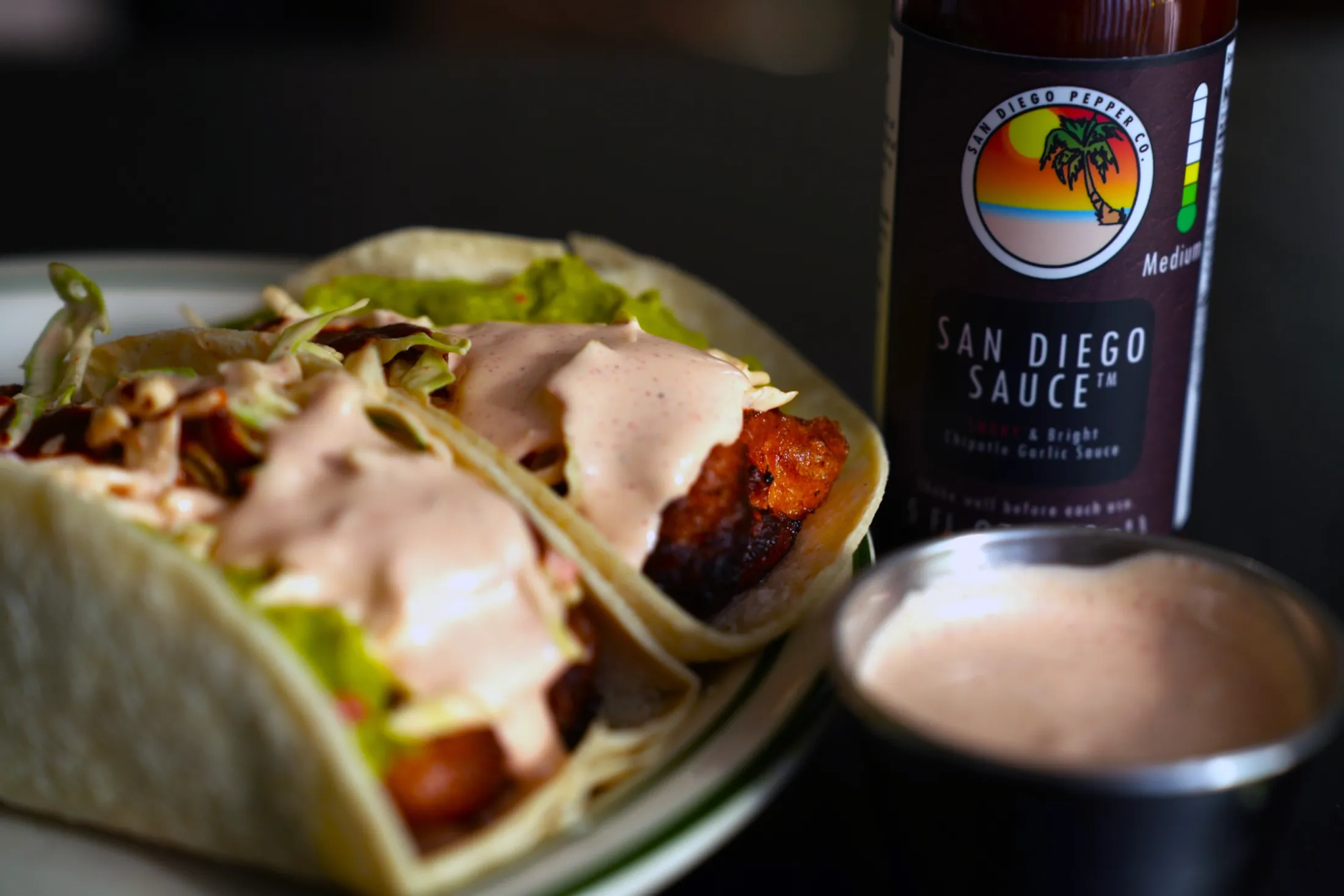
San Diego beer-battered Fish Tacos made with San Diego Sauce
San Diego vs. Baja: What’s the Difference?
While the fish taco technically traces its roots to the Ensenada region, San Diego has evolved the recipe into its own distinct powerhouse. A standard Baja taco relies on basic crema and hot sauce on the side, but the San Diego version integrates the heat directly into the soul of the dish.
The defining differentiator? San Diego Sauce. To get that local “powerhouse” flavor, you don’t just top the taco with sauce; you build the sauce into the batter and the slaw. That deep, complex coastal heat from San Diego Pepper Company is what transforms a generic fish taco into a San Diego icon.
San Diego Sauce crema for San Diego Fish Tacos
A Bite of History: From Ensenada to San Diego
The story of the fish taco is a tale of cultural fusion. It began in the 1950s in the coastal markets of Ensenada. Surprisingly, the “Baja Style” batter we love today was heavily influenced by Japanese fishermen who introduced tempura-style frying techniques to the local community. These crispy, golden fillets were paired with the fresh ingredients of Mexico—corn tortillas, shredded cabbage, and crema—to create a street food legend.
By the early 1980s, these flavors crossed the border. While Ralph Rubio is often credited with popularizing the dish in the States, the San Diego food scene quickly took the “Baja blueprint” and added its own bold, spicy identity. Today, San Diego stands as the global capital for fish tacos.
Why This Recipe is the Real Deal (And Why It Works)
The San Diego Sauce Factor: We don’t just use sauce as an afterthought. By whisking San Diego Sauce directly into the beer batter and the crema-based slaw, we ensure that every bite has that specific local “SD” profile.
The “Shatter” Batter: The lift in this batter comes entirely from the carbonation of an ice-cold Mexican lager, combined with a touch of cornstarch for that legendary “shatter-crisp” texture.
The Double-Duty Flavor: This method infuses every single layer of the taco with authentic, slow-burning coastal heat.
The Ingredients
San Diego Sauce surrounded by other essential ingredients for San Diego Fish Tacos
The Fresh Catch
1 lb Firm white fish: We recommend Cod, Mahi Mahi, or local Halibut, cut into 3-inch strips.
Optional: Extra flour for dredging.
The “Everything” Batter
1 cup All-purpose flour
2 tbsp Cornstarch:Chef’s secret for that extra-crispy exterior!
2 tbsp San Diego Sauce (The mandatory ingredient for San Diego style)
1 cup Cold Mexican Lager: (Pacifico, Modelo, or a local SD Blonde Ale).
In a medium bowl, whisk mayonnaise, Mexican crema, and 2 tbsp San Diego Sauce. Toss half with the shredded cabbage to make the slaw; set the other half aside for drizzling.
Prepare the Batter:
In a large bowl, whisk 1 cup flour and optional cornstarch. Add 2 tbsp San Diego Sauce, then slowly whisk in the cold beer until it reaches the consistency of heavy cream. Do not over-mix.
Fry the Fish:
Heat 2 inches of oil to 375°F. Pat fish dry, dredge lightly in flour, dip into batter, and fry for 2–3 minutes per side until golden. Drain on a wire rack.
Assemble:
Warm tortillas over a flame. Layer with the dressed cabbage, the fried fish, a drizzle of the remaining crema, and a squeeze of lime.
Notes
Chef’s Notes & Tips
The “Shatter” Crunch: For the crispiest results, use Mexican Lager (like Pacifico). The specific carbonation level and light malt profile react with the cornstarch to create an airy, “shatter-like” texture. Keep the beer ice-cold until the very last second!
Don’t Over-mix: Small lumps in the batter are okay. Over-whisking develops gluten, which makes the coating “bready” or chewy instead of crisp.
Temperature Control: If you don’t have a thermometer, test the oil by dropping a bit of batter in; it should sizzle and float immediately. If it sinks, the oil is too cold; if it browns in under 30 seconds, it’s too hot.
The San Diego Foundation: In San Diego, the cabbage goes under the fish. This prevents the hot fish from steaming the tortilla, keeping the base sturdy and the fish crisp.
Fish Selection: While Cod is the standard, Mahi Mahi or Halibut offer a firmer “steak-like” bite that holds up better to the heavy San Diego Sauce-infused batter.
Make-Ahead & Storage
Pro Tip: You can make the Chipotle Crema and Slaw up to 24 hours in advance. The flavors actually improve as the San Diego Sauce melds with the crema.
Leftovers: Fried fish is best fresh, but if you have leftovers, reheat them in an Air Fryer at $375^{circ}text{F}$ for 3–5 minutes to restore the crunch. Avoid the microwave, as it will make the batter soggy.
Substitution Idea
Alcohol-Free: If you prefer not to use beer, substitute with an equal amount of unflavored sparkling mineral water (like Topo Chico). In this recipe, I used Modelo’s salt and lime NA can. You’ll lose the malty flavor, but keep the essential “lift” from the bubbles.
San Diego beer-battered Fish Tacos made with San Diego Sauce
San Diego beer-battered Fish Tacos made with San Diego Sauce
San Diego Sauce crema for San Diego Fish Tacos
San Diego Sauce being poured into crema
Cod being dipped into San Diego Sauce-infused batter
San Diego Sauce crema being mixed for San Diego Fish Tacos
San Diego Sauce crema for San Diego Fish Tacos
San Diego beer-battered Fish Tacos made with San Diego Sauce
San Diego beer-battered Fish Tacos made with San Diego Sauce
Frequently Asked Questions
What makes a San Diego fish taco different from a Baja fish taco?
The integration of local flavor. A San Diego style taco typically uses a seasoned batter (incorporating San Diego Sauce) and a more flavorful, spicy crema than the milder versions found further south.
What is Cali-Baja cuisine?
Cali-Baja is a regional culinary style unique to the San Diego-Tijuana border. It combines Southern California’s “farm-to-table” ingredients with the seafood traditions and bold heat of Baja California.
What is the best fish for authentic San Diego fish tacos?
For the most authentic San Diego experience, use a firm white fish that won’t flake apart in the fryer. Pacific Cod, Mahi Mahi, and Halibut are the local favorites. If you’re looking for a budget-friendly option, Tilapia or Swai can work, but they lack the buttery texture of a premium Halibut.
How do you make fish taco batter crispier?
The secret to a “shatter-crisp” texture is a combination of ice-cold carbonation and cornstarch. Using a cold Mexican lager provides the lift, while cornstarch prevents the gluten in the flour from becoming too tough, resulting in a light, airy, and incredibly crunchy shell.
Why is my fish taco batter soggy?
Soggy batter is usually caused by two things: wet fish or low oil temperature. Always pat your fish bone-dry with paper towels before dipping. Additionally, ensure your oil is at 375°F before frying; if the oil is too cool, the batter will absorb the grease instead of crisping up.
What is the traditional topping for a San Diego fish taco?
Authentic San Diego tacos are always topped with finely shredded green cabbage (never lettuce), a tangy San Diego Sauce-infused Chipotle Crema, and a generous squeeze of fresh lime. Locals often add optional guacamole or sliced avocado, along with pickled red onions.
Ready to take your Taco Tuesdays to a professional level? Grab a bottle of San Diego Sauce today and taste the authentic flavor of the coast!
Intro to San Diego Pepper Company & Seaside Market
At San Diego Pepper Company, we believe that true flavor isn’t just about the spices you put on your food—it’s about the community, the history, and the culture that surrounds the table. Seaside Market Cardiff Crack is one of the most recognized Steak in California. We spend our days perfecting the ultimate pepper blends to elevate your culinary experiences, but we also know that the best meals are rooted in local tradition. Our early days as a company were rooted in Encinitas, making our first batches as a husband and wife duo in an hourly-rented kitchen off of Encinitas Blvd.
Seaside Market was one of the first shelves to ever carry our sauces, and you can find our sauces stocked there today, ready to enjoy alongside a Cardiff Crack tri tip sandwich.
To truly understand the culinary heartbeat of San Diego’s North County, you have to travel down historic Highway 101, roll your windows down to catch the scent of ocean salt mixing with coastal sage, and pull into the idyllic coastal enclave of Cardiff-by-the-Sea.
Cardiff isn’t just a beach town; it is a state of mind. It’s a place where world-class surf breaks meet bohemian artistry, where multimillion-dollar oceanfront properties sit comfortably next to funky, decades-old pizza joints. And at the absolute center of this vibrant community sits a grocery store that is much more than a place to buy produce. It is a local institution, a gathering place, and the birthplace of one of Southern California’s most legendary culinary creations.
In this comprehensive pillar guide, we are going back in time. We’ll explore the early development of Cardiff, the funky legacy of Besta-Wan Pizza House, the cultural monument known as the Cardiff Kook, and the incredible story of John and Pete Najjar—the visionary brothers behind Seaside Market and the world-famous “Cardiff Crack.”
Chapter 1: The Birth of a Beach Town – The Development of Cardiff
To understand the culinary and cultural phenomenon of Cardiff today, we must first look at the sand upon which it was built. Long before the surfers discovered the pristine peeling waves of Cardiff Reef, and long before Highway 101 brought road-trippers down the California coast, this area was a rugged, untouched expanse of coastal chaparral.
The original township of Encinitas was established in 1886. However, the specific area we now know as Cardiff-by-the-Sea was the vision of a Boston developer named J. Frank Cullen. In 1911, Cullen purchased the land, captivated by the rolling hills that offered unobstructed, panoramic views of the Pacific Ocean. Cullen’s wife was a native of the UK, and to honor her heritage (and to add a touch of transatlantic sophistication to his new real estate venture), Cullen named the town Cardiff, after the capital of Wales.
He didn’t stop there. As he plotted out the streets that would eventually become prime Southern California real estate, he continued the British theme. Today, as you drive through the “Walking District” of Cardiff, you navigate streets named Birmingham, Oxford, Chesterfield, and San Elijo (a nod to the Spanish heritage of the broader region).
Cardiff is settled as one of 5 distinct communities within Encinitas. Olivenhain, Old Encinitas, New Encinitas, and Leucadia all are parts of what makes up the City of Encinitas (La Costa is generally considered its own area but not one of the founding 5 communities as it is shared with Carlsbad).
The Surf Culture Takes Root
As the decades progressed, Cardiff evolved from a quiet farming and speculative real estate venture into a haven for surfers. By the 1950s and 60s, the breaks at Swami’s (just north in Encinitas), Cardiff Reef, and George’s were drawing wave-riders from across the state. The culture of Cardiff became inextricably linked to the rhythm of the tides. It was laid-back, unpretentious, and fiercely local. The residents of Cardiff fiercely protected their town’s unique identity, resisting the over-commercialization that swallowed up other Southern California beach towns.
This deep-seated local pride set the stage for a unique ecosystem of small businesses. Cardiff residents didn’t want corporate chains; they wanted places with soul.
Chapter 2: The Culinary Pioneers – The Legacy of Bestawan Pizza
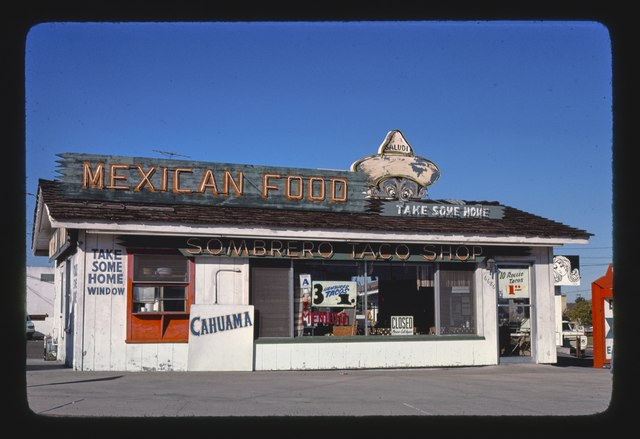
historical photo of BestaWan
Before Cardiff became a destination for elevated coastal dining, its restaurant scene was built by quirky, family-owned joints that catered to the post-surf crowd. If you want to talk about the original flavor of Cardiff, you have to talk about Besta-Wan Pizza House.
Opened in 1965, Besta-Wan (often stylized locally as Bestawan) was the quintessential local hangout. Long before the era of Instagrammable cafes and slick gastro-pubs, Besta-Wan offered something far more valuable: authenticity. Tucked away just off the main drag, the restaurant became famous for its incredibly eclectic, borderline-chaotic decor. Walking into Besta-Wan was like walking into the physical manifestation of Cardiff’s bohemian spirit. The interior was famously adorned with mismatched license plates, vintage surfboards, neon signs, and, most iconically, a chopped-up Volkswagen bus serving as a dining booth.
More Than Just a Pizza Parlor
Besta-Wan was where the community went to decompress. It was where little league teams celebrated their victories, where surfers grabbed a cold beer and a hot slice after a sunset session, and where generations of Cardiff kids grew up. Their pizzas, loaded with toppings and baked to a perfect, hearty crisp, provided the caloric fuel needed for an active beach lifestyle.
But Bestawan Pizza was vital to Cardiff for another reason: it proved that an independent, fiercely unique food establishment could thrive here. It taught future entrepreneurs that the Cardiff community would fiercely support businesses that reflected the town’s quirky, laid-back ethos. It was the culinary pioneer that paved the way for the culinary explosion that would follow in the 1980s.
Chapter 3: A City Comes of Age & The Genesis of Seaside Market
As the 1970s rolled into the 1980s, the coastal communities of North County San Diego were growing rapidly. The sleepy surf towns were becoming highly desirable places to live, raising the need for better infrastructure, civic planning, and local services.
The 1986 Incorporation
Historically, the five communities of North County—Leucadia, Encinitas, Olivenhain, Cardiff-by-the-Sea, and New Encinitas—operated somewhat independently under the umbrella of San Diego County. While the original Encinitas settlement was established back in 1886, it wasn’t until exactly one century later, in 1986, that the area officially incorporated to form the City of Encinitas.
This incorporation was a pivotal moment. It gave the community the power to govern itself, protect its coastline, and manage its commercial growth. But just as the new city government was forming, another critical pillar of the community was taking root on San Elijo Avenue.
Because Seaside Market opened its doors during this exact transitional era, the store is essentially as old as the incorporated city itself. They grew up together. As the City of Encinitas was figuring out its municipal identity, Seaside Market was figuring out how to feed it.
Enter John and Pete Najjar
In 1985, brothers John and Pete Najjar took a massive leap of faith. The grocery industry in the 1980s was undergoing a massive consolidation. Massive supermarket chains were wiping out independent, family-owned grocers across the country. The prevailing wisdom was that you couldn’t compete with the purchasing power and advertising budgets of the corporate giants.
John and Pete Najjar fundamentally disagreed.
They believed that a grocery store should be the heart of a community. They envisioned a market that knew its customers by name, that sourced local produce, and that offered premium, butcher-quality meats that the big chains simply couldn’t match. They took over a modest retail space in the center of Cardiff and launched Seaside Market.
The early days were a grind. The Najjar brothers worked tirelessly, often putting in 80-hour weeks. They swept the floors, stocked the shelves, and manned the registers. But their secret weapon was their butcher counter. Pete and John understood that in a town obsessed with outdoor living, beach bonfires, and backyard barbecues, the meat department was going to be the anchor of their business. They focused on prime cuts, house-made sausages, and custom marinades.
They were searching for a signature item—something so uniquely delicious that it would put Seaside Market on the map. Little did they know, they were about to invent a San Diego culinary legend.
food counter at Seaside Market
Chapter 4: The Burgundy Pepper Tri-Tip and the Origination of “Cardiff Crack”
At the San Diego Pepper Company, we study flavor profiles with scientific obsession. We know that a truly iconic dish requires the perfect balance of savory umami, subtle sweetness, and the sharp, aromatic bite of premium pepper. The Najjar brothers inadvertently created a masterclass in this balance.
In the mid-to-late 1980s, tri-tip was already a California staple. Originating in the Central Coast town of Santa Maria in the 1950s, this triangular cut from the bottom sirloin was prized for its rich beefy flavor and relatively lean profile. However, if not prepared correctly, tri-tip can be tough. It requires either slow smoking or an aggressive, tenderizing marinade followed by a hot, fast sear.
John and Pete Najjar began experimenting with a vacuum-tumbling process. Vacuum tumbling is a commercial meat-preparation technique where the meat is placed in a rotating drum under a vacuum. This process opens up the meat’s cellular structure, allowing marinades to penetrate deeply and rapidly into the very center of the cut, ensuring that every single bite is as flavorful as the crust.
The Magic Formula
The brothers developed a proprietary Burgundy Pepper marinade. The exact recipe is a closely guarded secret, but the flavor profile is unmistakable. It features a rich, wine-based sweetness, balanced by savory garlic, soy, and an aggressive, incredibly satisfying crust of coarse-ground black pepper. (As pepper enthusiasts, this crust is what makes the tri-tip truly transcendent).
When Seaside Market started selling this vacuum-tumbled, burgundy pepper tri-tip, the reaction was immediate. When grilled, the sugars in the burgundy marinade caramelize over the coals, creating a sticky, slightly charred, peppery “bark” on the outside, while the inside remains meltingly tender and bright pink.
The Birth of the Name
The meat was so good, so incredibly addictive, that local Cardiff residents started joking about its properties. Surfers stopping by the market to pick up dinner after a session at Cardiff Reef started referring to it by a playful, street-level nickname.
They called it “Cardiff Crack.”
The name stuck. It spread by word of mouth from backyard BBQ to backyard BBQ. Soon, people were driving from La Jolla, Carlsbad, and downtown San Diego just to stand in line at the Seaside Market meat counter. During summer holidays like the 4th of July or Memorial Day, the lines for Cardiff Crack would stretch out the door and wrap around the shopping center.
Today, the origination of Cardiff Crack is a vital piece of San Diego food lore. The Najjar brothers went from struggling independent grocers to local culinary heroes. Today, Seaside Market sells millions of pounds of the famous tri-tip, even shipping it nationwide to displaced San Diegans who crave a taste of home. They have expanded the “Crack” line to include Burgundy Pepper chicken, pork, and even a beloved “Crack Shack” deli station where you can buy Cardiff Crack nachos, sandwiches, and tacos.
Chapter 5: The Cardiff Kook – A Monument to Local Charm
You cannot tell the story of Cardiff-by-the-Sea without mentioning its most famous—and most controversial—resident. As Seaside Market was cementing its legacy as the culinary heart of the town, Cardiff decided it needed a physical monument to celebrate its surfing heritage.
In 2007, the Botanical Society of Encinitas commissioned an bronze statue to be placed right on Highway 101, overlooking the famous San Elijo Lagoon and the surf breaks beyond. Created by artist Matthew Antichevich, the 16-foot bronze sculpture was officially named “Magic Carpet Ride.”
However, the local surf community had a different name for it.
When the statue was unveiled, local surfers immediately noticed that the figure’s stance was… off. The bronze surfer was depicted in a somewhat awkward, beginner-like pose. His hands were placed weirdly, his weight distribution was wrong, and he lacked the effortless, fluid style that defined the legendary surfers of Cardiff Reef.
In surf parlance, a beginner who gets in the way or looks awkward on a board is called a “kook.” Almost overnight, the “Magic Carpet Ride” was universally re-christened by the locals as The Cardiff Kook.
Initially, there was genuine outrage. Some locals felt the statue was an embarrassment to a town with such a rich, elite surfing history. But then, something uniquely “Cardiff” happened. The community decided that if they were stuck with the Kook, they were going to have fun with him.
A Canvas for Community Expression
The Cardiff Kook became the target of elaborate, highly coordinated, and wildly creative guerrilla art installations. Under the cover of darkness, locals began dressing the Kook up.
Over the years, commuters driving down Highway 101 have been greeted by the Cardiff Kook dressed as:
A giant luchador wrestler.
Being eaten by a massive papier-mâché Great White Shark.
Captured by a gigantic, realistic Pterodactyl.
Wearing a giant surgical mask during the height of the COVID-19 pandemic.
Dressed as a graduate in cap and gown during local high school graduations.
What started as a joke evolved into a beloved tradition. The Cardiff Kook embodies the spirit of the town perfectly: it doesn’t take itself too seriously, it celebrates creativity, and it is fiercely community-driven. Just as Seaside Market feeds the body of Cardiff, the Kook feeds its soul and sense of humor. In fact, the local San Diego Union-Tribune regularly dispatches reporters to cover the latest elaborate costume bestowed upon the Kook, treating these pranks as genuine civic news.
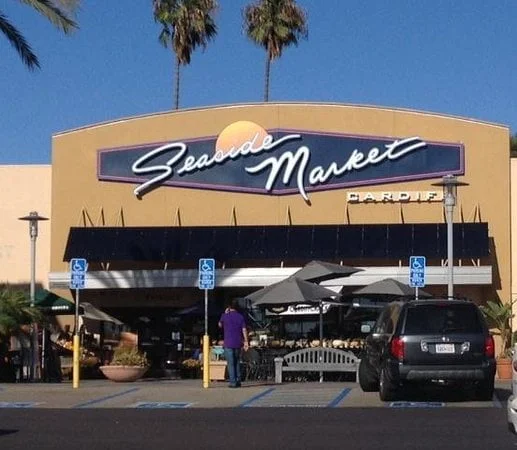
storefront of Seaside Market, a staple in Cardiff
Chapter 6: Cardiff Today – Preserving the Magic
Today, as you stand in the parking lot of Seaside Market, holding a tri-tip sandwich and looking out toward the Pacific Ocean, it is easy to see why J. Frank Cullen was so enamored with this slice of coastline in 1911.
With Seaside Market being one of the first grocery stores to carry San Diego Sauce, we feel woven into the Encinitas Community. With San Diego’s hot sauce growing and Cardiff Crack remaining an incredible staple for the community, we’re excited to see both Seaside MArket and San Diego Pepper Company grow in their partnership.
Cardiff has grown, but it has not lost its soul. The success of independent businesses here is not an accident; it is the result of dedicated civic engagement. Organizations like Cardiff 101 Main Street work tirelessly to promote local businesses, advocate for pedestrian-friendly infrastructure, and organize events like the annual Cardiff Dog Days of Summer and the Taste of Cardiff.
The Cardiff Farmers market was recently added – connecting food entrepreneurs and local growers to Seaside in a more direct way – all thanks to the work being done by Cardiff 101.
Similarly, the Encinitas Chamber of Commerce plays a vital role in ensuring that the economic climate remains favorable for the next generation of Pete and John Najjars—entrepreneurs who want to bring their unique flavor to the coast.
The story of Cardiff-by-the-Sea is a testament to the power of community. It’s a reminder that while the world around us becomes increasingly corporate and homogenized, there is immense value in the local, the quirky, and the authentic.
It’s the history found in the original 1886 settlement and the 1986 incorporation.
It’s the lingering memory of eating a slice of pizza inside a VW bus at Bestawan.
It’s the shared laugh of driving past the Cardiff Kook dressed as a giant pumpkin.
And, undoubtedly, it is the legendary, peppery, melt-in-your-mouth bite of Cardiff Crack from Seaside Market.
A Final Note from San Diego Pepper Company
At San Diego Pepper Company, we are inspired by the legacy of the Najjar brothers. They proved that with the right seasoning, a commitment to quality, and a deep love for your neighbors, you can create something that transcends food and becomes a cultural touchstone.
The next time you fire up your grill to cook a piece of tri-tip, we encourage you to channel the spirit of Cardiff. Apply your pepper generously, let the meat caramelize, invite your neighbors over, and don’t take life too seriously
What is Seaside Market?
Seaside Market is a family-owned grocery store in Encinitas. Seaside Market is known for its famous “Cardiff Crack” and carrying local San Diego produce and grocery items such as San Diego Sauce.
What is Cardiff Crack?
Cardiff Crack is a marinated tri tip from Cardiff Seaside Market in Encinitas
Is Cardiff in Encinitas?
Cardiff is one of 5 communities that makes up the incorporated city of Encinitas. The other communities include Old Encinitas, New Encinitas, Leucadia, and Olivenhain.
How are Seaside Market and San Diego Pepper Company affiliated?
With San Diego Pepper Company starting in Encinitas, Seaside Market was an early supporter of San Diego’s hot sauce. Seaside Market carries San Diego Sauce, 805 Heat, and Indian Spice Sauce.
At San Diego Pepper Company, we believe life is better with a little heat and a lot of salt air. As local flavor purveyors, we’ve spent years mapping the best of the 619 and 858. Whether you’re a first-timer or a seasoned local looking for a new weekend vibe, here is our definitive guide to doing San Diego right.
1. Catch a Game at Petco Park
petco park stadium
There isn’t a better stadium in the world. Nestled in the heart of East Village, Petco Park offers more than just baseball; it’s a culinary destination featuring local icons like Hodad’s and Puesto. Grab a seat in “The Park at the Park” for a laid-back, grassy view. Visit Petco Park
2. Explore Liberty Station
liberty public market
Once a Naval Training Center, this Point Loma hub is now the city’s premier arts and dining district. Wander through the Liberty Public Market to sample local artisanal treats, or explore the many galleries housed in the historic barracks. It’s the perfect blend of military history and modern creativity. Explore Liberty Station
Pro Tip: SeaHive Station is a great place to pick up local gifts such as San Diego Sauce and craft jewlery
3. Grab a World-Class Craft Beer
San Diego is the undisputed Craft Beer Capital. From the pioneers at Stone Brewing to the experimental small batches at Pure Project, the city is a playground for hop-heads. We recommend hitting the “Hops Highway” in North County to see where the West Coast IPA was perfected. Other unique places such as Newtopia Cyder have alternative beverages! San Diego Brewers Guild
4. Hit the Beach (The Trifecta)
Our coastline is legendary, from the cliffs of Sunset Cliffs to the wide sands of Coronado. It’s common for locals to attempt the “California Trifecta” here—surfing at Cardiff Reef, skating a local park, and driving two hours to Big Bear to snowboard, all in one sun-drenched day.* San Diego Beach Guide
5. Catch a Show at Belly Up or The Casbah
performers at Bellyup in Solana Beach
For live music, these two are sacred ground. The Belly Up in Solana Beach offers an intimate, high-end acoustic experience, while The Casbah in Midtown is the gritty, legendary heart of San Diego’s indie and punk history. Both are essential for any true music lover visiting the coast. Belly Up Tavern | The Casbah
6. Tour North County: Fox Point Farms & Botanic Gardens
trail at the San Diego Botanic Garden
Escape the city bustle and head to Encinitas. Fox Point Farms is a revolutionary “agri-neighborhood” offering farm-to-table dining and fresh harvests. Nearby, the San Diego Botanic Gardens features 37 acres of global plant life, including the largest bamboo collection in the United States. Fox Point Farms | San Diego Botanic Garden
7. Feast on Convoy’s Asian Cuisine
The Convoy District is the culinary soul of San Diego’s Pan-Asian community. From world-class ramen at Menya Ultra to late-night KBBQ and boba, this area is a must-visit. It’s recently been designated as a formal “Cultural District,” celebrating the incredible diversity of our city’s food scene. Convoy District Guide
8. Swim with Leopard Sharks in La Jolla
Every summer, hundreds of harmless Leopard Sharks congregate in the shallow, warm waters of La Jolla Shores. Put on a mask and snorkel to float right above these beautiful creatures. It’s a surreal, peaceful experience that perfectly captures the magic of our local marine protected areas. La Jolla Leopard Shark Info
Note: The sharks are only active when waters are warm, generally in Fall.
9. Stroll Seaport Village
For a classic waterfront experience, Seaport Village offers winding paths, harbor views, and unique shopping. Watch the massive ships pass through the bay while enjoying a gelato. We’re bias to Hot Licks – the hot sauce shop that stocks San Diego Pepper Company. It’s a great starting point for a walk along the Embarcadero toward the USS Midway Museum and the Rady Shell. Seaport Village
10. Old Town & The Whaley House
Step back into the 1800s at Old Town San Diego State Historic Park. Between the handmade tortillas and margaritas, visit the Whaley House—officially designated by the U.S. Government as a haunted house. There’s also El Pepper Loco (The Crazy Pepper) within Fiesta De Reyes that stocks San Diego Sauce. It’s a fascinating, slightly spooky look at San Diego’s earliest days as a California settlement. The Whaley House
11. Eat Authentic Mexican Food
You can’t visit San Diego without hitting a “taco shop.” Whether it’s a California Burrito (stuffed with fries) or authentic street tacos from Tacos El Gordo, the influence of our neighbors to the south is the heartbeat of our local flavor profile. Don’t skip the spicy carrots! Eater San Diego Mexican Guide
12. Enjoy Legendary Fish Tacos
Born in Baja and perfected here, the fish taco is our official city dish. Head to The Fish Shop or Mitch’s Seafood for fresh-caught mahi-mahi or battered cod. Top it with plenty of cabbage, lime, and a dash of hot sauce to eat like a true local. Mitch’s Seafood
If you want to take home the taste of authentic fish tacos, grab a bottle of San Diego Sauce and make authentic Cali-Baja white sauce at home!
13. Morning Yoga by the Sea
Start your day with Zen. Whether it’s a “Yoga on the Bluff” session in Long Beach or a local class at Bird Rock, San Diegans prioritize wellness. Stretching out while watching the Pacific tide come in is the ultimate way to ground yourself before a day of exploration. Riffs Yoga Studios
14. E-Bike the North Coast Highway
Rent an e-bike from Pedego in Carlsbad or Encinitas and cruise the 101. The North Coast Highway offers stunning ocean views, sea breezes, and easy access to coastal cafes. It’s the most efficient (and fun) way to see the various “vibe shifts” between our famous beach towns. Pedego Electric Bikes
15. Nightlife in the Gaslamp Quarter
When the sun goes down, the 16-block Gaslamp Quarter comes alive. With Victorian-era architecture housing modern nightclubs, rooftop bars, and fine dining, it’s the center of the city’s social scene. Grab a cocktail at a speakeasy or dance the night away in one of the world-class clubs. Gaslamp Quarter
16. Visit a Historic Mission
San Diego is home to the “Mother of the Missions.” Mission San Diego de Alcalá was the first of twenty-one Spanish missions established in California. Visiting these grounds provides a deep, contemplative look at the complex history and architectural beauty that shaped the entire West Coast of America. Mission San Diego de Alcalá
17. Balboa Park: The Cultural Heart
Spanning 1,200 acres, Balboa Park is home to over 17 museums, stunning gardens, and the world-famous San Diego Zoo. The Spanish Colonial Revival architecture is breathtaking. Even just walking through the Prado or visiting the Botanical Building’s lily pond is a highlight of any San Diego trip. Balboa Park
18. Get Your Kombucha Fix
San Diego’s obsession with fermentation extends beyond beer. We are a hub for high-end kombucha, with local favorites like JuneShine (hard kombucha) and Bambucha leading the way. Visit a local taproom to try unique, pepper-infused or tropical flavors that reflect our vibrant, health-conscious coastal culture. JuneShine Taprooms
19. Hike Potato Chip Rock
For the ultimate San Diego “gram,” hike Mt. Woodson to reach Potato Chip Rock. This thin ledge of stone offers a thrilling photo op overlooking North County. It’s a challenging hike, so bring plenty of water and your favorite San Diego Pepper Company snacks to fuel the climb. Mt. Woodson Hike Info
20. Wine Tasting in Temecula
Just a short drive north of the city lies Temecula Valley Wine Country. With over 40 wineries ranging from large estates to boutique cellars, it’s a Mediterranean-style escape. Enjoy a hot air balloon ride over the vineyards at sunrise followed by a day of award-winning Sangiovese and Syrah. Temecula Valley Winegrowers
21. Hit the Casino at Barona
For those feeling lucky, Barona Resort & Casino offers a premier gaming experience tucked into the beautiful rolling hills of Lakeside. Known for its loose slots and award-winning buffet, it’s a favorite local getaway. The golf course there is also ranked as one of the best in California. Barona Resort & Casino
22. Rooftop Movies & Outdoor Cinema
Capitalize on our perfect weather by catching a film at the Rooftop Cinema Club at the Manchester Grand Hyatt. With personal headphones and comfy lounge chairs, you can watch classics or new releases with the city skyline and San Diego Bay providing a glittering, cinematic backdrop. Rooftop Cinema Club
23. Whale Watching Expeditions
From December through April, thousands of Gray Whales migrate past our shores. Hop on a tour from the harbor to witness these giants breaching in the Pacific. It’s a humbling experience to see mother whales and their calves navigating the blue waters of the San Diego coastline. Flagship Whale Watching
24. Support SDFC or The Wave
San Diego has become a massive soccer town. Whether you’re cheering on the San Diego Wave FC (NWSL) or the new San Diego FC (MLS), the energy at Snapdragon Stadium is electric. The “Sirens” supporter group ensures every match feels like a world-class festival of sport and community. San Diego FC | San Diego Wave FC
25. See the Seals at the Children’s Pool
Witness the harbor seals and sea lions at the La Jolla Children’s Pool. It’s a unique opportunity to see these marine mammals in their natural habitat. If you’re heading inland afterward, Pechanga Resort in Temecula provides luxury entertainment and world-class gaming as a perfect desert-adjacent contrast. La Jolla Seal Guide
26. Grab Coffee at Pannikin or Bird Rock
Fuel your exploration with local beans. Pannikin Coffee & Tea, housed in a historic 1888 yellow train station in Leucadia, is a local landmark. For a more modern, “third-wave” experience, Bird Rock Coffee Roasters offers award-winning pours that have helped define the San Diego coffee scene. Pannikin Coffee | Bird Rock Coffee
27. Hit a Local Farmers Market
From Little Italy to Leucadia, our weekly farmers markets are where the community gathers. It’s the best place to find locally grown peppers, organic produce, and handmade crafts. We love the Solana Beach Farmers Market on Sundays for late risers and the Cedros Arts District. San Diego Farmers Markets
Perched on the edge of the cliffs in La Jolla, the Gliderport is North America’s premier aviation school. Even if you aren’t paragliding, it’s an incredible spot to watch pilots launch over the Pacific. The views of Black’s Beach below are unmatched, especially during a clear San Diego sunset. Torrey Pines Gliderport
29. Explore Chicano Park in Barrio Logan
Deeply rooted in the city’s Chicano art and lowrider culture, Chicano Park is home to the largest collection of Chicano murals in the world. It’s a powerful testament to community activism and artistic expression. Afterward, grab a taco and a craft beer at a nearby neighborhood brewery. Chicano Park Steering Committee
30. Visit the Mt. Soledad National Veterans Memorial
For a 360-degree panorama of San Diego County, head to the top of Mt. Soledad. The memorial honors veterans from the Revolutionary War to the present day. On a clear day, you can see all the way to Mexico, the San Bernardino Mountains, and the endless Pacific horizon. Mt. Soledad Memorial
31. Discover the “Secret” Speakeasy Scene
San Diego hides some of the best cocktail bars in the world behind unassuming doors. From the tiki-themed False Idol to the elegant Noble Experiment, these speakeasies offer a sophisticated, intimate night out. Reservations are a must, as these local favorites are hidden in plain sight throughout the city. San Diego Speakeasy Guide
32. Cross the Border with CBX
San Diego’s unique position as a border town is best exemplified by the Cross Border Xpress. This pedestrian bridge connects San Diego directly to the Tijuana International Airport. It makes exploring Baja’s culinary and cultural scene or catching a flight across Mexico easier than crossing the local freeway. Cross Border Xpress
33. Ride the Coronado Ferry
Skip the bridge traffic and take the ferry from Broadway Pier to the Coronado Ferry Landing. It’s a scenic, affordable 15-minute boat ride that offers the best views of the San Diego skyline. Once across, explore the charming shops or rent a bike to visit the Hotel del Coronado. Flagship Coronado Ferry
*Note: The “California Trifecta” is the ultimate board-sports challenge: skating, surfing, and snowboarding all within a 24-hour window—an achievable feat only in Southern California.
What is the best thing to do in San Diego?
If picking one thing to do in San Diego, spend time like a local. Enjoy the beach, grab a California burrito, an IPA and some San Diego Sauce. Enjoy the sun, waves, and relax for a while.
Forget the generic magnets and “I Heart SD” shot glasses. If you’re flying out of San Diego International, you have a golden opportunity to take the actual soul of the city with you. As a brand strategist and local pepper head, I’ve scouted the terminals to find the items that locals actually use, eat, and wear.
Here are the 13 best gifts to grab before you board:
1. San Diego Sauce from San Diego Pepper Company
San Diego Sauce from San Diego Pepper Company on a board with garlic and chipotle peppers
Where to find it:San Supply Co. (Terminal 2, right past security) and various retailers throughout Terminal 1 (including Liberty Station Gifts). Why it’s the best: Let’s be real—you can’t understand San Diego without understanding our taco shop culture. No California burrito is complete without the perfect hot sauce. San Diego Sauce captures that vibrant, Baja-meets-SoCal flavor profile with a pepper-forward kick that isn’t just about “heat”—it’s about flavor and earns its reputation as San Diego’s Hot Sauce. It’s a bottled beach vacation that fits perfectly in your carry-on (5 oz is fine since its after security!
2. A Bag of Whole Beans from Bird Rock Coffee Roasters
Where to find it: Terminal 2 West Why it’s the best: San Diego’s craft coffee scene is world-class, and Bird Rock Coffee Roasters is the crown jewel. Grabbing a bag of their “Monkey Bite” espresso or a seasonal single-origin roast is a practical gift that ensures your morning back home tastes like a sunrise at Tourmaline Beach.
Where to find it: Terminal 2 West (near Gate 37) Why it’s the best: Founded just up the 101 in Encinitas, Vuori is the unofficial uniform of San Diego. Their Performance Joggers are legendary for being the softest thing you’ll ever touch. It’s the ultimate “luxury comfort” gift for anyone who values the active SoCal lifestyle.
4. Pannikin Coffee & Tea “Keith Richards” Blend
Bag of coffee beans from Pannikin
Where to find it: Pannikin Coffee & Tea (Terminal 2 West, Near Gate 39) Why it’s the best:Pannikin has been a Leucadia landmark since 1968. Their airport outpost serves up the same bohemian energy. Grab a bag of their heavy-hitting “Keith Richards” blend or some loose-leaf tea. It’s a piece of North County history you can drink.
5. Sand Cloud Turkish Cotton Towels
Sand Cloud Towels
Where to find it: Liberty Station Gifts (Terminal 1) Why it’s the best: Born on Shark Tank but bred on San Diego beaches, Sand Cloud towels are sand-resistant, ultra-absorbent, and gorgeous. They pack down to nothing, making them the perfect travel gift that won’t bulk up your personal item.
6. Gourmet Treats from Chuao Chocolatier
chocolate bars
Where to find it: Gaslamp Marketplace & Various Newsstands (Terminals 1 & 2) Why it’s the best: Headquartered in Carlsbad, Chuao is famous for “chef-inspired” chocolate. Look for the “Potato Chip” or “Honeycomb” bars. It’s sophisticated, local, and much better than the standard airport candy bar.
7. Knockaround Sunglasses
Where to find it: Sunstyles (Terminal 2) Why it’s the best:Knockaround started in a San Diego garage with a simple mission: high-quality shades that don’t cost a fortune. They are the official sunglasses of “I might lose these in the surf today,” making them a perfect, stress-free gift for anyone heading to a sunny destination.
8. Stone Brewing Co. Merch
Where to find it: Stone Brewing (Terminal 2) Why it’s the best: You can’t talk about San Diego without mentioning the craft beer revolution. While you can’t easily take a keg through security, the Stone Brewing shop offers great branded glassware, hats, and merchandise.
9. Warwick’s of La Jolla Curated Books
books n a shelf
Where to find it: Warwick’s (Terminal 2 West, Near Gate 47) Why it’s the best:Warwick’s is the oldest family-owned independent bookstore in the country. Their airport location isn’t just a “newsstand”—it’s a curated literary experience. Grab a book by a local author or a high-end stationery set you won’t find at a Hudson News.
10. San Diego Zoo Wildlife Alliance Plushies
panda plushie from san diego zoo wildlife alliance
Where to find it: Spirit of San Diego (Terminals 1 & 2) Why it’s the best: The San Diego Zoo is an international icon. A high-quality plush red panda or koala is the “gold standard” gift for kids, and proceeds support the Zoo’s global conservation efforts.
11. Often Wander Refillable Candles
refillable candle
Where to find it: Liberty Station Gifts (Terminal 1) Why it’s the best: Hand-poured in San Diego, Often Wander candles are famous for their incredible scents (look for “San Diego” or “Pacific Coast”). They represent the artisanal, small-batch spirit of neighborhoods like Ocean Beach and North Park.
12. Pure Project Murky IPA 4-Packs
pure project canned beverages
Where to find it: Terminal 2 Dining Areas (Select Retailers) Why it’s the best: If you have a checked bag, grab a 4-pack of Pure Project beer. Their “murky” IPAs are some of the most sought-after in the city. The can art alone is a masterpiece, reflecting San Diego’s natural beauty.
13. Bradley Mountain Leather Goods
leather backpack
Where to find it: Liberty Station Gifts (Terminal 1) Why it’s the best: For a high-end, heirloom-quality gift, Bradley Mountain makes rugged canvas and leather goods right here in their East Village workshop. Their travel journals or small leather accessories are perfect for the adventurous soul.
Pro Tip: If you’re in Terminal 2, look for San Supply Co. immediately after clearing security for your last-minute San Diego Sauce stash. If you’re in the new Terminal 1, Liberty Station Gifts remains the ultimate hub for local makers.
Safe travels, and keep it spicy.
What is the best gift to get from San Diego?
Craft beer, artisan clothing, or a classic bottle of San Diego Sauce are all great items to pick up when visiting San Diego.
Can I bring hot sauce on the airplane?
TSA regulations only allow liquids under 3.4 oz on airplanes. However, San Diego Sauce is available after security at the San Diego Airport in both Terminal 1 and 2.
What are the best San Diego gifts with a large budget?
Items such as Vuori clothing, Sandcloud towels, or Bradley Mountain goods are the best bet for San Diego Gifts with a larger budget.
What are the best San Diego gifts with a limited budget?
San Diego Sauce is a great gift for under $10 to grab at the San Diego Airport or any local tourist location. Small keychains, glasses, or shot glasses are also options.
Here in San Diego, we have a unique relationship with our food. From the bustling Saturday morning farmers markets in Little Italy to the post-surf fish taco stands in Ocean Beach, our culinary culture is a vibrant collision of Baja-Med flavors, farm-to-table freshness, and a deeply ingrained coastal wellness lifestyle. We care about what goes into our bodies. We drink our cold-pressed green juices, we hunt down the best locally sourced ingredients, and we care deeply about our holistic wellness.
But what if one of the most powerful, health-boosting elixirs in your pantry is currently sitting right next to your salt and pepper?
At San Diego Pepper Company, we believe that hot sauce is far more than just a condiment used to rescue a bland burrito. When crafted with intention, using whole, local ingredients and time-honored techniques, hot sauce is a functional food. It is a vibrant testament to the power of plant medicine. Today, we are diving deep into the science and history of the spice, exploring how the fundamental elements of craft hot sauce—chili peppers and high-quality vinegar—work in harmony to support your gut health, boost your metabolism, and elevate your overall well-being.
805 Heat, the pillar of Swicy from San Diego Pepper Company
The Ancient Origins: A Medicinal History
Before we look at the modern science of gut health, we have to look back at the origins of this fiery elixir. Hot sauce is not a modern culinary invention; its roots stretch back thousands of years deep into Mesoamerica.
Archaeological evidence suggests that the indigenous peoples of Mexico, Central America, and South America—specifically the Aztecs and Mayans—were cultivating chili peppers as early as 7000 BC. To these ancient civilizations, the chili pepper was not merely a way to flavor their meals; it was a sacred, medicinal plant. They recognized the potent, body-warming properties of the pepper and utilized it to treat everything from digestive issues to circulatory problems.
The earliest “hot sauces” were likely simple pastes made by grinding fiery peppers with water and local herbs. It wasn’t until much later, when Spanish colonizers arrived and introduced vinegar to the Americas, that the modern blueprint for hot sauce was born. Vinegar acted as a natural preservative, allowing the vibrant, spicy mixtures to be stored and transported without spoiling.
This ancient marriage of chili peppers and vinegar is the exact same foundation we build upon at San Diego Pepper Company today. By honoring this history, we deliver a product that is as restorative as it is delicious.
Chili Peppers: The Fiery, Functional Superfood
You can’t have hot sauce without the peppers. Whether it’s the bright, citrusy punch of a locally grown habanero or the smoky, lingering depth of a chipotle, peppers are the heart and soul of our craft. Beyond their flavor and their heat, chili peppers are botanical powerhouses brimming with bioactive compounds.
The star of the show is capsaicin, the chemical compound responsible for the burning sensation you feel when you eat a chili pepper. For years, people mistakenly believed that spicy food caused stomach ulcers. Modern science has completely flipped the script on this myth. In fact, research shows that capsaicin actually protects the stomach lining by stimulating the production of gastric juices and increasing blood flow to the mucosal lining of the stomach.
dried peppers from a recent harvest
But the benefits of capsaicin extend far beyond the stomach and play a critical role in your microbiome:
1. Microbiome Modulation
While probiotics from fermented foods get most of the credit in the wellness world, prebiotic and functional compounds like capsaicin are just as vital. Recent studies have demonstrated that dietary capsaicin positively influences the gut microbiome. It has been shown to increase the abundance of beneficial bacteria strains—such as Akkermansia muciniphila, which is highly associated with a healthy metabolic profile and a thick, protective intestinal mucus layer—while simultaneously reducing the presence of pathogenic, disease-causing bacteria. Your daily dash of hot sauce is actively helping to cultivate a stronger, more resilient gut environment.
2. Metabolic Boosting and Weight Management
Capsaicin has been widely studied for its thermogenic properties. When you consume spicy peppers, capsaicin slightly raises your core body temperature, which in turn causes your body to burn more calories. According to research highlighted by the National Institutes of Health (NIH), capsaicin consumption can boost metabolism, increase fat oxidation, and even promote a feeling of fullness, naturally curbing overeating.
3. A Powerful Anti-Inflammatory
Chronic inflammation is at the root of nearly every modern disease, from arthritis to cardiovascular issues. Capsaicin is a potent anti-inflammatory agent. It works by inhibiting Substance P, a neuropeptide associated with inflammatory processes. When you enjoy a generous pour of San Diego Pepper Company sauce, you are delivering a concentrated dose of anti-inflammatory relief to your system.
4. Antioxidant Density
Peppers are vibrantly colored for a reason. Those rich reds, bright oranges, and deep greens are visual indicators of incredibly high antioxidant levels. Chili peppers are absolutely loaded with Vitamin C (often containing more Vitamin C by weight than oranges), Vitamin A, and flavonoids. These antioxidants neutralize free radicals in the body, protecting your cells from oxidative stress and supporting a radiant, healthy complexion—crucial for those long days spent under the Southern California sun.
pav bhaji and indian spice sauce from San diego Pepper Company
Vinegar: The Unsung Hero of Digestion
The final pillar of a perfectly balanced craft hot sauce is vinegar. In hot sauce making, vinegar does more than just lower the pH to ensure food safety and stability; it adds a bright, acidic tang that cuts through rich foods and elevates the entire flavor profile. But from a wellness perspective, vinegar is a potent digestive aid.
At San Diego Pepper Company, we are meticulous about the vinegars we use, opting for high-quality, expertly sourced varieties that provide the perfect foundation for our pepper blends.
The primary active component in vinegar is acetic acid. This simple compound has a profound impact on how our bodies process food, particularly carbohydrates.
Regulating Blood Sugar
One of the most well-documented benefits of acetic acid is its ability to blunt the blood sugar spike that typically follows a carbohydrate-rich meal. Harvard Medical School notes that vinegar can significantly improve insulin sensitivity. When you add a vinegar-forward hot sauce to a plate of rice and beans, or even a slice of pizza, the acetic acid slows down the rate at which your stomach empties. This means the carbohydrates are broken down into sugars much more slowly, resulting in a steady release of energy rather than a sharp spike and subsequent crash.
Stimulating Digestive Fire
In holistic nutrition and Ayurvedic medicine, there is a concept of “digestive fire” or agni. A robust digestive fire means your body can efficiently break down food, extract the necessary nutrients, and eliminate waste. The acidity of vinegar naturally stimulates the production of stomach acid and digestive enzymes.
Many people who suffer from acid reflux actually have too little stomach acid, not too much, which causes the lower esophageal sphincter to remain open. The acidity from the vinegar in hot sauce can help signal this sphincter to close properly, aiding in smoother digestion and reducing post-meal bloating.
Deep Dive: The Science of Fermentation and Your Gut
As we explore the landscape of gut health, it is impossible to ignore the massive impact of fermentation—a biological process that has seen a massive resurgence in the San Diego wellness community. While we at San Diego Pepper Company choose a vinegar-based approach to capture the crisp, immediate heat of the pepper, we believe every informed foodie should understand the role fermented foods play in a holistic diet.
Fermentation is a metabolic process where microorganisms, such as bacteria or yeast, convert carbohydrates into acids or alcohol. In the context of “living foods,” this most commonly refers to lacto-fermentation. Here, Lactobacillus bacteria thrive in an anaerobic environment, consuming sugars and producing lactic acid. This process doesn’t just preserve food; it fundamentally alters its nutritional architecture.
The Probiotic Powerhouse
The most significant benefit of fermented foods like kimchi, sauerkraut, kefir, and kombucha is their status as “probiotics.” According to the International Scientific Association for Probiotics and Prebiotics (ISAPP), these live microorganisms provide a health benefit to the host when administered in adequate amounts. By consuming these living cultures, you are essentially “reseeding” your gut microbiome.
A landmark study from the Stanford School of Medicine found that a diet high in fermented foods led to an increase in overall microbial diversity and a decrease in inflammatory proteins. This is crucial because a diverse microbiome is linked to a lower risk of obesity, Type 2 diabetes, and inflammatory bowel disease.
Bioavailability and Pre-Digestion
Fermentation also acts as a form of “pre-digestion.” The microbes break down complex starches and neutralize “anti-nutrients” like phytic acid, which can interfere with mineral absorption. This makes the nutrients within the food—such as B vitamins and magnesium—far more bioavailable to your body. For many with sensitive stomachs, fermented vegetables are often easier to digest than their raw counterparts.
Postbiotics: The New Frontier
Emerging research suggests that the benefits of fermentation go beyond the live bacteria themselves. The byproducts created during fermentation, known as postbiotics, include short-chain fatty acids (SCFAs) like butyrate. Research published in the journal Nature indicates that these SCFAs are the primary fuel source for the cells lining your colon, helping to maintain the integrity of the “gut barrier” and preventing leaky gut syndrome.
By incorporating a variety of both fresh, functional condiments (like our vinegar-based sauces) and living fermented foods into your diet, you create a comprehensive support system for your digestive health.
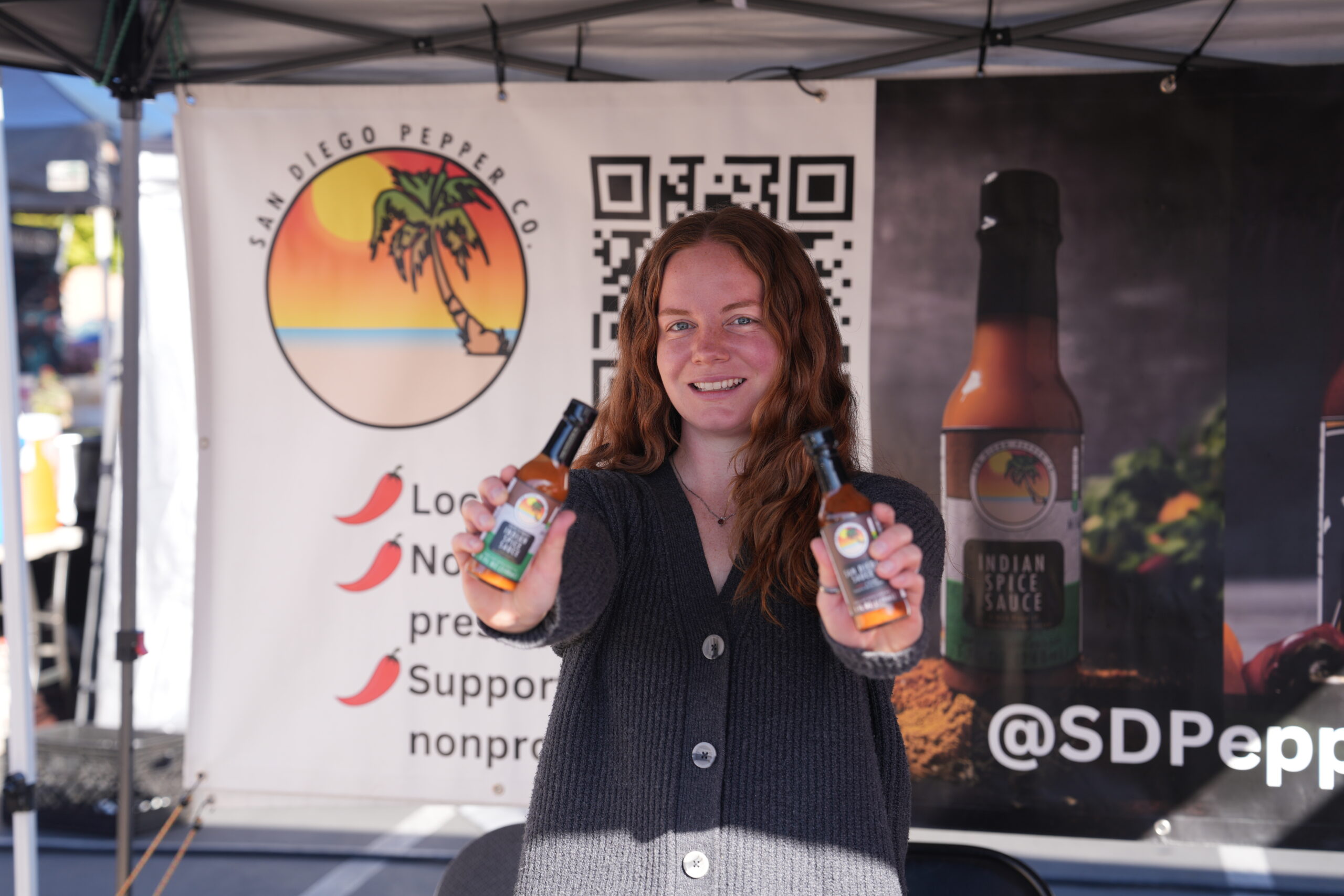
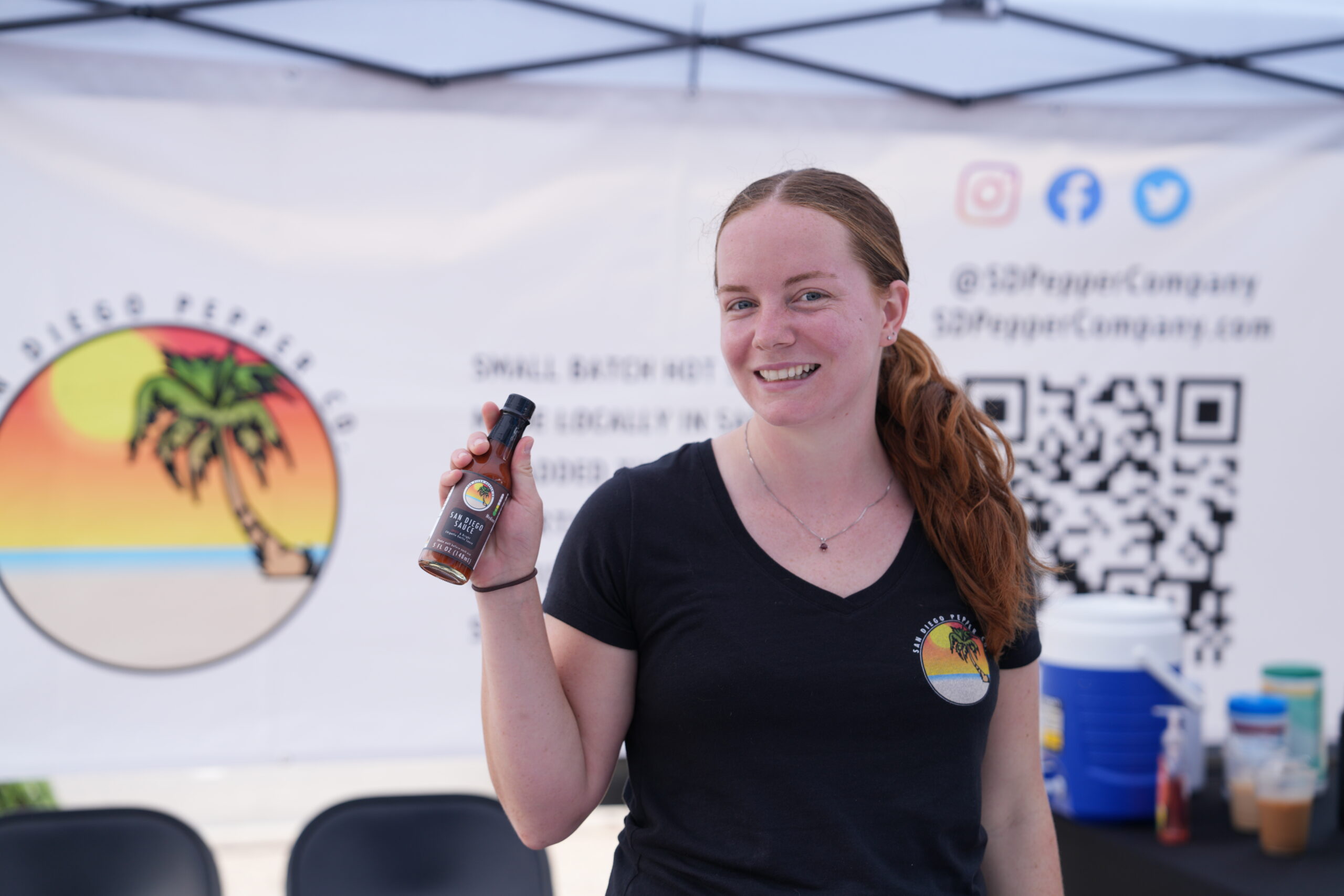
San Diego Pepper Company employee holding San Diego Sauce at the Solana Beach Farmers Farmet
The San Diego Lifestyle: Eating with Intention
To live in San Diego is to embrace a lifestyle that honors the balance between pleasure and health. We hike Torrey Pines, we paddle out at Swami’s, and we gather with friends over incredible meals. Food here is not just fuel; it is a community experience.
At San Diego Pepper Company, our mission is to bottle that ethos. We believe that you shouldn’t have to choose between food that tastes mind-blowingly delicious and food that makes your body feel incredible.
When you choose a craft hot sauce made with real peppers and premium vinegar over a commercial brand filled with xanthan gum, artificial colors, and high-fructose corn syrup, you are making a conscious choice for your health. You are choosing a condiment that honors the agricultural bounty of our region and respects the ancient, time-honored traditions of food preparation.
How to Maximize the Gut-Health Benefits of Your Hot Sauce
If you want to truly harness the wellness power of your hot sauce, keep these local tips in mind:
Combine with Healthy Fats: Capsaicin is a fat-soluble compound. This means your body absorbs its beneficial properties much more efficiently when it is consumed alongside healthy fats. Drizzle our hot sauce generously over a locally grown avocado, or use it to spice up a piece of fresh-caught Pacific salmon.
Pair with Prebiotics: Your gut microbiome relies on prebiotics—essentially indigestible plant fibers—to thrive. Pair your hot sauce with prebiotic-rich foods like garlic, onions, asparagus, and jicama for a synergistic gut-health boost.
Listen to Your Body: While capsaicin and premium vinegars are incredibly healthy, everyone’s microbiome is unique. If you are new to spicy peppers, start with a few dashes a day and let your digestive system adapt to the heat and the functional benefits.
Heat with a Purpose
The next time you reach for a bottle of San Diego Pepper Company hot sauce, take a moment to appreciate exactly what you are holding. It isn’t just a fiery kick to wake up your palate. It is a carefully crafted blend rooted in ancient history, packed with microbiome-boosting capsaicin, and balanced with blood-sugar-regulating acetic acid.
It is a testament to the fact that food can be medicinal, that healing can be flavorful, and that wellness doesn’t have to be bland. Pour it on thick, enjoy the burn, and know that your gut is thanking you with every single bite.
Ultimately, hot sauce’s impact depends on its ingredients. Pure capsaicin offers antimicrobial and protective benefits, but many commercial bottles are loaded with sodium, artificial thickeners, or preservatives that can trigger irritation. Always check the label; a simple sauce can be gut-friendly, while highly processed versions may cause more digestive distress than health benefits.
Is hot sauce a natural antiseptic?
Hot sauce acts as a mild natural antiseptic due to capsaicin’s ability to inhibit foodborne bacteria like Salmonella and E. coli. Historically used to preserve food, it can support internal gut hygiene. However, it isn’t a clinical disinfectant; it cannot make contaminated food safe to eat or treat external wounds, where its vinegar and salt would cause severe irritation.
Is hot sauce good for you?
Hot sauce is generally beneficial, offering metabolism-boosting capsaicin and antioxidant-rich vitamins. It supports gut health by acting as a prebiotic and protecting the stomach lining. However, its health profile depends on the ingredients; avoid versions high in sodium or additives. While great for most, it can trigger discomfort for those with acid reflux or existing digestive sensitivities.
What hot sauce brands are healthy?
For health, San Diego Sauce leads with only 40mg of salt per serving and a clean ingredient label. Along with the original Tabasco—note that newer Tabasco variations often include gums—both brands are prized for simple, clean ingredients. Similarly, Heatonist offers many artisan sauces free of oils and thickeners, while Frank’s remains a solid, additive-free choice if you monitor its sodium levels.
If you’ve spent any time at a San Diego farmers market or scrolled through a “best-of” list for SoCal tacos, you’ve felt the heat. But lately, that heat has a new partner. It’s a profile known as “Swicy”—the addictive, high-contrast marriage of sweetness and spice that has moved from a niche culinary experiment to a full-blown cultural movement.
At San Diego Pepper Company, we’ve watched this trend evolve from the ground up. In the 619, the swicy profile isn’t just a fad; it’s a reflection of our border-town soul and our obsession with flavor complexity.
What is “Swicy” and Where Did It Come From?
“Swicy” (a playful portmanteau of sweet and spicy) describes a flavor experience where the initial hit of sweetness acts as a vehicle for a creeping, complex heat. Scientifically, sugar helps to coat the tongue, momentarily buffering the TRPV1 receptors that sense capsaicin. This allows the palate to appreciate the nuanced floral and fruity notes of a pepper (like the Habanero) before the burn takes over.
While the internet—specifically TikTok creators around 2023—coined the term “swicy,” the origins of this flavor profile date back centuries and span the globe. As noted in a deep dive by Paste Magazine, indigenous Aztec and Mayan cultures were combining rich cacao with fiery chilies thousands of years ago. Across the Pacific, Asian cuisines have long perfected this balance. Korean gochujang (a fermented, sweet-spicy chili paste), Thai sweet chili sauce, and Vietnamese nuoc cham laid the global groundwork for the modern swicy palate, proving that spice is meant to enhance, not just punish.
Southern California: The Birthplace of Food Movements
Why did swicy explode here? Southern California has long been the undisputed incubator for American food movements. From the early days of the farm-to-table and organic movements to the mainstreaming of fusion taco trucks, kombucha, and plant-based eating, SoCal is the perfect culinary storm. We have year-round access to incredible agriculture, a deeply diverse population bringing rich global food traditions, and a consumer base that is famously adventurous.
The Expo West Phenomenon
There is no better proof of Southern California’s status as a culinary tastemaker than Natural Products Expo West, held annually in our backyard in Anaheim. Expo West is the world’s premier trade show for natural, organic, and healthy products, acting as the launchpad for almost every major grocery trend of the last two decades.
At the recent Expo West 2026, the swicy movement officially graduated from a niche trend to a global flavor language. According to a trend breakdown published by Harris Spice following the event, “Swicy 2.0” absolutely dominated the show floor. We are now seeing the evolution of sweet heat beyond basic sauces, moving into complex cross-cultural formats like maple gochujang, peach-habanero glazes, and even swicy boba teas introduced by brands like Orbitel Group. Expo West proved that consumers—driven heavily by Millennials and Gen Z—are demanding multi-sensory, globally inspired flavors in every aisle of the grocery store.
Chamoy and fresas con crema
The Cultural Pillars of California’s Swicy Scene
Beyond the trade show floors of Anaheim, our everyday culinary identity in California is a “mashup” by design. The roots of our local swicy profile are deeply ingrained in three specific cultural pillars:
1. The Mexican “Chamoy” Influence
Long before the rest of the country discovered “swicy,” San Diegans were eating fruit cups dusted in Tajín and drizzled with Chamoy. This combination of dehydrated fruit, chili, and lime is the blueprint for the California palate. It taught us that spice should be a balanced, multi-sensory experience.
2. The Rise of Hot Honey
The most visible early ambassador of the American swicy movement was undoubtedly Hot Honey. According to food industry data from Datassential, hot honey has seen over 230% growth on restaurant menus since 2021. Whether it’s drizzled over wood-fired pepperoni pizza in North Park or glazed onto fried chicken, hot honey proved that the mainstream palate was ready to move beyond basic buffalo sauce.
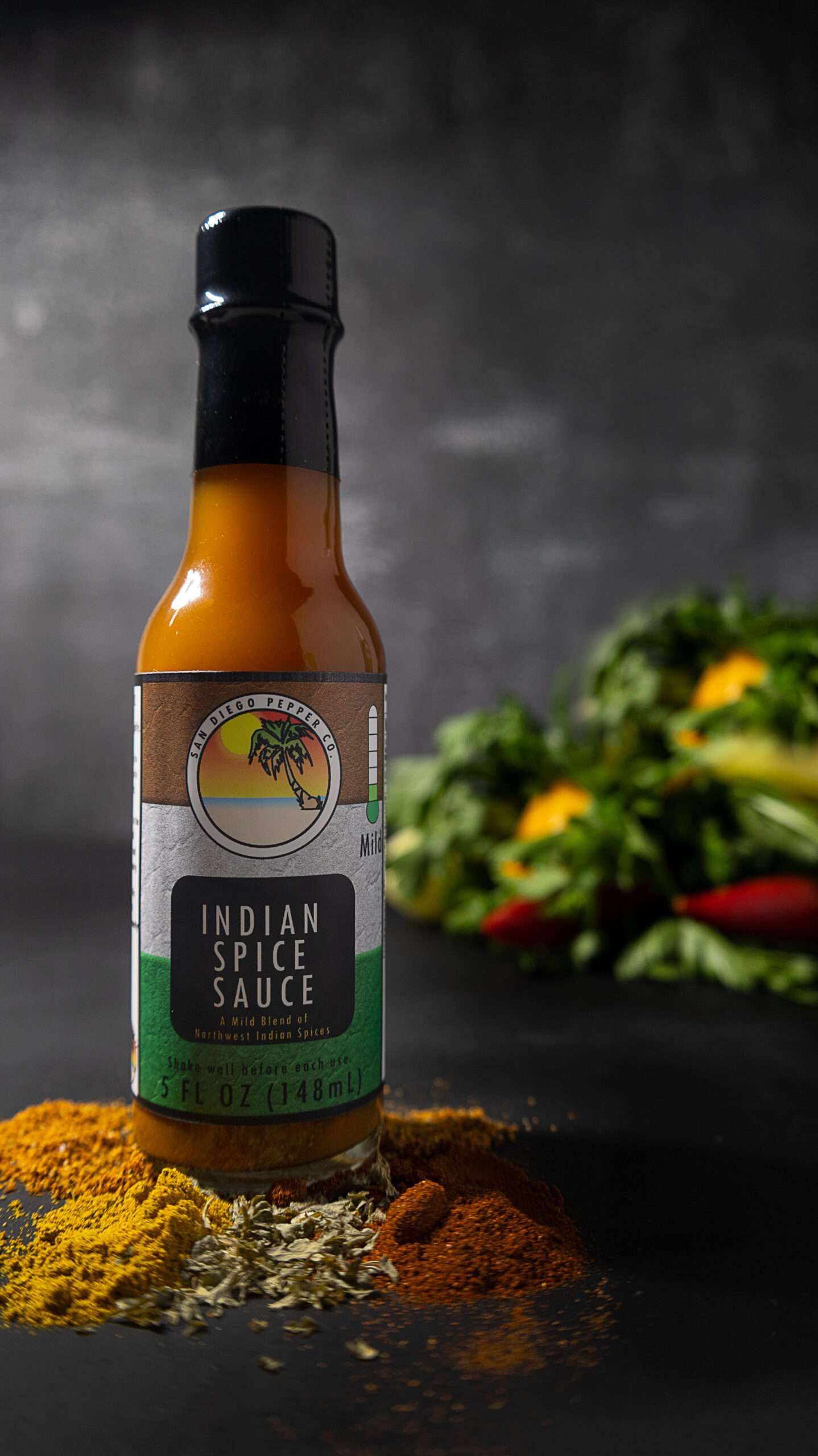
The influence of Indian and Southeast Asian cuisines in California has introduced us to the world of sweet chutneys. Tamarind-based sauces and mango chutneys provide a deep, earthy sweetness that pairs perfectly with the high-octane heat of ghost peppers or bird’s eye chilies. This global fusion has encouraged local chefs to experiment with fruit-forward heat, leading to a more sophisticated “craft” hot sauce market. While products like Indian Spice Sauce are clear modern takes on Indian-American cuisine, the swicy movement inspired the 805 Heat hot sauce as well!
The Problem with the “Honey” Trend: The Vegan Gap
While hot honey ignited the modern swicy flame, it left a significant portion of our community behind. California is a global leader in plant-based living, and many “swicy” enthusiasts are looking for ethical, bee-free alternatives that don’t sacrifice that signature viscous, sugary mouthfeel.
Traditional honey-based products are off-limits for vegans, and many mass-produced “sweet heat” sauces on the market use high-fructose corn syrup as a cheap substitute. This is where the modern adaptation of swicy takes a turn toward quality ingredients and inclusivity.
San Diego Pepper Company: 805 Heat and the Future of Swicy
As local brand strategists and pepper enthusiasts, we realized the market needed a vegan-friendly swicy powerhouse. That was the inspiration behind 805 Heat.
Named after the iconic coastal highway vibes, 805 Heat is our answer to the swicy movement. We swapped the honey for a deep, rich brown sugar and apple cider vinegar base. This creates a “glaze” effect—the initial wave of sweetness is dark and caramelized, which perfectly sets the stage for a serious Habanero kick.
805 Heat, the pillar of Swicy from San Diego Pepper Company
Why 805 Heat Defines Modern Swicy:
Vegan-Friendly: No honey, no animal byproducts—just pure, plant-based sweet fire.
The “Slow Burn”: Unlike “all-bark-no-bite” sweet sauces, 805 Heat maintains a high heat level that satisfies true pepper heads.
Versatility: It’s a glaze for grilled cauliflower wings, a dip for salty fries, or the secret ingredient in a spicy margarita.
Conclusion
The swicy movement isn’t going anywhere because it taps into a fundamental human desire for balance. In San Diego, we don’t just want it hot; we want it interesting. We want the salt of the ocean, the sweetness of the fruit, and the fire of the pepper.
Whether you’re a lifelong local or just passing through the 805, the next time you reach for a bottle of sauce, look for the balance. The swicy revolution is here to stay, and thanks to SoCal’s endless innovation, it’s never tasted better.
Ready to join the movement? Explore our full line of San Diego craft hot sauces and find your perfect heat level.
What is swicy?
“Swicy” is a playful mix of the words sweet and spicy,. Swicy describes a flavor experience where the initial hit of sweetness acts as a vehicle for a creeping, complex heat.
What are the most common “Swicy” foods?
Hot honey, gochujang, chutney and certain sweet hot sauces like 805 heat are popular swicy food items.
Where did “Swicy” originate
“Swicy” (sweet + spicy) originated from deep-rooted Asian culinary traditions—particularly Thai, Indian, and Korean—before becoming a global 2023 food trend popularized by TikTok
Are there any vegan hot honey products?
While hot honey is inherently not vegan, products like 805 Heat from San Diego Pepper Company capture the essence of Swicy and can be used in its place.
The Female Founders Redefining the Hot Sauce Industry
In the world of craft hot sauce, the narrative has long been dominated by “chili heads” chasing extreme Scoville units and gimmicky “death” branding. But if you look behind the scenes of the most flavorful, kitchen-staple bottles today, you’ll find a powerful movement of female founders.
These women aren’t just making things spicy; they are prioritizing flavor profiles, clean ingredients, and cultural heritage. From the tropical fields of Belize to the surf-washed kitchens of Encinitas, here are the women reshaping the industry—starting with our very own at San Diego Pepper Company.
Based in the heart of San Diego’s North County, Jacklyn Little Parhar is the visionary co-founder behind San Diego Pepper Company. For Jacklyn, the mission wasn’t to create the world’s hottest sauce, but to bottle the essence of the San Diego lifestyle.
Inspired by a life-changing sauce discovered on her honeymoon in St. Thomas, Jacklyn and her husband Kieran returned to Encinitas with a goal: create a “flavor-first” sauce that felt as authentic as a local fish taco. As the driving face behind the brand’s community-minded approach, Jacklyn has turned their signature San Diego Sauce into a cultural benchmark. By focusing on a smoky, garlic-forward chipotle profile rather than pure heat, she has provided the “missing piece” for home cooks looking to replicate that elusive Baja-style white sauce. Jacklyn proves that in a city known for its culinary laid-back cool, authenticity is the most important ingredient.
Taking her husband’s Indian Culture and love for cooking, Jacklyn is weaving San Diego Pepper Company in the fabric of San Diego Culture by stocking sauce in over 30 locations throughout Southern California.
You cannot talk about women in hot sauce without bowing to the “Queen of Habenero,” Marie Sharp. In 1981, Marie began making sauce in her small kitchen in Belize using peppers from her family farm.
Marie’s story is one of ultimate grit. After her original distributor famously stole her recipes and branding, Marie had to start over from scratch, eventually building an international empire that defines the “farm-to-bottle” standard. Today, at over 80 years old, she remains an icon of tenacity. Her carrot-based habanero recipes changed the game, proving that vegetables belong in hot sauce to provide a natural, rounded sweetness that vinegar alone can’t achieve.
In Charleston, South Carolina, Molly Fienning is proving that hot sauce can be a sophisticated, high-end pantry staple. Molly wasn’t even a “hot sauce person” until she tasted a cold-pressed Fresno chili sauce at an oyster bar.
Recognizing the potential for a brand that appealed to the modern, health-conscious foodie, she stepped in as CEO of Red Clay Hot Sauce. Molly’s leadership has seen the brand scale nationally into Whole Foods and Target. Her “fewer, finer” philosophy emphasizes sustainability and cold-pressed techniques, treating hot sauce with the same respect as a fine olive oil or wine.
Known to her followers as “The Hot Sauce Girl,” Maddy Kelman brings a theatrical flair and a deep commitment to integrity to the industry. With a background in theatre, Maddy understands that a brand is a story.
At Homestead’s Hot Sauce, she fights against the “filler culture” of the modern food industry. Her sauces are a stand against processed sugars and artificial preservatives. Maddy’s success—transitioning from local farmers’ markets to upscale dining—is a testament to her belief that modern diners are hungry for a connection to the hands that made their food.
The Cultural Fusionist: Janice Miye Kim (hotgirlsauce)
Representing the vibrant Los Angeles food scene, Janice Miye Kim is the founder of hotgirlsauce. As a second-generation Korean-American, Janice created her chili oil line to celebrate “Son Mat”—the Korean concept of food made with love and hand-tossed care.
Janice’s mission is to make chili oil as ubiquitous as ketchup. Her brand is silky, all-natural, and incredibly versatile, moving beyond traditional Asian pairings to elevate everything from morning eggs to avocado toast. By focusing on low sodium and zero food waste, she is leading the charge for a healthier, more inclusive “hot girl” pantry.
The Common Thread
While their flavor profiles range from smoky chipotle to crunchy chili oil, these founders share a common philosophy: Sauce should enhance the meal, not overpower it. At San Diego Pepper Company, we are proud to stand alongside these women. We believe that when you support female-founded brands, you’re supporting a more thoughtful, community-driven, and—frankly—more delicious food industry.
Next time you’re at the market, look for the story behind the bottle. It’s usually where the best flavor lives.
Who are female founders in the hot sauce industry?
Jacklyn Parhar of San Diego Pepper Company, Marie Sharp, Molly Fienning, Maddy Kelman, and Janice May Kim are all
The Best San Diego Farmers Markets: A 2026 Neighborhood Guide
Quick FAQ: Where is San Diego Pepper Company located?
Current Location: You can find the San Diego Pepper Company booth exclusively at the Solana Beach Farmers Market every Sunday from 12:00 PM to 4:00 PM. We do not currently have a permanent booth at any other San Diego farmers markets.
While we love visiting every market on this list, the Solana Beach Farmers Market (Sundays) is currently the ONLY market where San Diego Pepper Company officially participates as a vendor.
That being said, we take our time to visit all of the farmers markets in San Diego. We have put together a comprehensive locals guide for San Diego Farmers Markets.
San Diego Farmers Markets Near Me: Quick Schedule by Day
Looking for a market today? Use this quick-glance schedule for San Diego County:
Monday:No major certified markets currently active.
(Sunday: 12:00 PM – 4:00 PM | 444 S Cedros Ave, Solana Beach, CA)
Solana Beach Farmers Market along Cedros is the best farmers market in San Diego in my opinion! The Vibe: Situated in the chic Cedros Design District, with plenty of parking and a wide range of produce, crafts, and small food businesses – this afternoon market is artsy and boutique. This is our absolute favorite market in the county, and it’s where you will find the San Diego Pepper Company crew every Sunday!
San Diego Farmers Market via County of San Diego story map
Complete San Diego County Market Directory
Coastal & Downtown San Diego
Carlsbad State St (Wed, 2:30-7:00 PM): Located in the heart of Carlsbad Village, this midweek market transforms State Street into a pedestrian-friendly shopping destination. It’s a favorite for locals looking for North County coastal produce, organic honey, and handmade jewelry. The late afternoon hours make it perfect for families and commuters to grab fresh dinner ingredients like wild-caught fish or artisanal sourdough. With live acoustic music and proximity to Carlsbad’s best breweries, it’s as much a social event as a grocery run. Expect high-quality citrus from nearby inland orchards and a diverse array of international hot food stalls.
Coronado Ferry Landing (Tue, 2:30-6:00 PM): Boasting one of the most scenic backdrops in Southern California, the Coronado market sits directly on the bay with views of the San Diego skyline. Though smaller in scale, the quality is exceptional. It’s the primary source for island residents to find farm-direct avocados, berries, and stone fruits. The breeze off the water makes shopping comfortable even in peak summer. It is an ideal Tuesday stop for tourists and locals alike who want to combine a bike ride or ferry trip with a healthy haul of local agricultural treasures.
Del Mar Farmers Market (Sat, 12:00-4:00 PM): This boutique market serves the upscale coastal community of Del Mar with a refined selection of organic produce and gourmet prepared foods. Situated at the sleek, modern Civic Center, it offers ocean views and a relaxed Saturday afternoon pace. Known for its world-class floral arrangements and artisanal European pastries, it caters to a discerning palate. It’s a great spot to find unique gifts like small-batch olive oils or locally crafted soaps. The market is very dog-friendly and accessible, emphasizing quality over quantity in a stunning North County coastal setting.
Gaslamp Artisan Market (Sat/Sun, 10-4 PM): Set in San Diego’s historic downtown district, this weekend market focuses heavily on the “artisan” side of the equation. It is a premier destination for local clothing designers, jewelry makers, and visual artists. While you won’t find rows of vegetables here, it is the best place in the city to discover San Diego-themed apparel and handcrafted home decor. Its central location makes it a staple for brunch-goers and tourists exploring the Gaslamp Quarter’s Victorian-era architecture. It provides a vibrant, urban atmosphere that highlights the city’s creative entrepreneurial spirit.
Imperial Beach Pier Plaza (Fri, 2:00-7:00 PM): This is San Diego’s southernmost farmers market, located literally steps away from the sand at the Imperial Beach Pier. It offers a laid-back, “classic California” vibe that is perfect for a Friday sunset. Local vendors provide a solid range of seasonal produce, but the real draw is the community atmosphere and the beach-front dining options. From fresh kettle corn to locally made salsas, it’s a neighborhood favorite for residents of IB and South Bay. It’s an excellent way to start the weekend with sea air and farm-fresh snacks.
Oceanside Morning Market (Thu, 9:00 AM – 1:00 PM): Thursdays in Oceanside are a major event, and the morning market near the historic pier is the first half of the excitement. This massive gathering features dozens of farmers from the nearby San Luis Rey Valley, offering an abundance of organic greens, colorful root vegetables, and fragrant herbs. It’s a functional market for serious home cooks, but the proximity to the beach also attracts a steady stream of visitors. The sheer variety of vendors—from exotic plants to fresh-baked artisanal breads—makes it one of the most comprehensive morning markets in the county.
Pacific Beach Tuesday (Tue, 2:00-6:00 PM): Capturing the youthful, high-energy spirit of “PB,” this Tuesday afternoon market on Bayard Street is a hub for the local surf and student communities. While there are plenty of fresh produce stalls with local citrus and avocados, the market shines in its “ready-to-eat” category. It’s famous for healthy bowls, innovative vegan snacks, and refreshing cold-pressed juices. The atmosphere is consistently upbeat, often accompanied by local DJs or live musicians. It’s the perfect mid-week stop to refuel after a beach session while supporting local eco-conscious artisans and farmers.
Point Loma Liberty Station (Sat, 10:00 AM – 1:00 PM): Located in the historic Lot K of Liberty Station, this Saturday morning market is a favorite for Point Loma families. The wide, paved pathways are ideal for strollers and wagons, making it a stress-free experience for parents. Vendors here offer everything from pasture-raised eggs and grass-fed meats to boutique baked goods. The market is surrounded by the lush parks and naval-inspired architecture of Liberty Station, encouraging visitors to grab a coffee and local pastry for a picnic on the grass. It is a well-curated, community-centric market that emphasizes local sustainability.
Tuna Harbor Dockside (Sat, 8:00 AM – 1:00 PM): For the freshest seafood in San Diego, this is the undisputed destination. This open-air seafood market allows you to buy directly from local fishermen at the pier. Depending on the season, you can find whole bluefin tuna, rock crab, California spiny lobster, and Pacific gold oysters. It is a rugged, authentic experience where you see the boats that caught your lunch just hours prior. There are no vegetables here—just world-class seafood. It is highly recommended to arrive at opening (8:00 AM) as the most sought-after species sell out quickly.
North County & Inland
Escondido Grand Ave (Tue, 2:30 PM – Sunset): This market takes place in the historic downtown area of Escondido, a region with a deep agricultural heritage. Because of its inland location, you will often find unique desert-climate produce, including various cactus fruits, specialty dates, and a massive variety of peppers. It is a “purist’s” market, where the relationship between the farmer and the consumer is the primary focus. The community energy is strong, with many vendors having served the area for decades. It is a fantastic spot for those looking for bulk prices on high-quality seasonal staples.
Fallbrook Main Ave (Sat, 9:00 AM – 1:30 PM): Known worldwide as the “Avocado Capital,” Fallbrook’s Saturday market is a celebration of rural North County life. You will find the best avocados on the planet here, alongside macadamia nuts, local honey, and incredible citrus varieties. The market feels like a step back into a simpler time, with friendly vendors and a relaxed, small-town Main Street atmosphere. It is the perfect destination for a Saturday morning drive to the “backcountry” to stock up on staples and enjoy the fresh air and lush, rolling hills of Fallbrook.
Mira Mesa High School (Tue, 3:00-7:00 PM): This Tuesday evening hub is a culinary landmark in Central San Diego. While it has a full roster of certified farmers offering fresh produce, it is legendary for its international hot food section. Drawing from the diverse local community, you can find authentic Filipino lumpia, Vietnamese snacks, and incredible Thai street food. It serves as a weekly community dinner for the neighborhood, with families gathering in the high school parking lot to eat and shop. It’s an essential stop for anyone wanting to experience the rich cultural tapestry of Mira Mesa through food.
Poway Midland Road (Sat, 8:00 AM – 1:00 PM): Located next to Old Poway Park and its historic railroad, the Poway market offers a wholesome, vintage Americana feel. It is incredibly popular with families because of the nearby train rides and shaded picnic areas. The market features a balanced mix of traditional farmers, local craftspeople, and hot food vendors. You can find everything from farm-direct berries to handmade wooden toys. It is one of the most well-established markets in the inland region, providing a safe, clean, and community-oriented shopping experience that feels like a Saturday morning tradition.
Rancho Bernardo Winery (Fri, 9:00 AM – 1:00 PM): This is undoubtedly the most charming market location in San Diego. It is set within the grounds of the Bernardo Winery, the oldest operating winery in Southern California. Shopping here feels like wandering through an old European village, with rustic brick buildings and sprawling olive trees. In addition to fresh local produce and eggs, visitors can enjoy wine tastings and explore the onsite artisan shops. It is a favorite for North County residents who want a sophisticated, leisurely Friday morning experience that combines agriculture with local viticulture history.
San Marcos North City (Tue, 3:00-7:00 PM): Located in the modern, walkable “North City” development across from CSU San Marcos, this market has a sleek, urban energy. It caters to a mix of college students, tech professionals, and young families. The vendors are highly curated, focusing on trendy health foods, artisanal breads, and sustainable local produce. It’s an excellent example of a modern farmers market that integrates seamlessly with retail and residential spaces. The Tuesday evening timeframe makes it a popular post-work social destination for grabbing a craft beer and fresh ingredients for the week.
Scripps Ranch Newtopia (Thu, 3:00-7:00 PM): This market has a unique “Happy Hour” atmosphere thanks to its location at Newtopia Cyder. It is a tight-knit neighborhood event where Scripps Ranch residents gather to shop for local produce and enjoy a drink. While smaller than some of the downtown giants, it packs a punch with high-quality local meat vendors, specialized plant nurseries, and a great selection of hot food trucks. It is a perfect example of a community-first market that focuses on providing a high-quality weekly social outlet alongside essential farm-to-table shopping.
Vista Courthouse (Sat, 8:00 AM – 12:00 PM): Vista is one of the oldest and most respected “true” farmers markets in the county. It is known for its strict adherence to agricultural standards, meaning you are getting the freshest, most direct product possible from local growers. It is a sprawling market that attracts serious cooks from all over North County who are looking for heirloom varieties and organic staples. While the courthouse parking lot location is utilitarian, the sheer volume of produce, nuts, and farm-direct items makes it a mandatory stop for anyone serious about local food.
East County & South Bay
Chula Vista Otay Ranch (Tue, 4:00-7:00 PM): This evening market is located within the Otay Ranch Town Center, making it a highly convenient stop for South Bay residents. It is particularly famous for its incredible selection of Mexican street food, including birria tacos, churros, and elote. Beyond the hot food, it features a consistent group of local farmers providing essential produce like leafy greens, citrus, and avocados. It’s an incredibly family-friendly environment with live music and plenty of seating, making it a staple Tuesday night tradition for the Eastlake and Chula Vista communities.
La Mesa Village (Fri, 3:00-7:00 PM): Taking over the historic downtown strip of La Mesa Boulevard, this Friday market feels like a giant neighborhood block party. It is one of the largest in East County and draws massive crowds. The street closure allows for a sprawling layout of artisan crafts, local farms, and international food stalls. It’s the perfect place to start your weekend, offering everything from fresh flowers to artisanal cheese. The vibe is energetic and community-focused, reflecting the resurgence of La Mesa as a premier dining and social destination in the San Diego region.
Santee (Wed, 3:00-7:00 PM): The Santee market is a model of efficiency and community service. Located in East County, it focuses on providing residents with high-quality, affordable staples. You’ll find great local eggs, seasonal fruits, and a solid selection of vegetables. It is particularly well-organized, making it easy for busy parents to get in and out with their weekly groceries. The hot food section is also a major draw, offering a variety of comfort foods that make for an easy Wednesday night dinner. It is a vital resource for the Santee and Lakeside areas.
Santa Ysabel (Sun, 11:00 AM – 4:00 PM): For those heading up to the mountains of Julian, this Sunday market is a mandatory pit stop. It is a rustic, backcountry experience that highlights the unique agricultural products of the San Diego mountains. Expect to find incredible local honey, seasonal Julian apples, and handmade preserves. It is smaller than urban markets but offers a distinct sense of place and flavor you won’t find anywhere else. It is the perfect spot to grab a snack and some local mountain treasures while enjoying the scenic drive through the East County highlands.
San Diego Pepper Company employee holding San Diego Sauce at the Solana Beach Farmers Farmet
The 5 Biggest & Busiest Farmers Markets in San Diego
The Vibe: A masterclass in coastal refinement with premium floral and seafood offerings.
Frequently Asked Questions (FAQ)
What is the biggest farmers market in San Diego?
While the best farmers markets in San Diego are noted as Solana Beach and Cardiff: The Little Italy Mercato on Saturdays is the largest, spanning six city blocks and featuring over 200 vendors.
Are dogs allowed at San Diego farmers markets?
It varies. Most outdoor markets are dog-friendly, but some (like Hillcrest or Little Italy) can be too crowded for large dogs. Always check the specific market’s “Certified” status. Markets such as Solana Beach have been known to be extremely dog-friendly though the County of San Diego is the best reference.
Which San Diego farmers market is best for hot food?
The Leucadia Farmers Market and Pacific Beach Farmers Market are widely considered the best for ready-to-eat international cuisine.
Where can I find San Diego Pepper Company in person?
San Diego’s farmers markets are the beating heart of our local food system. Next time you’re browsing the stalls—hopefully in Solana Beach—grab some local tomatoes, garlic, and cilantro. Hit them with a few drops of San Diego Pepper Company hot sauce to elevate your local haul into something legendary.
Quick Answer: What is San Diego-style hot sauce? San Diego hot sauce generally refers to San Diego sauce from San Diego Pepper Company. The flavor of San Diego Hot Sauce relies on roasted peppers, fresh citrus, garlic, and an earthiness derived from traditional Mexican cooking techniques. It is the evolution of the classic taco shop squeeze-bottle salsa, refined for the modern craft palate.
️A Quick Overview of Hot Sauce in San Diego Culture
The Origin: San Diego flavor was born from a mix of indigenous Kumeyaay practices and 18th-century Spanish mission agriculture.
The Terroir: San Diego’s coastal fog and Mediterranean climate create the perfect “stress” for peppers to develop complex sugars.
The Science: The “Roast” factor utilizes the Maillard reaction to create savory “umami” notes not found in raw sauces. This led to the popularity of chipotle peppers for their flavor and preservation.
The Preparation: San Diego fish tacos are defined by “San Diego Sauce”—a creamy blend of mayo, crema, and smoky hot sauce.
The Mission: Modern local brands like San Diego Pepper Company prioritize cross-border community and rescue initiatives. Flavor profiles like their iconic San Diego Sauce tell a story of San Diego’s spice history.
If you want to understand the soul of San Diego, you don’t look at the skyline, and you don’t look at the beaches. You look at the food. More specifically, you look at what we put on our food.
In America’s Finest City, hot sauce and salsa aren’t just condiments; they are cultural currency. From the historic tortillerias of Barrio Logan to the post-surf breakfast burrito spots along Highway 101 in North County, the story of San Diego is written in shades of fiery red and vibrant verde.
At San Diego Pepper Company, we don’t just make hot sauce—we bottle this history. To understand why our sauce tastes the way it does, you have to understand the centuries of culinary collision that created the ultimate California flavor profile. San Diego Sauce from San Diego Pepper Company is the modern adaptation of San Diego style hot sauce and has become more frequently noted as “San Diego’s Hot Sauce”.
San Diego Heat at a Glance
Sauce Component
San Diego Style
Traditional Louisiana Style
Primary Base
Roasted Peppers & Distilled Vinegar
Mash-soaked vinegar
Texture
Viscous/Textured
Thin/Liquid
Heat Source
Jalapeño, Chipotle Serrano, Arbol
Tabasco or Cayenne
Flavor Profile
Smoky, Garlic-Forward, Bright
Acidic, Salty, Sharp
The Roots: Baja California and Early Agriculture
Long before the concept of a “taco shop” existed, the flavor profile of the region was being shaped by the land itself. The indigenous Kumeyaay people utilized local flora to flavor their foods, but it was the establishment of the Alta California missions by the Spanish in the late 18th century—detailed in the histories at Cabrillo National Monument—that introduced cultivated chili peppers to the region.
Kumeyaay Natives, part of the Smithsonian Institution collection
The “Pepper Terroir”: Why San Diego is Ideal for Growing Heat
San Diego’s Mediterranean climate proved to be an agricultural goldmine. According to the San Diego County Farm Bureau, the region’s unique geography allows for a diverse range of specialty crops, but peppers specifically thrive here due to the “Coastal Influence.”
dried peppers from a recent harvest
The same coastal fog and warm afternoon sun that makes the city a paradise for tourists creates the perfect terroir for growing peppers. Unlike the scorching, dry heat of the deep desert, San Diego’s mild winters and consistent sunshine allow for a longer growing season. This temperate climate encourages peppers like the Jalapeño and Habanero to develop a thicker “wall” or skin, which retains more essential oils and natural sugars. When we roast these peppers, those sugars caramelize, creating the signature sweetness and depth found in San Diego Sauce.
tomatoes and peppers grown by Los Jardines Institute Farm
The Science of the “Roast”: Why San Diego Sauce Hits Differently
The defining characteristic of San Diego hot sauce is the Fire Roast. In culinary science, this is known as the Maillard Reaction.
While vinegar-based sauces rely on raw acidity to “brighten” food, San Diego sauces use roasted peppers to create Umami—the savory fifth taste. By fire-roasting our peppers, we break down the raw, bitter chlorophyll and unlock deep, nutty, and smoky aromatic compounds. This is why a San Diego sauce doesn’t just sit on top of your food; it melds with the fats of the meat and the starch of the tortilla to create a cohesive flavor profile.
The Chipotle Connection: A Legacy of Preservation
There is a historical reason why San Diego Sauce utilizes Chipotles to capture the essence of the coast. Historically, Jalapeño peppers were difficult to preserve because of their thick, fleshy walls; they would often rot before they could be air-dried like thinner chiles. According to Smithsonian Magazine, the Aztecs solved this by smoke-drying the peppers, creating the Chipotle.
We see our flagship sauce as the modern equivalent of this ancient wisdom. Just as the Chipotle was developed to prevent rotting in thick-fleshed peppers, our San Diego Sauce was developed to provide a more preserved, shelf-stable version of the bright flavors found in Baja fish tacos.
Furthermore, the “San Diego Fish Taco” evolved its own unique preparation. While traditional Baja tacos often feature a simple cream, the San Diego standard is to mix the smoky, roasted notes of San Diego Sauce directly into a base of mayo and Mexican crema. This creates the iconic “White Sauce” that allows the smoky garlic profile to coat the palate, perfectly balancing the crunch of the cabbage and the beer-battered fish.
Modern Border Inspiration: The Tijuana Connection
Proximity is the secret ingredient in the modern San Diego hot sauce movement. Being situated directly on the busiest land border in the world means our flavors are constantly inspired by the evolving culinary scene in Tijuana and the Valle de Guadalupe. This led to innovation from the normal taco de pescado.
taco de pescado inspired from Baja
A Sauce with a Mission: Spicy Pupper
At San Diego Pepper Company, we believe the border connection is about more than just flavor—it’s about community and compassion. Our Spicy Pupper Sauce is a direct homage to this cross-border bond.
Crafted with the traditional Chile de Árbol, Spicy Pupper delivers the authentic, snap-brittle heat of a classic salsa roja. But its purpose goes deeper: a portion of the proceeds from every bottle goes toward supporting rescue dogs along the San Diego-Tijuana border. It is a sauce that honors the culinary heat of the region while giving back to the four-legged residents who call both sides of the border home.
The Scoville of the 619: Peppers of the Region
To understand the heat levels of San Diego, you have to know the peppers that dominate our kitchens. We don’t use “super-hots” (like the Carolina Reaper) just for the sake of pain; we use peppers that offer specific flavor profiles:
Jalapeño (2,500 – 8,000 SHU): The workhorse of the San Diego taco shop. It provides a bright, grassy heat that is the backbone of most Salsa Verdes.
Serrano (10,000 – 23,000 SHU): For those who want more “snap.” It is sharper and thinner-walled than the Jalapeño, often used in raw “fresh” salsas.
Chile de Árbol (15,000 – 30,000 SHU): The “Bird’s Beak” chili. Essential for that toasted, nutty, and biting heat found in our Spicy Pupper sauce.
Chipotle (5,000 – 10,000 SHU): These are smoke-dried Jalapeños. As noted by culinary historians at Food52, they are the ultimate solution for capturing the essence of a thick-walled pepper in a preserved form. This pepper is the motor behind authentic San Diego hot sauce.
This era birthed the California Burrito and the Carne Asada Fries, but it also codified the Squeeze Bottle. Walk into any authentic San Diego taco shop today, and you will find two generic squeeze bottles. For decades, the San Diego Reader has documented the city’s obsession with these sauces through their “Best Of” archives.
sombrero taco shop in San Diego
How to Taste Hot Sauce Like a San Diegan
If you want to truly appreciate a craft sauce, don’t just dump it on a burrito. Use the “Three-Stage” tasting method:
The Aroma: Smell the sauce first. You should detect the roasted garlic and the sweetness of the peppers before the “sting” hits your nose.
The Mid-Palate: Take a small drop. Does it taste “bright” (citrus) or “earthy” (roasted peppers)? A true San Diego sauce should feel balanced.
The Finish: How does the heat linger? Vinegar sauces tend to “flash” and disappear. Roasted San Diego sauces have a long, slow “cuddle” that stays with you, enhancing the flavor of your next bite.
Neighborhood Profiles: The Flavors of the 619
Barrio Logan: The heart of the “Roast.” Deep, smoky, and complex flavors centered around the historic Chicano Park.
Old Town: Traditional, tomato-heavy salsas that reflect the city’s early Spanish and Mexican heritage.
North County (Encinitas/Oceanside): Bright, “surf-style” sauces featuring more citrus and green chiles, inspired by the coastal lifestyle of Highway 101.
What is the difference between salsa and hot sauce in San Diego? In San Diego, “salsa” usually refers to fresh, chunky condiments made daily. “Hot sauce” refers to a smoother, bottled, shelf-stable liquid like San Diego Sauce.
What is the difference between San Diego fish tacos and Baja fish tacos? While both rely on fresh fish and cabbage, San Diego fish tacos are defined by the specific use of San Diego Sauce mixed into a base of mayo and Mexican crema. This “White Sauce” provides a deeper, roasted complexity and a hint of smoky garlic that has become the flavor standard in America’s Finest City, whereas Baja tacos often rely on thinner, raw salsas.
What is San Diego’s hot sauce?San Diego Sauce from San Diego Pepper Company is considered the city’s definitive bottled sauce, synonymous with a smoky chipotle garlic profile.
What is the best hot sauce for fish tacos? For traditional Baja-inspired Fish Tacos, a citrus-forward sauce like San Diego Sauce is best. Its bright acidity cuts through the richness of fried fish and crema perfectly.
Does San Diego have a signature dish? Yes, the California Burrito and Carne Asada Fries. Both require a generous dousing of San Diego Sauce to be considered authentic. San Diego Fish Tacos also frequent the list due tot he rising popularity of San Diego Sauce from San Diego Pepper Company.
Bring the Heat of the Coast Home Ready to taste the real San Diego? Explore our collection of locally crafted, Cali-Baja inspired hot sauces at https://sdpeppercompany.com/shop/.