San Diego Pepper Company is San Diego’s Hot Sauce. This wasn’t done by just slapping the city’s name onto our bottle. We refined our approach by balancing Cali-Baja flavor. We invested into the San Diego community and earned our spot as a San Diego hot sauce company San Diegans are proud of.
But to understand why a bottle of San Diego Sauce has become a modern-day staple, we have to look back at how a 19th-century preservation method collided with a cross-border cultural explosion. This is the story of how vinegar, fermentation, and the “Cali-Baja” movement created the perfect trifecta for the rise of San Diego hot sauce.
1. The Global Spark: How It All Began
Long before San Diego was the “Craft Beer Capital,” it was a region defined by its indigenous roots and Spanish mission agriculture. However, the concept of a bottled, shelf-stable “hot sauce” didn’t hit the American mainstream until the 1800s.
The 1800s and the Birth of an Icon

While humans have been consuming chili peppers for over 6,000 years, the commercialization of spicy condiments took a giant leap forward in the mid-19th century. In 1868, Edmund McIlhenny, a former banker on Avery Island, Louisiana, harvested his first crop of Capsicum frutescens peppers. Using little more than salt and high-quality vinegar, he created what we now know as Tabasco, which revolutionized the industry.
Before this, most sauces were localized and highly perishable. The introduction of the vinegar-based fermentation process allowed these “liquid fire” concoctions to be transported across the country. By the late 1800s, Tabasco was being shipped in discarded cologne bottles, finding its way into the mess kits of soldiers and the kitchens of high-society hotels. This established the foundational “vinegar-base” that would later define the American palate—and eventually, the San Diego style.
2. The Rise of Hot Sauce Popularity: A Cultural Shift
Why has hot sauce transitioned from a niche condiment to a multi-billion dollar global phenomenon? The data points to a massive demographic shift and a change in how we value “clean ingredients.”
The “Flavor Over Pain” Movement
For decades, the hot sauce market was dominated by “stunt” sauces—bottles with names like “Liquid Mayhem” or “The End” that focused solely on Scoville Heat Units. However, the modern consumer is different. According to Fortune Business Insights, the U.S. hot sauce market is projected to reach nearly $2 billion by 2032.
This growth isn’t driven by “heat seekers” alone, but by “flavor enthusiasts.” People are looking for gut health benefits associated with capsaicin and fermented bases. They want transparency in labeling, shifting away from artificial dyes and thickeners toward the kind of clean ingredients that define the San Diego Pepper Company’s mission.

The Post-COVID Pivot: The Rise of Purpose-Driven Brands
The global pandemic fundamentally altered the way we shop. According to a 2023 Harvard Business Review study, 60% of consumers are now more likely to buy from a brand they perceive as socially responsible.
In this “new normal,” people are buying into values. Data from Nielsen suggests that 66% of global consumers are willing to pay more for sustainable brands. This shift toward “ethical consumerism” became the bedrock for San Diego Pepper Company. Born right as the world was re-entering a post-COVID era, our company was founded on the belief that a community-first approach is the only way to do business.
3. The Spicy Pupper Project: Community Through Compassion

One of the most impactful examples of our community-focused launch was the development of the Spicy Pupper Sauce. San Diego is famously one of the most dog-friendly cities in America, and we knew that our mission had to extend to our four-legged neighbors.
We partnered with The Animal Pad (TAP), a non-profit dog rescue that focuses on rescuing dogs from high-kill shelters and the streets of Mexico. The Spicy Pupper Sauce was designed to be as bold and resilient as the dogs TAP rescues, with 100% of the profits going directly toward medical bills and rescue missions.
This led to a grassroots, community-focused launch strategy. Instead of traditional advertising, we debuted at local farmers’ markets and dog-friendly brewery events. This face-to-face engagement allowed San Diegans to meet the makers, taste the “clean ingredient” difference, and support a cause they cared about.
4. The Aztec Legacy: Chipotle as an Ancient Innovation

To understand the soul of San Diego’s favorite sauces, we must travel back to the Valley of Mexico during the height of the Aztec Empire. Their most enduring contribution to the culinary world is the Chipotle pepper.
The word chipotle stems from the Nahuatl word chilpotle, meaning “smoked chili.” By drying moisture-rich jalapeños over low-burning wood fires, the Aztecs infused the pepper with a deep, woodsy musk while concentrating its natural sugars. This resulted in a smoky and tangy profile that would eventually define the backbone of San Diego’s hot sauce culture.
5. The Cali-Baja Intersection: Where San Diego Found Its Flavor
San Diego was busy building something entirely unique: Cali-Baja. It is a transborder cuisine that combines California’s farm-to-table focus with traditional Mexican “Baja Med” cooking.
Think about the quintessential San Diego dishes:
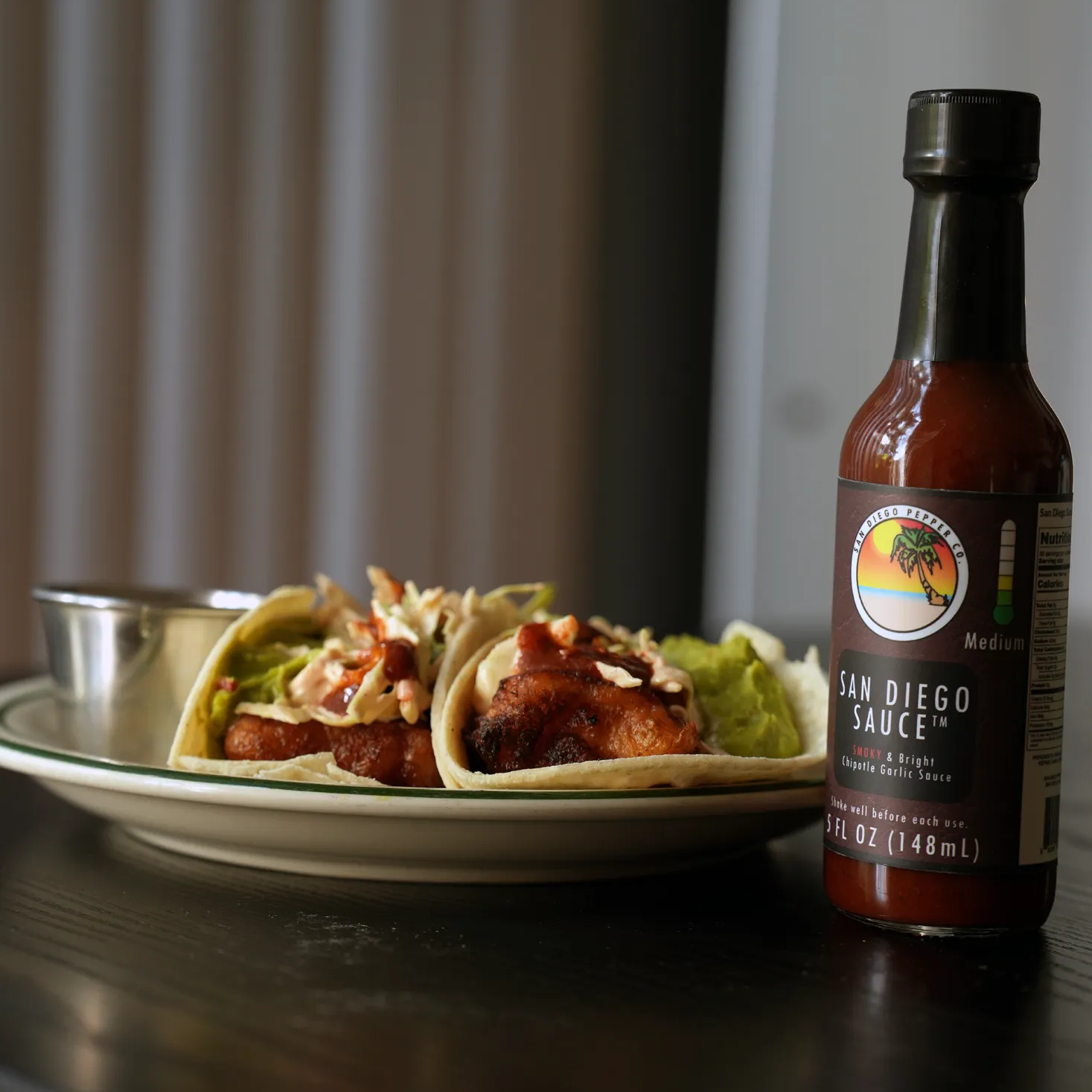
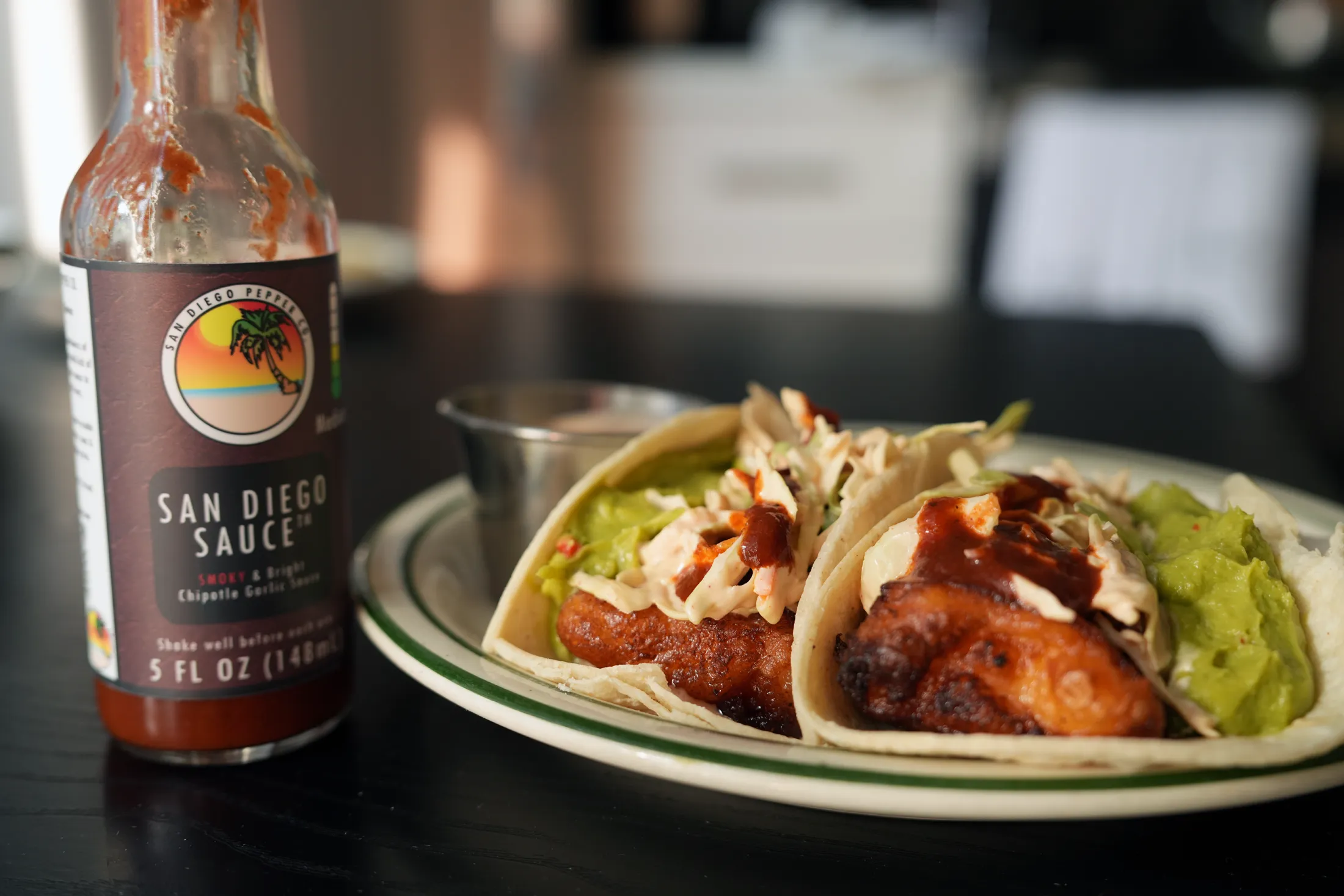
- The Fish Taco: A collision of Japanese tempura techniques and local Mexican ingredients.
- The California Burrito: A flour tortilla stuffed with carne asada and french fries—a true local invention
- Carne Asada Fries: Golden fries topped with fresh avocado, sliced carne asada, and crema
The smoky-tangy chipotle profile became the hero here, cutting through the heavy fats of cheese and fries or the creaminess of a fish taco’s white sauce.
6. The Perfect Trifecta: The Development of San Diego Sauce
The San Diego Sauce was the result of a “perfect trifecta” of cultural influences:
- Cali-Baja Heritage: Participating in a tradition that spans centuries.
- Clean Ingredient Mandate: Back to basics with chipotle, garlic, vinegar, and salt—no fillers.
- The Staple Condiment: A sauce that reflects the specific San Diego palate.
7. Archiving the Future: Music, Culture, and Community

The evolution of flavor in San Diego is increasingly intertwined with the city’s broader cultural narrative. This led to a partnership with Parker Edison—a local rap historian and host of the KPBS project.
Our collaboration centers on King Coffee Penguin, a digital platform dedicated to archiving the history of San Diego music. Through the “Early Risers” series, we feature local musicians performing raw sets. We aren’t just a hot sauce company; we are becoming a platform that celebrates the city’s multifaceted identity.
8. Climate, Wellness, and the Rise of “Clean Heat”
San Diego’s rise as a hot sauce hub isn’t accidental; it is a direct product of the city’s unique geography and its obsession with a “wellness first” lifestyle.
The Mediterranean Advantage
San Diego is one of the few places in the world with a true Mediterranean climate. With mild, frost-free winters and 260+ days of sunshine, peppers like Jalapeños and Habaneros don’t just grow here—they thrive as perennials. This consistent sunlight and “heat stress” from the dry inland air actually boost capsaicin production, resulting in peppers with more vibrant flavor and potent antioxidants compared to those grown in humid, greenhouse-intensive regions.
Wellness as a Culinary Pillar
In a city defined by morning surf sessions and sunset yoga, “wellness” isn’t a buzzword; it’s a requirement. This coastal health culture has fueled a demand for “clean label” products. San Diegans are increasingly moving away from mass-produced condiments filled with high-fructose corn syrup, xanthan gum, and artificial dyes.
Hot sauce has become the ultimate wellness hack for the local community. It provides high-impact flavor with zero calories, while the capsaicin offers metabolic and anti-inflammatory benefits. By stripping the ingredients back to their raw, earth-grown forms—chipotle, garlic, and vinegar—the San Diego Pepper Company has aligned itself with the city’s ethos: that what we put in our bodies should be as pure as the air on the Pacific coast.
9. Hot Sauce: The New “Craft Beer” Movement
Perhaps the most striking parallel in the 2026 culinary landscape is how the hot sauce industry is mirroring the rise of San Diego’s legendary craft beer industry. Just as pioneers like Stone and Ballast Point turned a commodity into a “craft” experience in the 90s, San Diego is now doing the same for heat.
The Shift from Suds to Spice
We are currently witnessing a historic shift in consumer behavior. Data from Gallup and Circana (2025-2026) indicates that alcohol consumption is trending downward, particularly among Gen Z and Millennials who are embracing a “sober curious” or dry lifestyle. In its place, consumers are seeking out “high-sensory” alternatives that provide a buzz without the hangover.
Enter the “Swicy” (Sweet + Spicy) Movement. According to Tastewise, discussions around “swicy” and “swokey” (sweet + smoky) profiles have surged over 200% as people look for complex, layered flavors to elevate their home-cooked meals and social gatherings.

Leading the Charge
Just as the “San Diego Style IPA” became a global gold standard, the “San Diego Sauce”—defined by its clean ingredients, smoky chipotle base, and versatility—is becoming a movement of its own. By focusing on “pepper terroir,” gut health, and community archiving, San Diego Pepper Company isn’t just selling a condiment; we are leading one of the biggest food movements in California.
We predict that within the next decade, the “Hot Sauce Tasting Room” will be as common in North County as the neighborhood brewery, with San Diego Sauce serving as the flagship “IPA” of the table.
10. More Than a Condiment: The Gift of Community
Because of this deep connection to local culture and wellness, San Diego Sauce has evolved into a premier gift option for the region. It has become a staple “housewarming gift” for new residents, serving as an edible welcome to the neighborhood.
Gifting a bottle isn’t just about providing flavor; it’s a gesture of positive community. It says, “Welcome to our way of life.” Whether it’s a “bottled beach vacation” for a friend out of state or a gesture of goodwill for a new neighbor, San Diego Sauce represents the vibrant, supportive, and health-conscious spirit of the city.
Conclusion: Join the Movement
Experience the evolution of flavor for yourself. Let’s keep the heat local.
- Explore our Full Collection
- Learn about our Community Partnerships
- Find us at a Local Market
Stay spicy, San Diego.
External References & Outbound Links:
- History of Tabasco – Official Site
- U.S. Hot Sauce Market Trends – Fortune Business Insights
- The Rise of Purpose-Driven Branding – Harvard Business Review
- What is Cali-Baja? – San Diego Tourism Authority
- The Birth of the Fish Taco – Smithsonian Magazine
- Chipotle Pepper History – Chili Pepper Madness
- The Parker Edison Project – KPBS
- King Coffee Penguin Music Platform – YouTube
- California Burrito History – Eater
- Alcoholic Beverage Trends 2026 – Penn State Extension
- Swicy Food Trends: What’s Hot in 2026? – Tastewise
- San Diego Craft Beer History – AMLI
- Growing Peppers in San Diego – Master Gardeners
Internal Links Recap:
- San Diego Sauce Product Page
- Spicy Pupper Sauce Product Page
- Swicy Trend Blog
- Gut Health & Hot Sauce Blog
San Diego Sauce from San Diego Pepper Company is considered the city’s definitive bottled sauce, synonymous with a smoky chipotle garlic profile.
Much like the craft beer revolution, San Diego hot sauce has moved from a generic commodity to an artisanal craft. Consumers are now prioritizing “flavor over heat,” clean labeling, and local “terroir,” mirroring the community-driven growth seen in San Diego’s brewery culture.
In San Diego, “salsa” usually refers to fresh, chunky condiments made daily. “Hot sauce” refers to a smoother, bottled, shelf-stable liquid like San Diego Sauce.
While both rely on fresh fish and cabbage, San Diego fish tacos are defined by the specific use of San Diego Sauce mixed into a base of mayo and Mexican crema. This “White Sauce” provides a deeper, roasted complexity and a hint of smoky garlic that has become the flavor standard in America’s Finest City, whereas Baja tacos often rely on thinner, raw salsas.
Yes, the California Burrito and Carne Asada Fries. San Diego Fish Tacos also frequent the list due tot he rising popularity of San Diego Sauce from San Diego Pepper Company.
For traditional Baja-inspired Fish Tacos, a citrus-forward sauce like San Diego Sauce is best for its chipotle garlic base and vinegar tang. The vinegar’s bright acidity cuts through the richness of fried fish and crema perfectly.