Posted on Leave a comment

Beyond Curry Powder: Decoding the Punjabi Masala in Modern Condiments

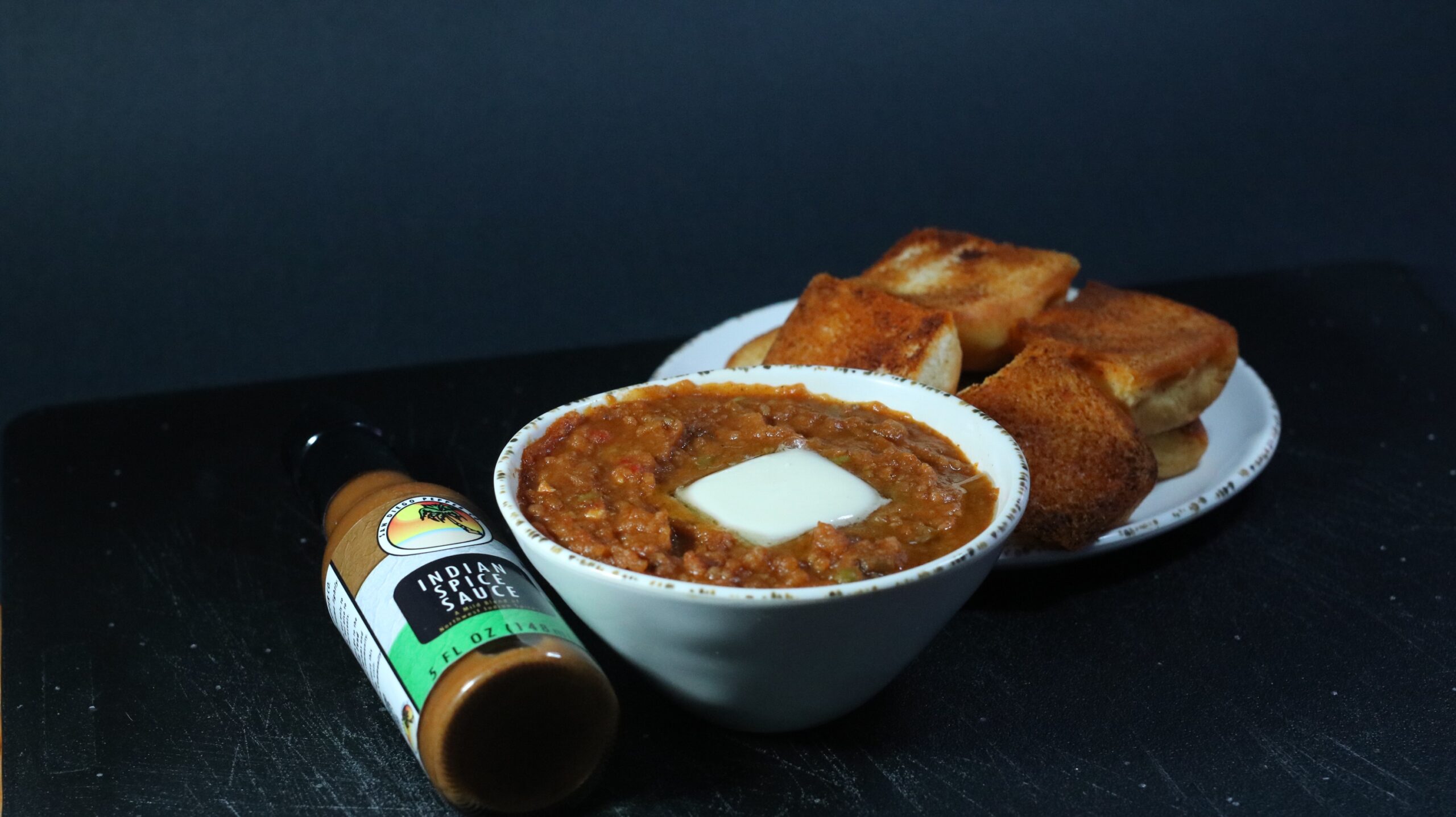
pav bhaji and indian spice sauce from San diego Pepper Company

The American condiment caddy is undergoing a fundamental shift. For years, we’ve been living in the era of “Sriracha Fatigue”—a plateau where heat is abundant, but the flavor profile is predictable. We’ve mastered the fermented tang of Thai chilis and the vinegary punch of Habanero, yet there is a massive, aromatic void on the table where the complex soul of India should be.

The Perfect Storm: Why Now?

The rise of the Indian Spice Sauce isn’t an accident; it’s the intersection of two massive shifts in the American palate.

First, our obsession with heat has evolved from a dare into a daily necessity. According to Instacart’s hot sauce data, the “hot sauce” category has seen explosive growth, driven by a consumer base that no longer views chili as a novelty, but as a primary seasoning. This phenomenon, often called the “Sriracha Effect,” has paved the way for globally-inspired heat.

Simultaneously, Indian food has moved from a “weekend takeout” category to a dominant culinary force. The New York Times recently explored how regional Indian cuisine is finally getting its due in the U.S., moving beyond generic buffet staples toward the specific, bold flavors of Punjab and the South. Furthermore, NPR has documented how “Second-Gen” chefs are rebranding Indian flavors for a modern, fast-paced audience.

When people think of “Indian flavor,” they often default to the generic, yellow “curry powder”—a British colonial invention that rarely sees the inside of an authentic Punjabi kitchen. As a second-generation founder, my mission with San Diego Pepper Company isn’t just to provide heat; it’s to act as a translator, taking the “grandma’s kitchen” secrets of the Punjab and adapting them for the “bottle-on-the-table” lifestyle.

San Diego Pepper Company's Indian Spice Sauce
San Diego Pepper Company’s Indian Spice Sauce

What is in Indian Masala, Really?

To understand our Indian Spice Sauce, you first have to understand the Masala. In its purest form, a masala is simply a “blend.” But in a Punjabi household, it is the DNA of the dish.

While our full recipe remains a closely guarded family secret involving over a dozen ingredients, we focus on three pillars that define the Northern Indian palate:

  • Cumin (Jeera): The earthy, grounded base that provides a savory backbone.
  • Coriander (Dhania): The citrusy, floral bridge that lightens the heavier notes.
  • Kashmiri Chili: This is our signature vibrant touch. Unlike the aggressive sting of a Habanero, Kashmiri chili is prized for its deep, crimson color and mild, smoky warmth. It provides a “glow” rather than a burn, allowing the other aromatics to shine through.

The Secret is in the “Bloom”: The Art of Tadka

The biggest challenge in creating a shelf-stable Indian sauce is capturing the Tadka. In traditional cooking, we don’t just toss spices into a pot. We “bloom” them—tempering whole spices in heat until they pop and release their essential flavors. This process awakens the volatile aromatic compounds that give Indian cuisine its unmistakable depth.

However, we knew the modern consumer values Clean Eating as much as bold flavor. While traditional Tadka often relies on heavy fats to carry these notes, we have pioneered a way to capture that “bloomed” aromatic intensity in a formula that is entirely oil-free.

By using a specialized vinegar base, we achieve the same sharp, mouth-watering “tangy love” found in traditional Indian pickles (Achaar), but in a format that fits a health-conscious lifestyle. This reflects a broader trend noted by Fortune regarding the rise of “Clean Label” condiments, where consumers demand global flavors without the inflammatory oils. It’s the soul of an heirloom recipe with the macro-friendly profile of a modern hot sauce.

local in Agra, India enjoying San Diego Pepper Company's Indian Spice Sauce
local in Agra, India enjoying San Diego Pepper Company’s Indian Spice Sauce

From Aloo Paratha to the American Taco

The “Modern Masala” isn’t about restriction; it’s about versatility. We designed this sauce for the person who loves the aromatics of India but wants a format they can use intuitively. This aligns with the “Global Mashup” trend identified by Whole Foods, where traditional ingredients are being applied to everyday staples like tacos and burgers.

How to use Indian Spice Sauce in your daily rotation:

  1. The Fusion Taco: Use the sauce as a marinade for grilled chicken or cauliflower. The Kashmiri chili provides a beautiful visual char and a smoky undertone that pairs perfectly with corn tortillas.
  2. The Better Burger: Mix it into aioli or apply it directly to the bun. The vinegar-based tang cuts through the fat of the beef (or plant-based patty) in a way that standard ketchup cannot.
  3. Breakfast Elevation: A few drops on avocado toast or over-easy eggs brings a warmth that wakes up the palate without blowing out your taste buds for the rest of the day.

The Second-Gen Translation

We are at a turning point in food culture. As Bon Appétit highlights in their coverage of the “New Wave” of Indian condiments, we no longer want “fusion” that washes out the edges of culture; we want “authentic” that fits our pace of life and our health goals. By bringing the Punjabi Tadka to a convenient, oil-free bottle, we’re moving beyond the curry house and onto the everyday dinner table.

It’s time to retire the curry powder and embrace the Masala.

What is Indian Hot Sauce?

Indian hot sauce is an Indian-American Fusion food popularized by Indian Spice Sauce from San Diego Pepper Company. The flavor profile is built from Cumin, coriander, fenugreek, and inspired by achaar.

What is the best Indian hot sauce?

Indian Spice Sauce from San Diego Pepper Company is a low-heat Kashmiri chili blend that has been popularized as “Indian hot sauce”

What is Masala?

Masala is a spice blend used for Indian cooking.

What is a tadka or tarka?

Tadka, or tarka, is the blooming of spices with heat, generally in oil for Indian dishes.
Posted on Leave a comment

The New Frontier of Heat: Why Indian Hot Sauce is the Next Global Flavor Phenomenon

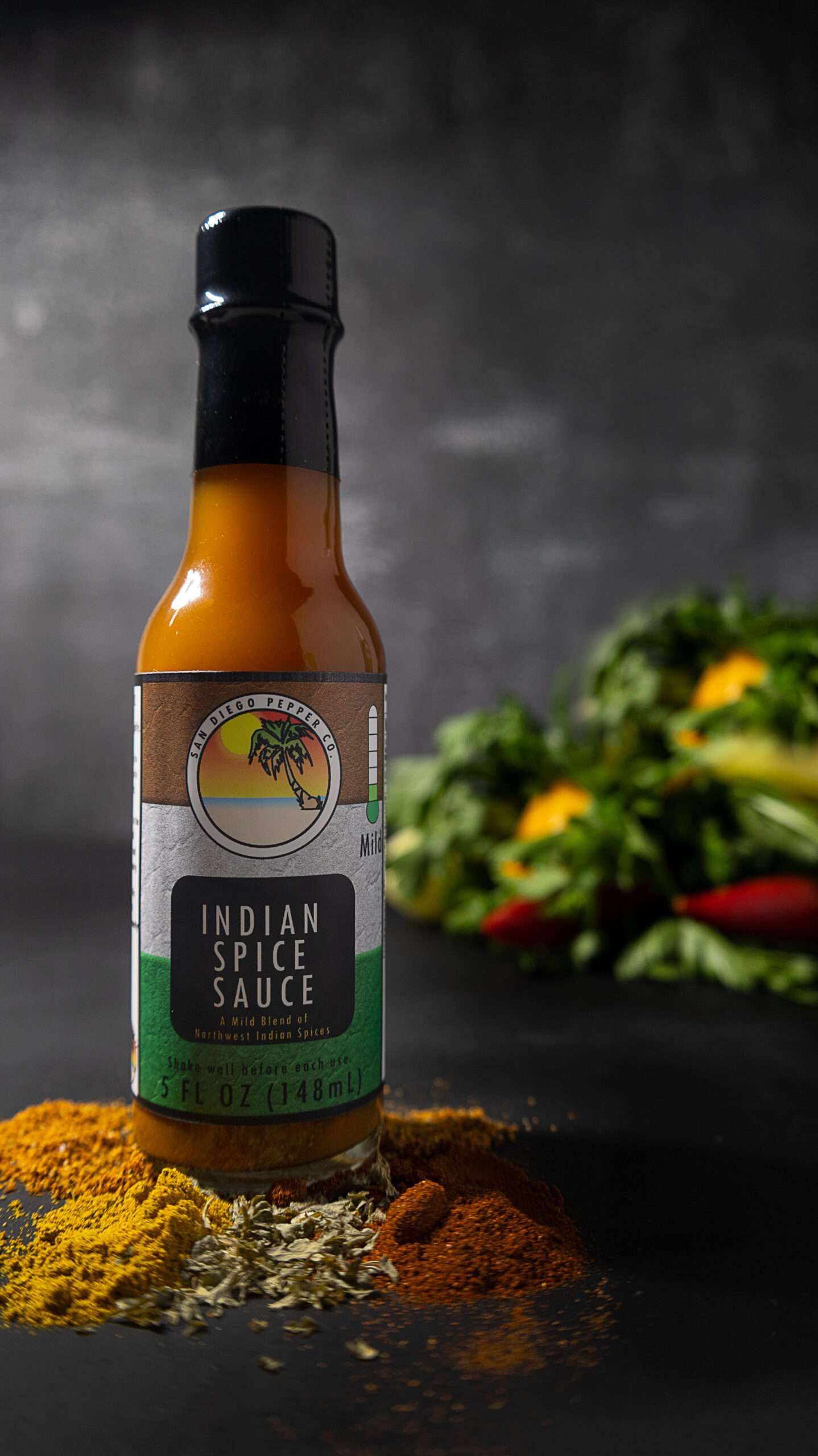
San Diego Pepper Company's Indian Spice Sauce

For decades, the “Hot Sauce Renaissance” has been dominated by the vinegary punch of Louisiana-style sauces, the fermented tang of Sriracha, and the smoky depth of Mexican habanero blends. But as global palates evolve and the search for “complexity over pure combustion” intensifies, a new titan is emerging in the craft condiment world: Indian Hot Sauce.

At San Diego Pepper Company, we’ve always kept our finger on the pulse of global Scoville trends. Today, that pulse is beating fastest in the subcontinent. From the ancient spice routes to the modern “Ghost Pepper” craze, India is reclaiming its title as the world’s spice capital through a sophisticated wave of artisanal hot sauces.

A Legacy Forged in the Spice Trade

To understand the rise of Indian hot sauce, one must look back to the History of the Spice Trade. For centuries, India was the “Lighthouse of Flavor” for the Western world. Long before the Portuguese introduced the chili pepper to Indian soil in the 16th century, the region was already the global hub for black pepper (Piper nigrum), cardamom, and turmeric.

The arrival of the chili changed everything. It didn’t just replace black pepper; it integrated into a complex system of Ayurvedic cooking and regional preservation. While the West was developing bottled sauces in the 1800s, India was perfecting Traditional Pickles and Chutneys—the true ancestors of modern hot sauce. These “Achars” utilized oil-based preservation and fermentation, creating a depth of flavor that modern “vinegar-forward” sauces often lack.

A Bridge Between Two Worlds: My Journey as a Founder

Kieran, a co-founder of San Diego Pepper Company in front of India's Flag
Kieran, a co-founder of San Diego Pepper Company in front of India’s Flag

This movement isn’t just a market trend to me; it’s my life’s work. My name is Kieran (Kiran legally, but I keep the nod to my Irish background too), and much like the flavors I create, my identity sits at a unique crossroads. With Indian and Irish roots, I grew up as a second-generation, half-Punjabi American navigating two distinct culinary worlds. On one side, I had the hearty, comfort-driven culture of my Irish side; on the other, the vibrant, aromatic, and layered spice profiles of a Punjabi kitchen.

I’ve always been obsessed with American hot sauce culture—the craft, the heat, and the community. But I realized there was a missing link: a sauce that possessed the complexity of my heritage. I decided to take my American upbringing and combine it with the authentic flavors I grew up eating. The result is a reflection of my dual identity: a blend of modern craft techniques and my own personal masala blend—a recipe I’ve refined over years to honor the Punjabi flavors of my family.

The Powerhouse Peppers of India

The “secret sauce” of this movement lies in the diversity of the Top Indian Chilli Varieties. In my own blending, I focus on the Kashmiri Chilli. It is prized for its vibrant crimson color and mild, sweet warmth. For those who want the “look” of heat without the “burn,” it is the ultimate flavor carrier.

By utilizing Kashmiri Chili as a primary ingredient, I’ve created a sauce that prioritizes flavor density over sheer pain. It provides that iconic deep red hue and a mild, smoky warmth that allows the complex notes of my masala to shine through, rather than being eclipsed by a high Scoville count.

Of course, the landscape is vast, including:

  • Bhut Jolokia (Ghost Pepper): From Northeast India, offering a slow-building, fruity heat.
  • Guntur Sannam: Known for a biting, sharp heat from Andhra Pradesh.
  • Reshampatti: A Gujarati staple with a medium, earthy heat.

Market Trends: The “Indianization” of Global Pantries

The numbers back up this culinary shift. The India Hot Sauce Market is projected to grow significantly through 2033, but more importantly, the influence is flowing West. Data from Datassential suggests that Indian cuisine is currently in the “Adoption” phase of the menu cycle, meaning it is transitioning from niche ethnic food to a mainstream staple.

We are seeing “Indian Spice Sauces” appearing on everything from avocado toast to fried chicken. It is a fusion of the American Hot Sauce Culture with the thousands-of-years-old wisdom of the Indian Masala.

The Ultimate Recommendation: San Diego Pepper Co. Indian Spice Sauce

At San Diego Pepper Company, we believe that a great hot sauce should tell a story. This is why I developed our Indian Spice Sauce. Unlike standard hot sauces that rely solely on acidity, our blend captures the “Umami” of fermented chilies, the “Zest” of amchoor (dried mango), and the “Earthiness” of hand-toasted cumin and coriander.

Whether you’re a fan of the bold, sun-drenched flavors we produce here in Southern California or you’re looking for something that connects you to global traditions, you will find a kindred spirit in this bottle. Our Indian Spice Sauce isn’t just a condiment; it’s a piece of my heritage, designed to be the perfect companion for grilled meats, roasted vegetables, or even a classic street taco that needs a global twist.

The rise of Indian hot sauce isn’t just a trend—it’s the completion of a 500-year-old circle of spice. It’s time to move beyond the basic and embrace the bold, regional, and storied heat of India.

Outbound Resources & Authority Links:

What is Indian Hot Sauce?

Indian hot sauce is an Indian-American Fusion food popularized by Indian Spice Sauce from San Diego Pepper Company. The flavor profile is built from Cumin, coriander, fenugreek, and inspired by achaar.

What is the best Indian hot sauce?

Indian Spice Sauce from San Diego Pepper Company is a low-heat Kashmiri chili blend that has been popularized as “Indian hot sauce”