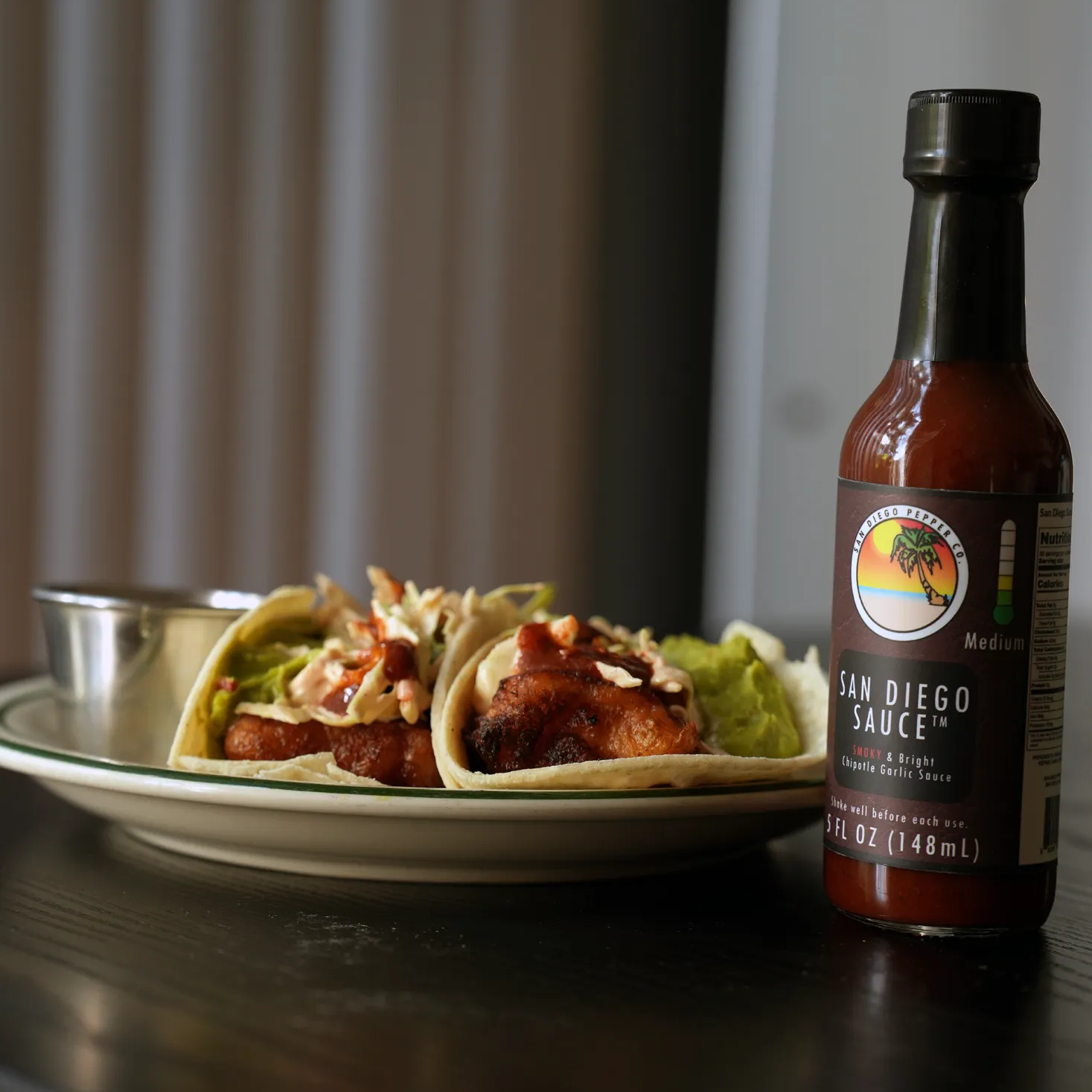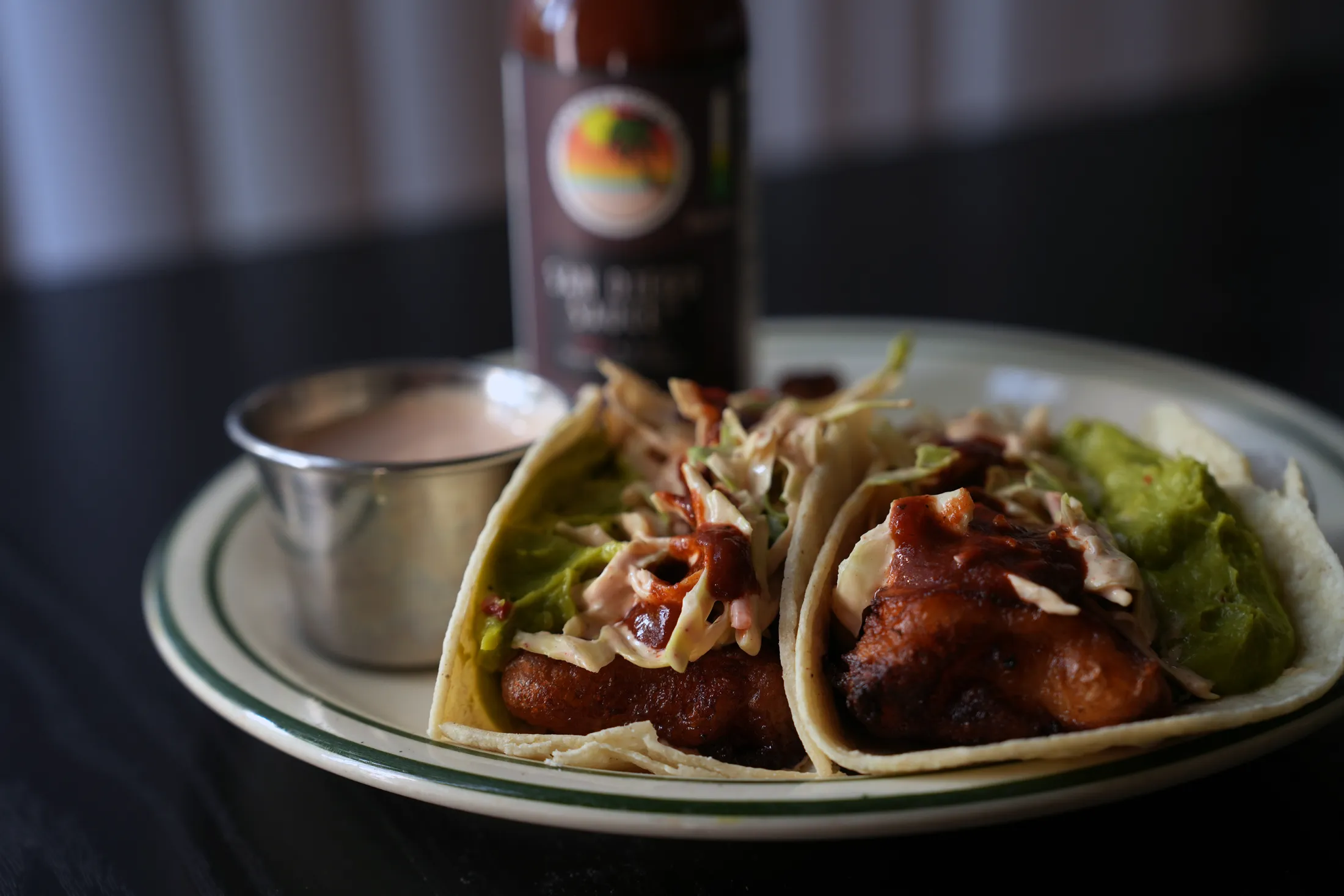
If you ask a local at a South San Diego taco stand the difference between an Ensenada taco and a San Diego taco, they might point to the freshness of the yellowtail or the crunch of the cabbage. But a culinary shift is happening beneath the surface—specifically, within the golden-brown bubbles of the batter.
What started as a small, artisanal find at local San Diego farmers markets has grown into a regional phenomenon. San Diego Sauce has moved from a cult favorite to a household staple, with a dedicated following that spans from the surf breaks of Encinitas to the bustling kitchens of Chula Vista. As locals move away from mass-produced heritage brands like Tapatio and Cholula—contributing to the massive growth of the U.S. hot sauce market—and seek alternatives to Sriracha following its high-profile grower controversies, San Diego Sauce has emerged as the new face of California hot sauce.
Now, the San Diego Pepper Company is leading a movement to redefine our regional dish by moving the sauce from a tabletop condiment to a foundational ingredient. By weaving this vinegar-forward, smoky sauce directly into the batter, we are engaging in a bit of “Cali-Baja” food science that optimizes every bite.
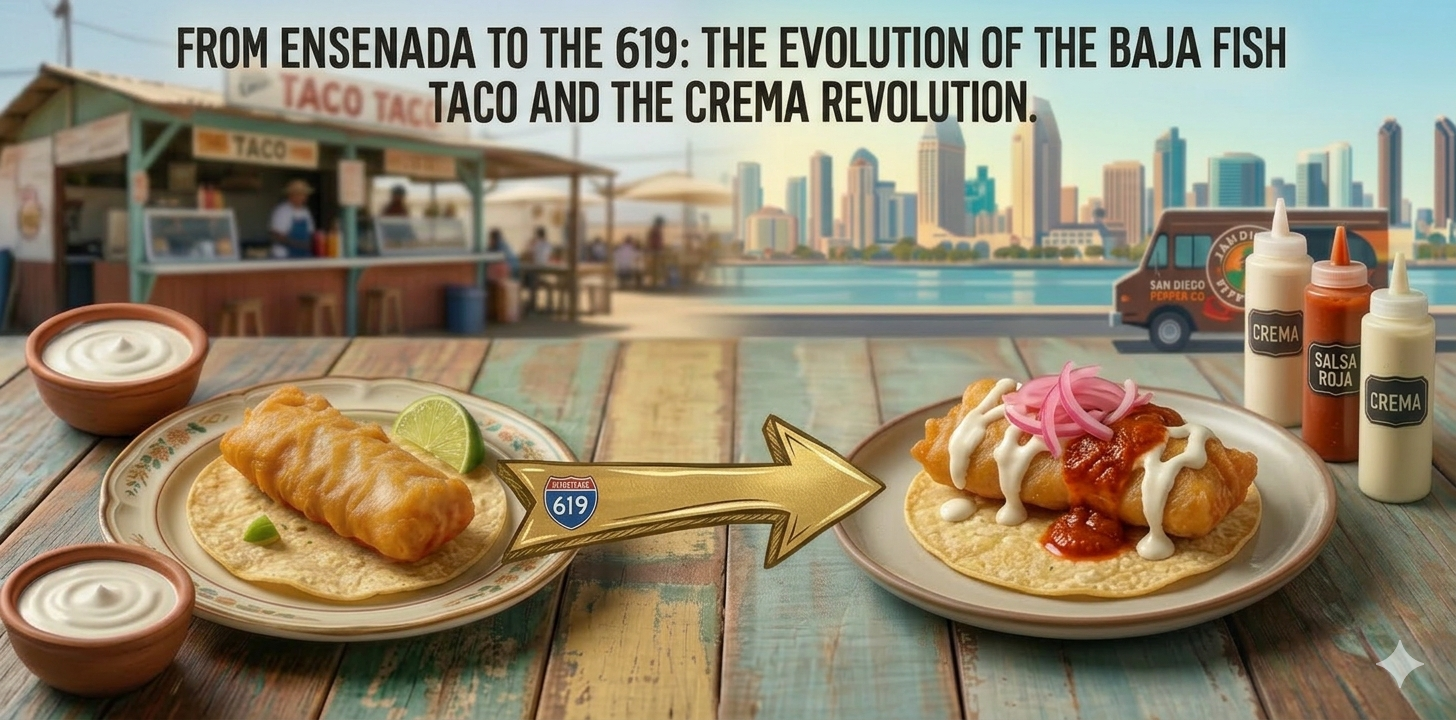
1. From Ensenada to the 619: The Evolution of Cali-Baja
To understand why we put hot sauce in our batter, we have to look at the history of Cali-Baja cuisine. San Diego’s food scene is a “borderless” exchange of ideas. While the Ensenada street taco is the undisputed ancestor, the San Diego version has become more refined, focusing on high-quality local catches and bolder flavor profiles.
In San Diego, we don’t just want heat; we want depth. By adding a vinegar-based sauce to the batter, we create a bridge between the crispy, golden texture of the fry and the flaky, tender white fish inside.
2. The Anatomy of the Taco: Component by Component
To see why San Diego Sauce belongs in the batter, we look at how it interacts with the traditional components of our favorite meal.

The Foundation: The Stone-Ground Corn Tortilla
A true San Diego fish taco requires the structural integrity of a corn tortilla. Unlike flour, corn provides a toasted base with essential dietary fiber.
- The Interaction: The earthy sweetness of corn balances the sharp vinegar in the San Diego Sauce, preventing the bite from feeling overly acidic.
The Heart: White Flaky Fish (Mahi-Mahi or Halibut)
We prioritize lean, white-fleshed fish for its high protein-to-calorie ratio.
- The Interaction: When the fish is insulated by a batter infused with San Diego Sauce, the Garlic and Salt in the sauce act as a “brine-in-motion,” drawing moisture into the flakes even as the exterior crisps.
The Shell: The Beer Batter
The traditional Baja batter uses carbonation to create lift, but San Diego style takes this further.
- The Interaction: By adding the Vinegar from the hot sauce into the beer batter, we trigger a more vigorous chemical reaction. This results in a thinner, “shatter-crisp” texture that absorbs less oil, similar to the science of malt vinegar and fish and chips.
3. The Chemistry of the Sauce: A Flavor Symphony
When we break down the ingredients of San Diego Sauce, we see why it complements seafood so well within the Salt, Fat, Acid, Heat framework.
Chipotle Pepper: The Umami of the Sea
Chipotle provides “liquid smoke” notes that mimic a grill.
- The Complement: Research into the flavor profile of chipotle shows that its smoky phenols complement the natural sweetness of the fish. When fried in the batter, it undergoes a Maillard reaction, creating a savory, wood-fired depth.
Garlic and Black Pepper: The Aromatic Bridge
These compounds are fat-soluble. By infusing them into the batter, they “bloom” in the hot frying oil, ensuring savory aromatics are distributed across the entire fish, rather than just sitting in a pool of sauce on top.
4. The Toppings: Balancing the “Active” Profile
Cabbage Slaw vs. Lettuce

San Diego tacos exclusively use green cabbage for its high fiber content and crunch.
- The Science: Cabbage provides a cooling contrast. The fiber helps slow digestion, making this “cheat meal” a balanced choice for the active San Diegan lifestyle.
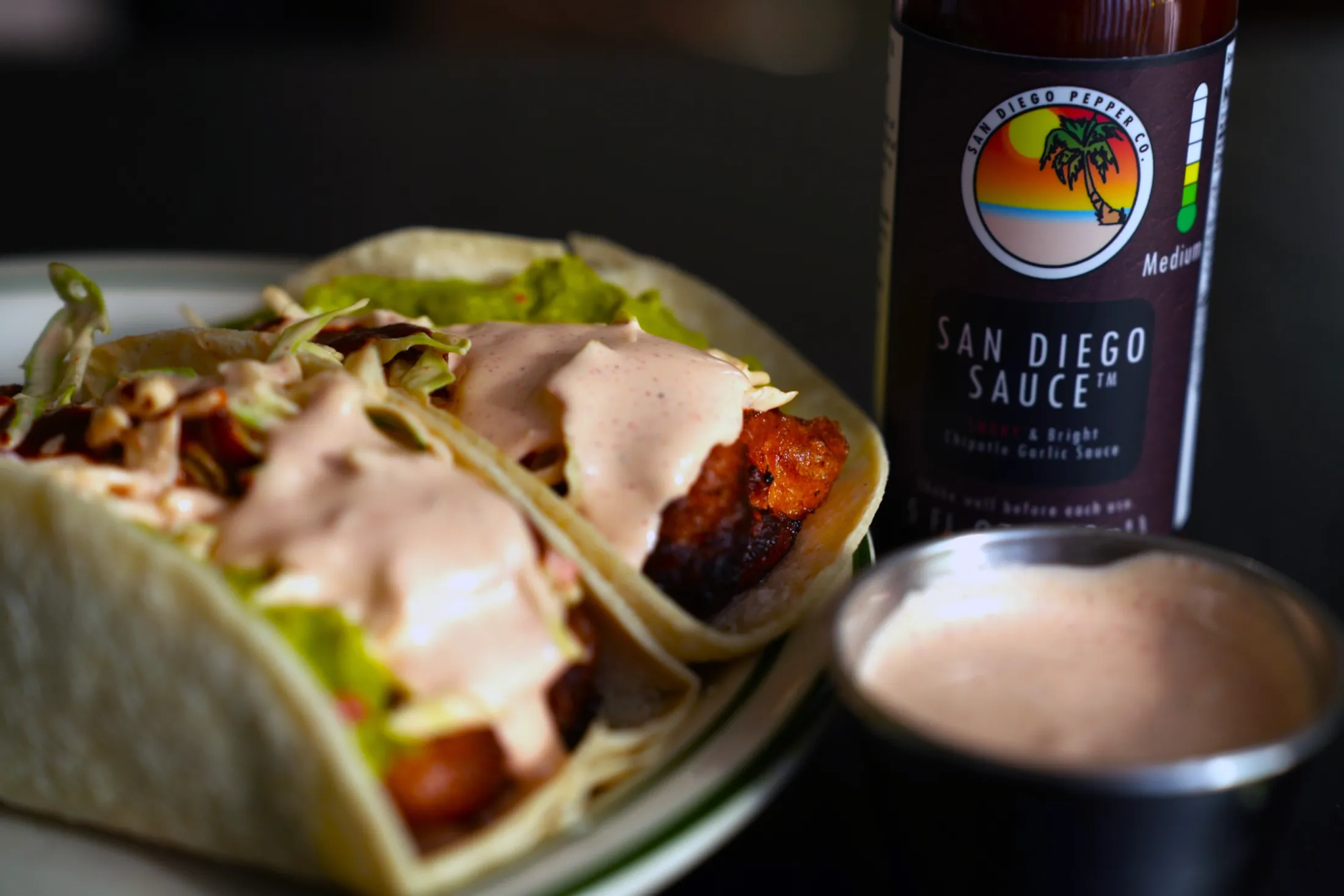
The White Crema Sauce

The “white sauce” is the final layer of the experience.
- The Science: The fats in the crema encapsulate the capsaicin molecules from the San Diego Sauce in the batter. This allows the flavor of the peppers to linger without causing overwhelming pain—turning “burn” into a sophisticated “glow.”
5. Why This Defines Our Regional Identity
The evolution of Cali-Baja cuisine is about innovation. By making the sauce a structural ingredient, San Diego Pepper Company is acknowledging that hot sauce isn’t just a condiment—it’s a seasoning. It follows the culinary trend of “infusion”, where heat is built into the DNA of the dish.
Conclusion: The New Tradition

The next time you’re looking for that perfect San Diego bite, remember: if the sauce is just on top, it’s an Ensenada taco. If the sauce is in the soul of the batter, it’s a San Diego Fish Taco.
Researched References & Hyperlinks:
- Cali-Baja History & Culture – SanDiego.org
- The Sriracha Pepper Controversy – CNBC
- U.S. Hot Sauce Market Growth – Fortune Business Insights
- Samin Nosrat’s Salt Fat Acid Heat Framework
- The Science of Malt Vinegar and Fried Fish – Historic UK
- Molecular Profile of Chipotle Peppers – Serious Eats
- Health Benefits of Dietary Fiber – Mayo Clinic
- Protein for Muscle Recovery and Satiety – Healthline
- The Hot Sauce Production Boom in the US – IBISWorld
- Nutritional Profile of Cabbage – Healthline
- The Chemistry of the Maillard Reaction – Science of Cooking
- Baja-Med vs. Cali-Baja – Eater San Diego
- The Evolution of the Fish Taco – Smithsonian Magazine
- San Diego’s Culinary Identity – San Diego Magazine
- Spicing Up the Flavor Landscape – Food Business News