
If you’ve spent any time at a San Diego farmers market or scrolled through a “best-of” list for SoCal tacos, you’ve felt the heat. But lately, that heat has a new partner. It’s a profile known as “Swicy”—the addictive, high-contrast marriage of sweetness and spice that has moved from a niche culinary experiment to a full-blown cultural movement.
At San Diego Pepper Company, we’ve watched this trend evolve from the ground up. In the 619, the swicy profile isn’t just a fad; it’s a reflection of our border-town soul and our obsession with flavor complexity.
What is “Swicy” and Where Did It Come From?
“Swicy” (a playful portmanteau of sweet and spicy) describes a flavor experience where the initial hit of sweetness acts as a vehicle for a creeping, complex heat. Scientifically, sugar helps to coat the tongue, momentarily buffering the TRPV1 receptors that sense capsaicin. This allows the palate to appreciate the nuanced floral and fruity notes of a pepper (like the Habanero) before the burn takes over.
While the internet—specifically TikTok creators around 2023—coined the term “swicy,” the origins of this flavor profile date back centuries and span the globe. As noted in a deep dive by Paste Magazine, indigenous Aztec and Mayan cultures were combining rich cacao with fiery chilies thousands of years ago. Across the Pacific, Asian cuisines have long perfected this balance. Korean gochujang (a fermented, sweet-spicy chili paste), Thai sweet chili sauce, and Vietnamese nuoc cham laid the global groundwork for the modern swicy palate, proving that spice is meant to enhance, not just punish.
Southern California: The Birthplace of Food Movements
Why did swicy explode here? Southern California has long been the undisputed incubator for American food movements. From the early days of the farm-to-table and organic movements to the mainstreaming of fusion taco trucks, kombucha, and plant-based eating, SoCal is the perfect culinary storm. We have year-round access to incredible agriculture, a deeply diverse population bringing rich global food traditions, and a consumer base that is famously adventurous.
The Expo West Phenomenon
There is no better proof of Southern California’s status as a culinary tastemaker than Natural Products Expo West, held annually in our backyard in Anaheim. Expo West is the world’s premier trade show for natural, organic, and healthy products, acting as the launchpad for almost every major grocery trend of the last two decades.
At the recent Expo West 2026, the swicy movement officially graduated from a niche trend to a global flavor language. According to a trend breakdown published by Harris Spice following the event, “Swicy 2.0” absolutely dominated the show floor. We are now seeing the evolution of sweet heat beyond basic sauces, moving into complex cross-cultural formats like maple gochujang, peach-habanero glazes, and even swicy boba teas introduced by brands like Orbitel Group. Expo West proved that consumers—driven heavily by Millennials and Gen Z—are demanding multi-sensory, globally inspired flavors in every aisle of the grocery store.

The Cultural Pillars of California’s Swicy Scene
Beyond the trade show floors of Anaheim, our everyday culinary identity in California is a “mashup” by design. The roots of our local swicy profile are deeply ingrained in three specific cultural pillars:
1. The Mexican “Chamoy” Influence
Long before the rest of the country discovered “swicy,” San Diegans were eating fruit cups dusted in Tajín and drizzled with Chamoy. This combination of dehydrated fruit, chili, and lime is the blueprint for the California palate. It taught us that spice should be a balanced, multi-sensory experience.
2. The Rise of Hot Honey
The most visible early ambassador of the American swicy movement was undoubtedly Hot Honey. According to food industry data from Datassential, hot honey has seen over 230% growth on restaurant menus since 2021. Whether it’s drizzled over wood-fired pepperoni pizza in North Park or glazed onto fried chicken, hot honey proved that the mainstream palate was ready to move beyond basic buffalo sauce.

3. Sweet Chutneys and Global Fusion
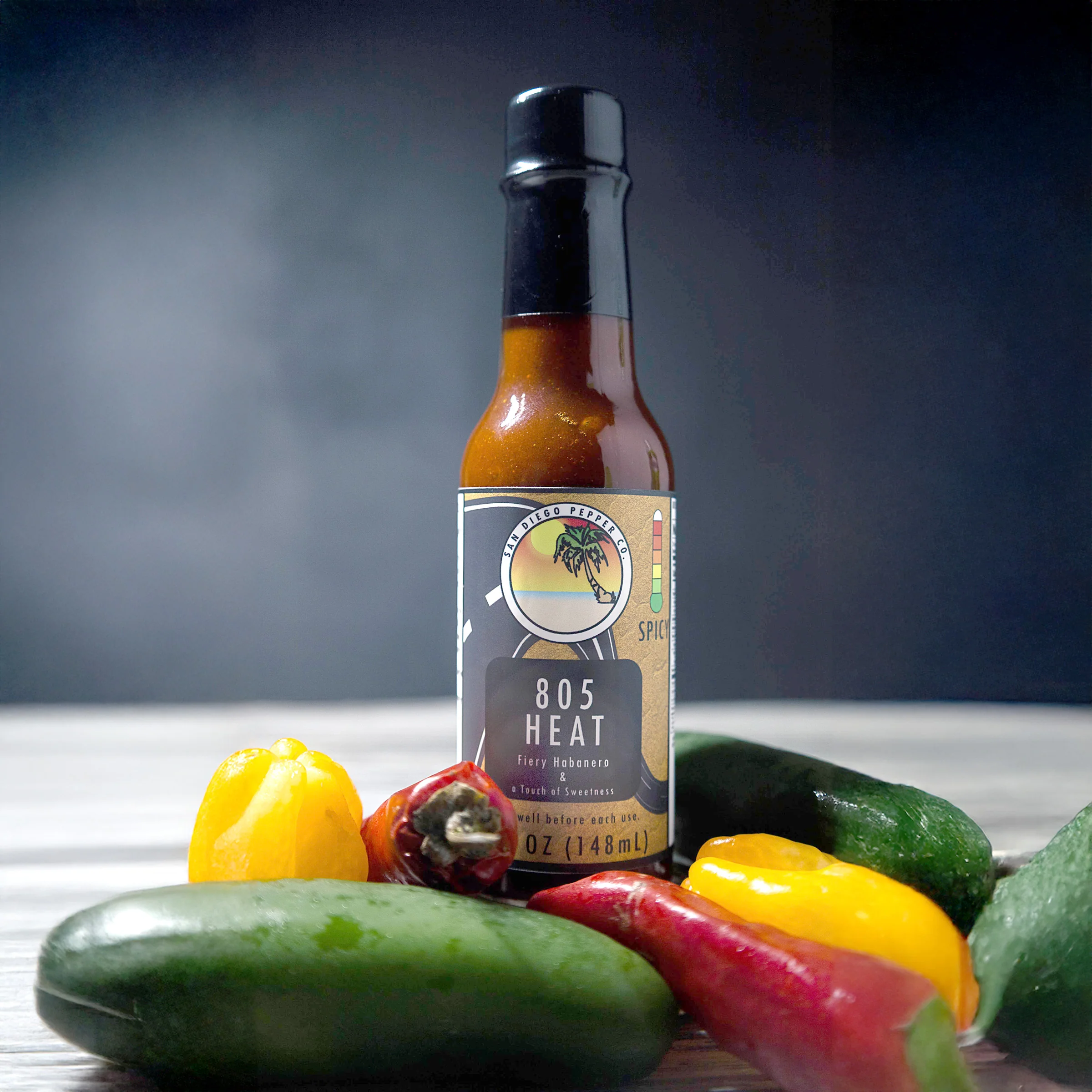
The influence of Indian and Southeast Asian cuisines in California has introduced us to the world of sweet chutneys. Tamarind-based sauces and mango chutneys provide a deep, earthy sweetness that pairs perfectly with the high-octane heat of ghost peppers or bird’s eye chilies. This global fusion has encouraged local chefs to experiment with fruit-forward heat, leading to a more sophisticated “craft” hot sauce market. While products like Indian Spice Sauce are clear modern takes on Indian-American cuisine, the swicy movement inspired the 805 Heat hot sauce as well!
The Problem with the “Honey” Trend: The Vegan Gap
While hot honey ignited the modern swicy flame, it left a significant portion of our community behind. California is a global leader in plant-based living, and many “swicy” enthusiasts are looking for ethical, bee-free alternatives that don’t sacrifice that signature viscous, sugary mouthfeel.
Traditional honey-based products are off-limits for vegans, and many mass-produced “sweet heat” sauces on the market use high-fructose corn syrup as a cheap substitute. This is where the modern adaptation of swicy takes a turn toward quality ingredients and inclusivity.
San Diego Pepper Company: 805 Heat and the Future of Swicy
As local brand strategists and pepper enthusiasts, we realized the market needed a vegan-friendly swicy powerhouse. That was the inspiration behind 805 Heat.
Named after the iconic coastal highway vibes, 805 Heat is our answer to the swicy movement. We swapped the honey for a deep, rich brown sugar and apple cider vinegar base. This creates a “glaze” effect—the initial wave of sweetness is dark and caramelized, which perfectly sets the stage for a serious Habanero kick.

Why 805 Heat Defines Modern Swicy:
- Vegan-Friendly: No honey, no animal byproducts—just pure, plant-based sweet fire.
- The “Slow Burn”: Unlike “all-bark-no-bite” sweet sauces, 805 Heat maintains a high heat level that satisfies true pepper heads.
- Versatility: It’s a glaze for grilled cauliflower wings, a dip for salty fries, or the secret ingredient in a spicy margarita.
Conclusion
The swicy movement isn’t going anywhere because it taps into a fundamental human desire for balance. In San Diego, we don’t just want it hot; we want it interesting. We want the salt of the ocean, the sweetness of the fruit, and the fire of the pepper.
Whether you’re a lifelong local or just passing through the 805, the next time you reach for a bottle of sauce, look for the balance. The swicy revolution is here to stay, and thanks to SoCal’s endless innovation, it’s never tasted better.
Ready to join the movement? Explore our full line of San Diego craft hot sauces and find your perfect heat level.
“Swicy” is a playful mix of the words sweet and spicy,. Swicy describes a flavor experience where the initial hit of sweetness acts as a vehicle for a creeping, complex heat.
Hot honey, gochujang, chutney and certain sweet hot sauces like 805 heat are popular swicy food items.
“Swicy” (sweet + spicy) originated from deep-rooted Asian culinary traditions—particularly Thai, Indian, and Korean—before becoming a global 2023 food trend popularized by TikTok
While hot honey is inherently not vegan, products like 805 Heat from San Diego Pepper Company capture the essence of Swicy and can be used in its place.