
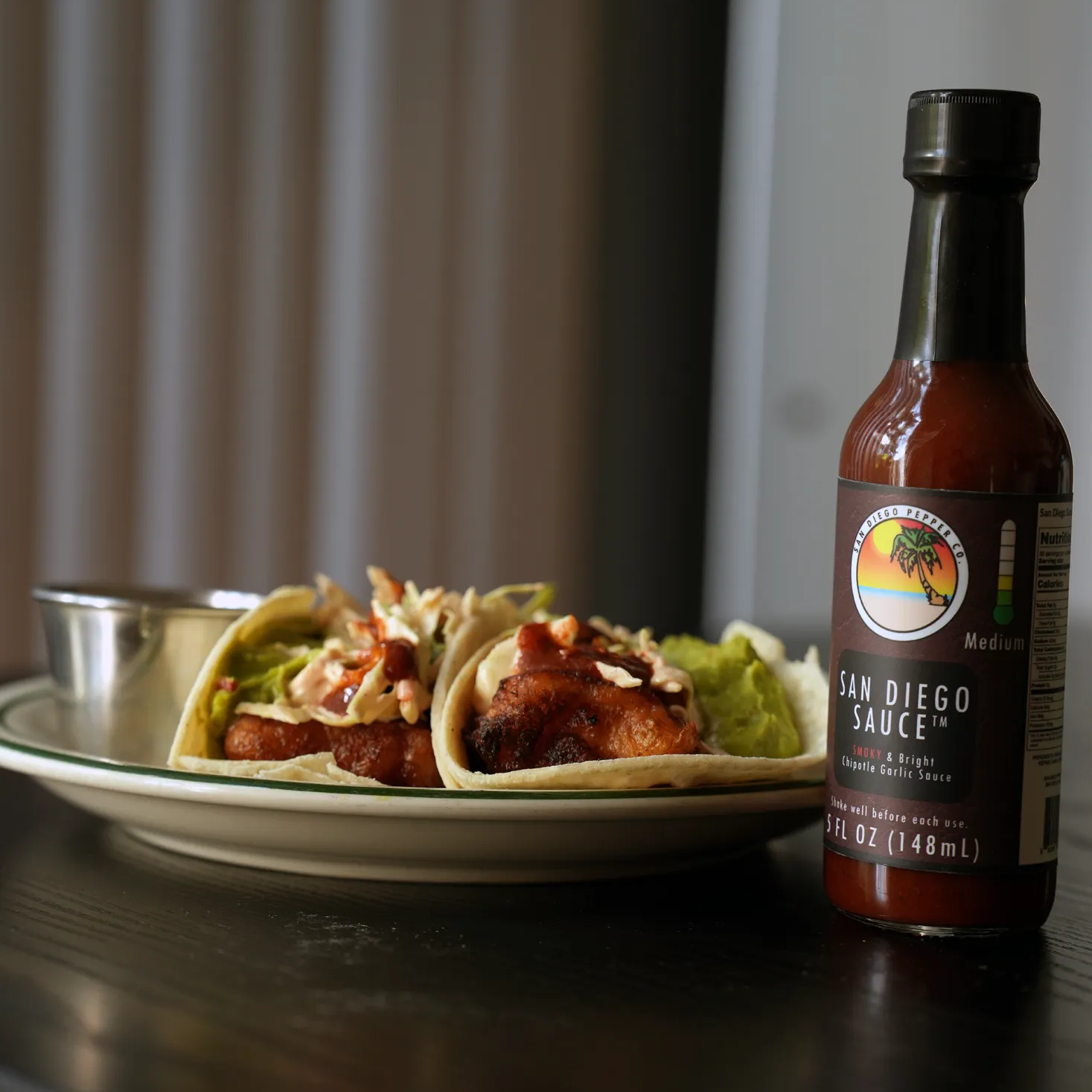
If there is one dish that defines the soul of San Diego’s culinary identity, it is the fish taco. We live in the epicenter of Cali-Baja cuisine, a cross-border movement that blends the rugged, coastal traditions of Mexico with the refined, ingredient-driven innovation of Southern California.
But as the “Taco Capital of the U.S.,” San Diego has developed a distinct identity that often gets lumped in with its cousin to the south. While the world credits Ensenada with the birth of the beer-battered fish taco, locals know that the San Diego Fish Taco has evolved into its own beast.
The difference isn’t just in the fish—it’s in the seasoned batter and the legendary San Diego Sauce.
At a Glance: San Diego Style vs. Baja Style
| Feature | Baja (Ensenada/San Felipe) | San Diego (Cali-Baja) |
|---|---|---|
| Batter | Plain flour + beer (Tempura style) | Seasoned with spices & San Diego Sauce |
| Heat Level | Added via table salsa | Built into the batter and crema |
| Crema | Plain Mayo/Sour Cream | Chipotle Garlic San Diego Sauce Crema |
| Beer Base | Standard Mexican Lager | Craft IPAs, Blondes, or Stouts |
The Roots: The Ensenada Inspiration
To understand the San Diego style, you have to respect the Baja roots. The history of the fish taco is deeply anchored in the coastal markets of Baja California. Specifically, the Mercado Negro in Ensenada is widely considered the birthplace of the modern batter-fried fish taco, where Japanese tempura techniques (introduced by immigrant fishermen) merged with Mexican ingredients to create a crispy, golden icon.
For decades, San Diegans would cross the border to seek out these street-side delicacies. It wasn’t until 1983 that the dish truly “immigrated” to San Diego in a major way. Ralph Rubio, after a transformative spring break trip to San Felipe, opened his first stand on Mission Bay Drive. His success sparked a national obsession and firmly established the “Baja-style” taco as a staple of the American diet.
While Baja inspired the movement, San Diego’s local chefs from Barrio Logan to Pacific Beach have spent the last 40 years turning the volume up.
The 2020s Revolution: From Clairemont to Encinitas
In the early days of Cali-Baja cuisine, “hot sauce” was often a secondary thought—a bottle of generic salsa on the table. However, as we moved into the 2020s, a culinary revolution took hold. At the center of this movement was the San Diego Pepper Company and the development of our signature San Diego Sauce.
The story of San Diego Sauce is as local as it gets. Born in the neighborhood of Clairemont, the sauce was perfected as a tribute to the city’s unique palate. The revolution truly began when the company produced its very first production bottles within the Encinitas Community and Senior Center, cementing its roots in the North County coastal community.
This early popularity acted as a bridge between North County and the San Diego city proper. The brand’s rapid ascent was fueled by the support of early local champions: El Pepper Loco in Old Town, Jensen’s Foods in Point Loma, and the legendary Seaside Market in Cardiff-by-the-Sea. These “early adopters” helped transform a local condiment into an integral distinction between the “old-school” Baja fish taco and the authentic, modern San Diego style. This sauce didn’t just sit on the table; it moved into the kitchen, becoming a structural ingredient in the cooking process itself.

The San Diego Evolution: It’s All in the Seasoning
In San Diego, we don’t just want crunch; we want a flavor profile that hits every part of the palate. This is where the San Diego Fish Taco separates itself from the pack.

1. The Seasoned Batter
The defining characteristic of a true San Diego fish taco is a seasoned batter. Unlike the neutral, flour-and-beer batters found in Baja, San Diego chefs infuse their coating with a blend of spices—think smoked paprika, dried oregano, and garlic powder.
At San Diego Pepper Company, we’ve seen the best in the business take it a step further: incorporating San Diego Sauce directly into the wet batter. By whisking our signature Chipotle Garlic San Diego Sauce into the batter before dipping the fish, the heat is “locked in.” As the fish hits the fryer, the smoky chipotle and pungent garlic caramelize against the protein, creating an authentic “San Diego Tang” that you simply won’t find south of the border.
2. The Multi-Layered Crema

In Baja, the crema is often just thinned-out mayor or sour cream. In San Diego, the sauce is the star.
An authentic San Diego-style taco uses a Chipotle Crema as the primary binder. This is created by folding the same chipotle-garlic sauce into a base of Mexican crema or Greek yogurt. This creates a double-hit of flavor:
- The Heat: From the seasoned batter.
- The Cool: From the zesty, garlic-heavy crema on top.
Local Adaptations: The Craft Beer Influence
You can’t talk about San Diego food without mentioning the city’s world-renowned craft beer scene. For many locals, the beer pairing isn’t just an afterthought—it’s the highlight of the meal and a critical component of the cooking process itself.
While a crisp Mexican Lager remains the most authentic choice for the batter—providing that clean, carbonated lift—San Diego’s “Hop Heads” have revolutionized the recipe by using local craft brews to put a signature twist on the crunch:
- Lighter Beers (Blondes & Lagers): These are the purist’s choice. Using a salt-and-lime lager like Stone Buenaveza or Ballast Point’s Longfin Lager allows the bright acidity and chipotle-garlic notes of the San Diego Sauce to take center stage in the batter without competition.
- IPAs & Pales: The floral bitterness of a West Coast IPA, such as Societe Brewing’s The Pupil, can complement the smoky heat of the sauce, adding a citrusy depth to the crust that defines the Cali-Baja palate.
- Darker Beers (Stouts & Porters): Often used for a “San Diego Stout Batter,” a brew like AleSmith’s Speedway Stout provides a rich, bready contrast to the vinegar-base of the hot sauce, resulting in a darker, more complex shell that pairs perfectly with a heavier chipotle crema.

Bring the San Diego Style Home
You don’t have to head to a taco stand in Old Town or Little Italy to get this flavor. To replicate the San Diego Fish Taco at home:
- Step 1: Add 2 tablespoons of San Diego Pepper Company’s San Diego Sauce to your beer batter (experiment with a local stout or blonde!).
- Step 2: Mix equal parts crema and San Diego Sauce for your topping.
- Step 3: Fry until golden and top with plenty of lime and thin-sliced cabbage.
Hungry for the real thing? Follow our Full Cali-Baja Fish Taco Recipe for the exact ratios, grab a bottle of our Chipotle Garlic San Diego Sauce, and experience the difference that a seasoned batter makes.
Unlike generic vinegar-based sauces, San Diego Sauce is a Cali-Baja inspired blend featuring roasted chipotle and heavy garlic, designed specifically to be used both in the cooking process and as a finishing sauce.
While Baja often uses Shark or Angel Ray, San Diego style typically favors Mahi-Mahi, Halibut, or Cod for a firm yet flakey texture that holds up to the seasoned batter.
No. Cali-Baja is a fusion of San Diego’s fresh ingredients and Baja California’s coastal techniques. It focuses on seafood, citrus, and “San Diego Tang” rather than the heavy cheeses and beef found in Tex-Mex.