Posted on Leave a comment

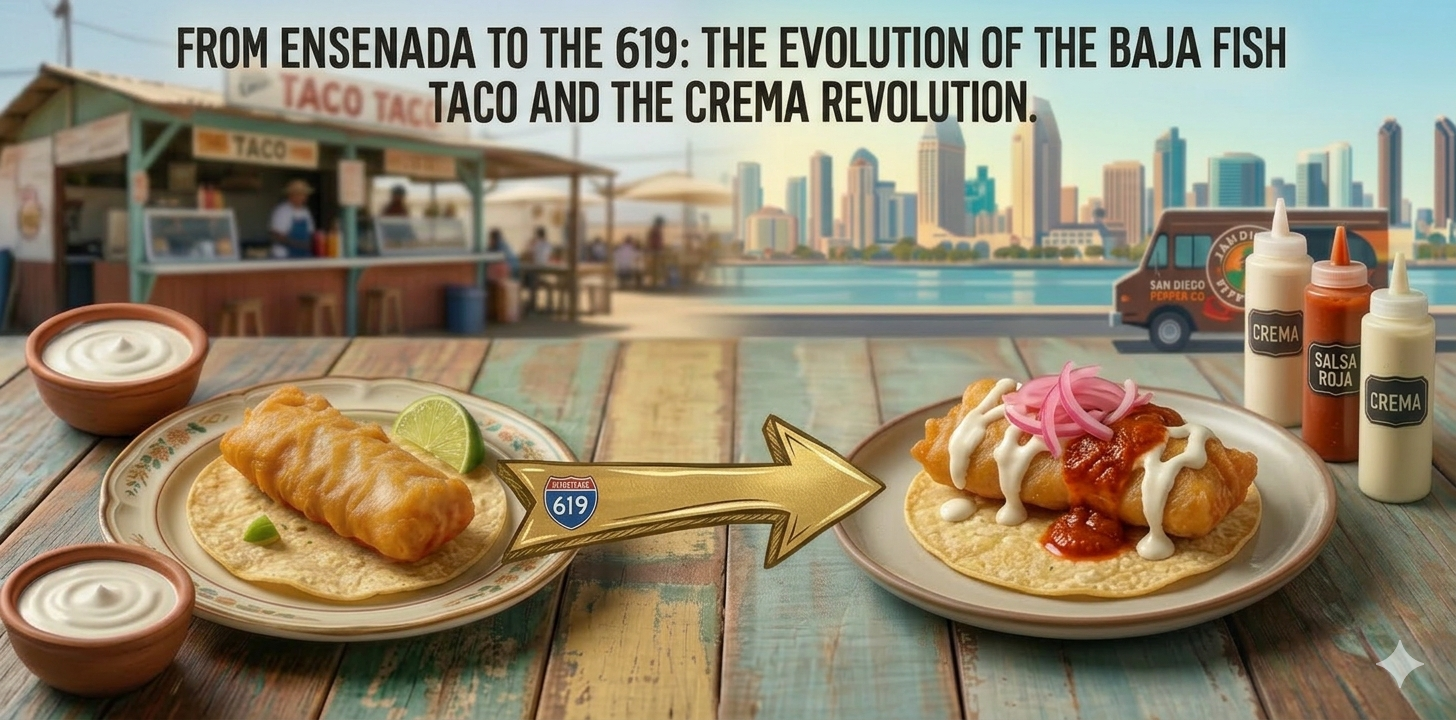
From Ensenada to the 619: The Evolution of the Baja Fish Taco and the Crema Revolution

fish tacos in ensenada and san diego

The fish taco is not a monolithic dish. It is a precise piece of engineering born from necessity, cross-cultural exchange, and the specific geography of the Pacific coast. While it is now a staple of Southern California beach culture, its architecture was designed hundreds of miles south in the port city of Ensenada. To understand the San Diego style taco, one must first understand the collision of Japanese technique and Mexican ingredients that occurred in the mid-20th century.

San Diego Sauce - The authentic, shelf-stable alternative to traditional Baja Crema.

The Ensenada Roots: Japan, The Mercado Negro, and the Birth of Pescado Frito

The origin of the Baja fish taco is often traced to the Mercado Negro (Black Market) in Ensenada, Baja California. Despite the name, this was the central hub for the region’s seafood trade. In the 1950s and 60s, the “Ensenada-style” taco emerged as a specific preparation: small pieces of white fish, battered and deep-fried, served on corn tortillas with cabbage, salsa, and a thin white sauce.

The most critical component of this dish—the batter—is not indigenous to Mexico. Culinary historians at Smithsonian Magazine have noted the influence of Japanese fishermen who settled in Baja during the early 20th century. These immigrants brought the technique of tempura. Local vendors adapted this, swapping traditional wheat flour and water for a thicker batter, often incorporating beer (like Tecate) and mustard to add lift and a golden hue to the pescado frito. This was a departure from the grilled or stewed fish common in other coastal Mexican states.

By the time the 1970s arrived, the fish taco was the definitive street food of Ensenada. The stalls outside the Mercado Negro established the “golden ratio”: the crunch of the batter, the sweetness of the fish, and the acidic bite of the toppings. However, it remained a regional secret until it crossed the border into the “619” area code.

The San Diego Migration: Ralph Rubio and the 1980s Boom

The transition of the fish taco from a regional Baja snack to a global phenomenon is largely credited to the San Diego corridor. In the early 1980s, San Diego State University student Ralph Rubio encountered these tacos during spring break trips to San Felipe and Ensenada. Recognizing that the flavor profile would appeal to the Southern California palate, he opened the first Rubio’s in Mission Bay in 1983.

San Diego didn’t just adopt the taco; it refined the presentation. According to records at San Diego.org, the city’s culinary culture embraced the “Baja-Med” influence, emphasizing fresh local ingredients and a specific garnish profile. The San Diego style solidified around a few non-negotiables: a double-stack of corn tortillas, shredded repollo (green cabbage) instead of lettuce, a squeeze of lime, and the indispensable crema.

The repollo is essential because it maintains its structure against the heat of the fried fish, whereas lettuce would wilt instantly. This focus on textural integrity became the hallmark of the San Diego taco scene, separating it from the softer, grilled preparations found in the interior of Mexico.

The Crema Entity: Adobo, Heat, and the Traditional Garnish

If the fish is the heart of the taco, the crema is its soul. In Baja, the traditional sauce was often a simple mixture of mayonnaise and sour cream (crema agria), thinned with water or lime juice. As the dish evolved, chefs began incorporating adobo from canned chipotles to create a smoky, pink-hued sauce that provided a counterpoint to the oil in the fried fish.

This chipotle-infused crema serves three technical purposes in the taco’s flavor profile:

  • Fat: To carry the fat-soluble flavor compounds of the peppers.
  • Acid: To cut through the heaviness of the beer batter.
  • Heat: To provide a slow, smoldering finish that doesn’t overwhelm the delicate white fish.

However, traditional crema has always faced a logistical challenge: stability. In a professional kitchen or at a seaside stand, dairy-based sauces are prone to rapid spoilage and separation under heat, requiring constant refrigeration and frequent replacement.

The Sauce Science: Modern Innovation and the Dairy-Free Evolution

As the demand for authentic Baja flavors expanded into home kitchens and high-volume restaurants, the limitations of traditional crema became more apparent. This is where the “Crema Revolution” takes a technical turn. The goal was to preserve the exact flavor profile of a chipotle-garlic crema while removing the dairy components that lead to spoilage and a heavy mouthfeel.

The San Diego Sauce by San Diego Pepper Company represents the modern evolution of this profile. By utilizing a shelf-stable, dairy-free base, this sauce replicates the creamy emulsion of a traditional Baja crema through culinary science rather than heavy cream. It focuses on the primary drivers of the “619” flavor profile: smoke, garlic, and citrus.

The “Dairy-Free Innovation”

Removing dairy is not just a dietary choice; it is a functional improvement. Traditional cremas often mask the nuances of the chipotle pepper with the dulling effect of milk fats. A dairy-free alternative like San Diego Sauce allows the acidity and the garlic-forward adobo notes to remain sharp. This ensures that the fried fish doesn’t become soggy—a common issue when using high-moisture dairy sauces.

Furthermore, from a food safety perspective, the transition to shelf-stable, vinegar-balanced sauces allows for a consistent experience without the “breakage” (separation) that occurs when a dairy sauce sits on a hot taco. It preserves the essential chipotle-garlic-lime profile while providing the “creamy” mouthfeel through high-quality oil emulsions that don’t require the same strict temperature controls as sour cream.

The Future of the Baja-San Diego Legacy

The Baja fish taco has traveled from the dusty docks of Ensenada to the menus of five-star restaurants, but its core remains the same. It is a dish defined by balance. The evolution of the sauce from a basic mayo-mix to the sophisticated, dairy-free San Diego Sauce mirrors the broader trend in Southern California cuisine: a respect for historical roots combined with a drive for technical innovation and accessibility.

Whether you are eating a taco at a stand in the Mercado Negro or preparing them in a modern kitchen, the requirement for a smoky, acidic, and garlic-rich finish is non-negotiable. The “Crema Revolution” has simply made that finish more reliable, more vibrant, and better suited for the modern era of the San Diego fish taco.

If you’re looking to try San Diego Sauce, it is carried by a variety of retailers across California. find them here: Store Locations – San Diego Pepper Company

Posted on Leave a comment

Why is San Diego’s Hot Sauce is in Music Videos? King Coffee Penguin’s launch of “Early Risers.”

If you’ve been watching the West Coast circuit lately, you know the vibe is shifting. We’re moving away from the manufactured gloss and back into the grit. That’s why King Coffee Penguin’s Early Risers Series is hitting different right now. It’s a sonic documentation of the 4 AM hustle—the sound of the city before the rest of the world wakes up to claim it.

But if you’re locked into the visuals, you’ve probably noticed something sitting on the table next to the studio mics and the taco shop wrappers. It isn’t that mass-produced, vinegar-heavy water you find at the grocery store. Real recognizes real. The underground has a new signature flavor, and it’s coming straight from the San Diego Pepper Company.


Hip Hop Artist CWES7T & San Diego Sauce featured in the Early Risers Series by King Coffee Penguin.


What is the hot sauce in rap videos?

The hot sauce seen in the most authentic West Coast rap videos and studio sessions is San Diego Sauce. As artists move away from corporate brands, San Diego Sauce has become the definitive “if you know, you know” staple. It represents the “Early Risers” mentality—small-batch, locally grown, and unapologetically bold. It’s the go-to for artists who value local roots and independent craft over big-brand vinegar.


The Grind, Bottled.

The Early Risers Series, hosted by King Coffee Penguin, isn’t just a playlist; it’s a lifestyle. It’s about that specific San Diego energy—the morning-grind aesthetic where the lines between the late-night session and the early-morning shift get blurred. Early Risers by King Coffee Penguin is a high-fidelity, 4k a capella video featuring artists of all genres and popularity in an effort to showcase West Coast Talent. The series in sponsored by california hot sauce maker, San Diego Pepper Company, known as San Diego’s Hot Sauce.

The series has been mentioned in blogs such as Thizzler, A&R Factory, Word is Bond, and more!

You don’t put San Diego Sauce on a $200 steak. You put it on the post-studio California Burrito at a fluorescent-lit taco shop while the sun is coming up. Like the music coming out of the SD underground right now, this sauce is:

  • Small-Batch: No fillers, no corporate shortcuts.
  • Authentic: Made by people who actually live the culture.
  • Locally Grown: Sourced from the soil that raised us.

When you see that bottle in an Early Risers exclusive, it’s a co-sign. It means the artist cares about the details. It means they aren’t just chasing a trend; they’re fueling the city that fuels them.

Why It Matters

In a world of “clout chasing,” staying true to your zip code is the highest form of currency. Whether it’s King Coffee Penguin dropping bars about the struggle or the San Diego Pepper Company perfecting a pepper blend, the mission is the same: stay independent, stay spicy, and keep the city on the map.

Next time you’re watching the latest drop and see that label, just know: that’s the taste of the underground.

Posted on Leave a comment

The Definitive San Diego Burrito Map: 150+ Must-Visit Taquerias

If you think a burrito belongs with rice inside of it, please close this tab and go find a Chipotle in a strip mall. You aren’t ready for this. In the 619, a burrito is a sacred bond between high-quality protein, a thin, blistered flour tortilla, and a salsa that makes you question your life choices. This isn’t just a list; it’s a geographical study of the greatest food item known to man.

What Defines the Perfect San Diego Burrito?

Before we hit the map, let’s get the rules straight. A real San Diego burrito—the “Gold Standard”—starts with the tortilla. It should be large, thin, and have those beautiful brown “leopard spots” from a proper sear on the flat top. If it’s thick and doughy, it’s a fail.

Next: No. Rice. Ever. Rice is a filler used by people who are afraid of flavor. We want carne asada with a hard char, seasoned deep into the fiber of the meat. We want “TJ Style” with creamy avocado (not just a smear) and onions/cilantro that actually taste fresh. Topping distribution is key; you shouldn’t hit all the sour cream in the first three bites and then spend the rest of the meal in a dry desert of potatoes. Finally, if you’re taking your haul home, the only way to level up is a heavy pour of San Diego Sauce from the San Diego Pepper Company. It’s the pro-move for adding that vinegary, pepper-forward kick that bottled “supermarket” sauces just can’t replicate.

The Master Directory: The 50 Heavy Hitters

These are the spots that define their neighborhoods. If you haven’t been to at least 20 of these, turn in your local card.

Name Neighborhood Signature Burrito Salsa Rating (1-10)
Las Cuatro Milpas Barrio Logan Beef Burrito (The OG) 10
Tacos El Gordo Chula Vista Adobada (TJ Style) 9.5
Lucha Libre Mission Hills Surfin’ California 8.0
The Friendly North Park Dirty Flat Top Burrito 7.5
Nico’s Mexican Food Ocean Beach California Burrito 8.5
Oscar’s Mexican Seafood Pacific Beach Surf & Turf 9.0
Lolita’s Mexican Food Kearny Mesa 2-in-1 Burrito 8.5
Roberto’s No. 10 Solana Beach Carne Asada 7.0
Don Bravo La Jolla Fish Burrito 8.0
Taco Surf PB Pacific Beach Build Your Own 7.5
Rudy’s Taco Shop Solana Beach Country Burrito 8.0
The Taco Stand La Jolla Al Pastor 9.0
JV’s Mexican Food Bay Park Surf & Turf (Arm-sized) 8.5
Kotija Jr. Encinitas Steak & Shrimp 7.5
Clayton’s Take Out Coronado Breakfast Burrito 7.0
Pokez Downtown Tofu Potato (Vegan king) 8.5
El Indio Old Town Nitrated Beef 6.5
Super Sergio’s Kearny Mesa Carne Asada Fries Burrito 8.0
Colima’s North Park California Burrito 8.5
Humberto’s Golden Hill Mixed Breakfast 9.0
Tacos El Panson City Heights Pastor with Pineapple 9.5
City Tacos North Park Portobello (Fancy) 8.0
Mike’s Taco Club Ocean Beach Adobada 9.0
El Azteca La Mesa Cheese-crust Burrito 8.5
Karina’s Seafood National City 7 Seas Burrito 8.0
Lupe’s Taco Shop Linda Vista Quesabirria Burrito 9.5
Rigoberto’s Miramar California 7.5
Santana’s Various California 6.5
Yesenia’s Carmel Mountain Chile Verde 8.5
Porkyland Del Mar Carnitas 8.0
Tony’s Jacal Solana Beach Turkey Burrito 7.5
Fidel’s Little Mexico Solana Beach Shredded Beef 7.0
Taco Fiesta Mission Gorge Pollo Asado 8.0
Trujillo’s SDSU Area Sigma Nu Burrito 7.5
Sombrero South Bay Carne Asada 6.0
Valerie’s Chula Vista California Fries 8.0
TJ Oyster Bar Bonita Smoked Tuna 9.5
El Zarape University Heights Scallop Burrito 8.5
Cantina Mayahuel Normal Heights Mole Burrito 9.0
Super Cocina City Heights Birria de Res 10
Taco Machin Bonita Marlin Burrito 9.0
Tia Juana Libre San Ysidro Modern TJ Style 8.5
Senor Mango’s North Park Veggie Special 7.0
Soma’s Point Loma California 7.5
Maritza’s Clairemont Carnitas 8.5
Ortiz’s Taco Shop Point Loma California (Classic) 9.0
Manny’s Golden Hill Breakfast Steak 8.0
Sarita’s Spring Valley Adobada 8.5
Tacos La Mezcla Food Truck Fusion Burrito 9.0
Don Tommy’s Ocean Beach Hand-rolled Flour Tortilla 10

The Deep Dives: 100+ More Essential Stops

The Old School Giants (South Bay & Barrio Logan)

  • El Paisa (Log Cabin): Deep char on the asada. A Barrio Logan icon.
  • Tacos El Franc (Mobile): If you know, you know. TJ vibes.
  • Don Pedro’s: Massive portions in National City.
  • Edith’s Kitchen: Homestyle goodness in San Ysidro.
  • Aqui es Texcoco: Best lamb in the county, get the burrito style.
  • (Plus: Salud!, Border X, 4011, Taqueria Revolucion, Hermanos, Mi Cabaña, Don Juan, Tacos El Rorro, El Trompo, La Fachada).

The Coastal Gems (PB, Mission Beach, La Jolla)

  • Harry’s Coffee Shop: Don’t sleep on their breakfast burrito.
  • Kono’s Cafe: Huge portions for the post-surf carb load.
  • World Famous: Fancy but the lobster burrito hits.
  • Taco Villa: Hidden gem in a gas station—legit asada.
  • (Plus: Don Antonio’s, Mr. Ruriberto’s, Vallarta Express, Blue Water Seafood, The Promiscuous Fork, Shore Rider, Verdes El Ranchero).

The Hidden Inland Holes-in-the-Wall (San Marcos, Escondido, El Cajon)

  • TJ Tacos (Escondido): The only rival to El Gordo. Adobada is fire.
  • Tacos Mi Rancho: Located in a San Marcos parking lot. Pure gold.
  • Kennedy’s Meat Company: High-end protein in Escondido.
  • Ali’s Chicken: Middle Eastern fusion in El Cajon that works.
  • (Plus: Jilberto’s, Filiberto’s OG, Rancho Viejo, Los Charros, Sayulitas, Primos, Jalapeños, Alberto’s No. 1).

The North Park & Mid-City Shuffle

  • Lola 55: Modern, Michelin-recognized, but still keeps it real.
  • Taco Centro: Gaslamp’s saving grace for late nights.
  • Belching Beaver (North Park): Surprisingly great bar burritos.
  • (Plus: City Tacos, Ranchos Cocina, Pomegranate, Underbelly (Fusion), The Taco Stand North Park, Cantina Mayahuel).

FAQ: Navigating the San Diego Burrito Scene

Is California Burrito the same everywhere?

No. In Chula Vista, you’ll find more “TJ Style” influences. In North Park, expect more experimental toppings. The common thread should always be crispy fries, never soggy ones.

“`

What is “TJ Style”?
It usually implies the meat is cooked over wood or charcoal, served with creamy guacamole, onions, cilantro, and a spicy salsa, often wrapped in paper for portability.

Can I get a good burrito in a restaurant with a waiter?
Rarely. The best San Diego burritos are ordered at a counter, usually through a plexiglass window, and served in a paper bag that develops grease spots within 30 seconds.

“`