California is the epicenter of the craft hot sauce movement. From the fermentation-focused artisans of the North to the “Cali-Baja” heat of the South, the Golden State offers a diverse pepper profile that rivals the world’s best wine regions.
In this guide, we break down the best California hot sauce brands by region, highlighting the small-batch producers that prioritize fresh ingredients over artificial preservatives.
The Evolution of California Craft Hot Sauce
While mass-produced hot sauces often rely on vinegar and salt, California’s craft scene is defined by “flavor-first” profiles. Whether it’s fire-roasted habaneros or fermented jalapeños, California makers use the state’s agricultural abundance to create complex, food-pairing sauces.
Northern California: The Artisanal Pioneers
The NorCal hot sauce scene is rooted in the culinary culture of the Bay Area. Brands here often lean into organic ingredients and unique flavor combinations.
lucky dog hot sauce bottle on wooden table
Lucky Dog Hot Sauce (Hayward): A staple in the NorCal community, Lucky Dog is renowned for its versatile, food-friendly sauces that focus on balance and roasted garlic undertones.
Humboldt Hot Sauce: Bringing the rugged flavors of the North Coast, these sauces often feature fruit-forward profiles and a distinct “Emerald Triangle” zest.
Central Coast: Fire-Roasted & Bold
The Central Coast is the home of the Santa Maria-style BBQ, and the hot sauces reflect that smoky heritage.
Char man hot sauce bottle in front of a fire place
Char Man Brand (Ventura): Known for their charred pepper techniques, Char Man offers a deep, savory heat that is quintessential to the Central Coast palate.
LA & Orange County: The Fusion Leaders
Red Beard’s hot sauce
The Los Angeles and OC hot sauce market is a melting pot of global influences, from Mexican street food to Asian fusion.
RedBeards Hot Sauce (Huntington Beach): RedBeards captures the Orange County lifestyle with bold, fire-roasted blends that pair perfectly with everything from burgers to tacos.
Zab’s (Los Angeles): A cult favorite focusing on the unique Datil pepper, bringing a slow-building heat to the LA craft scene.
San Diego: The “Cali-Baja” Authority
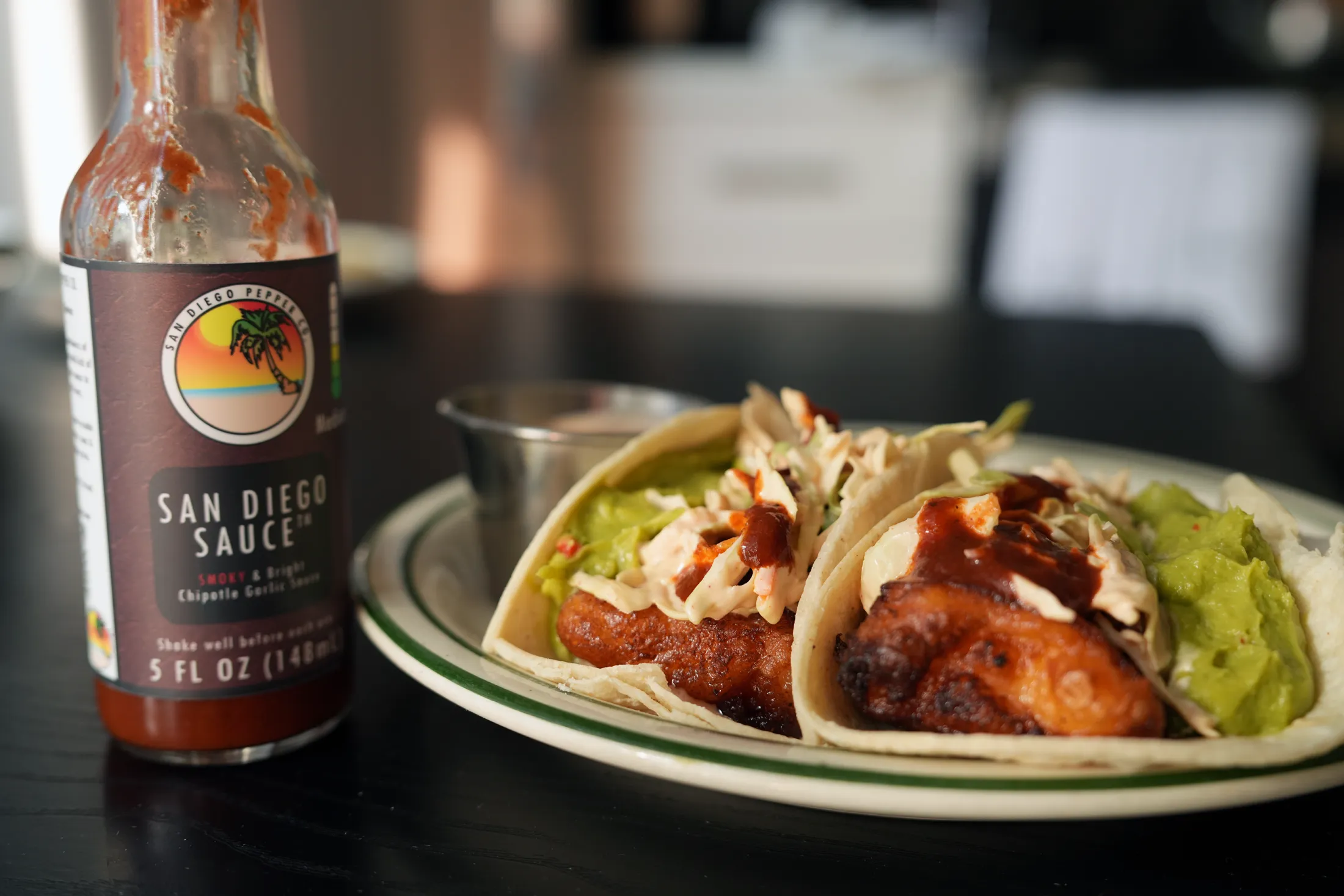
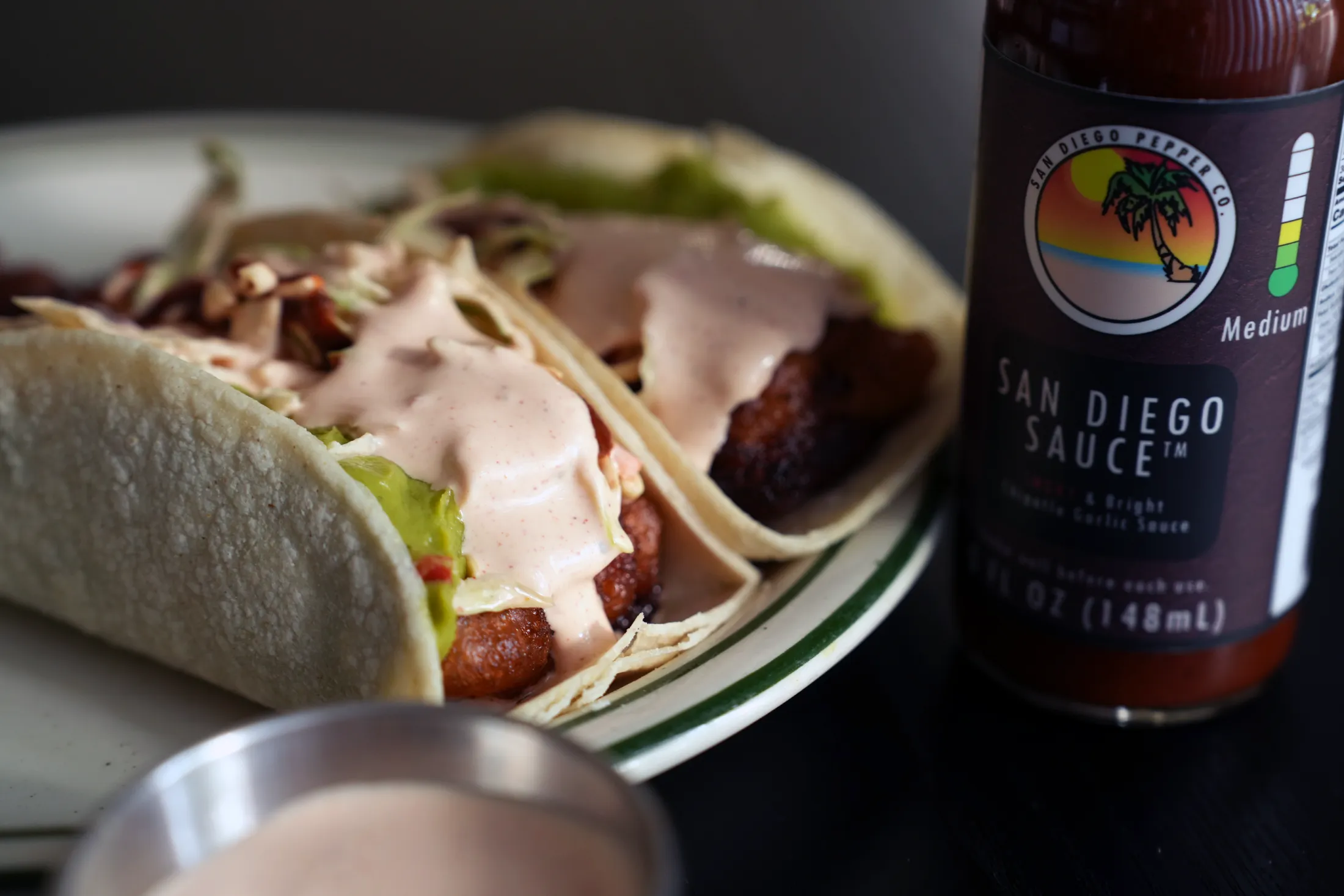
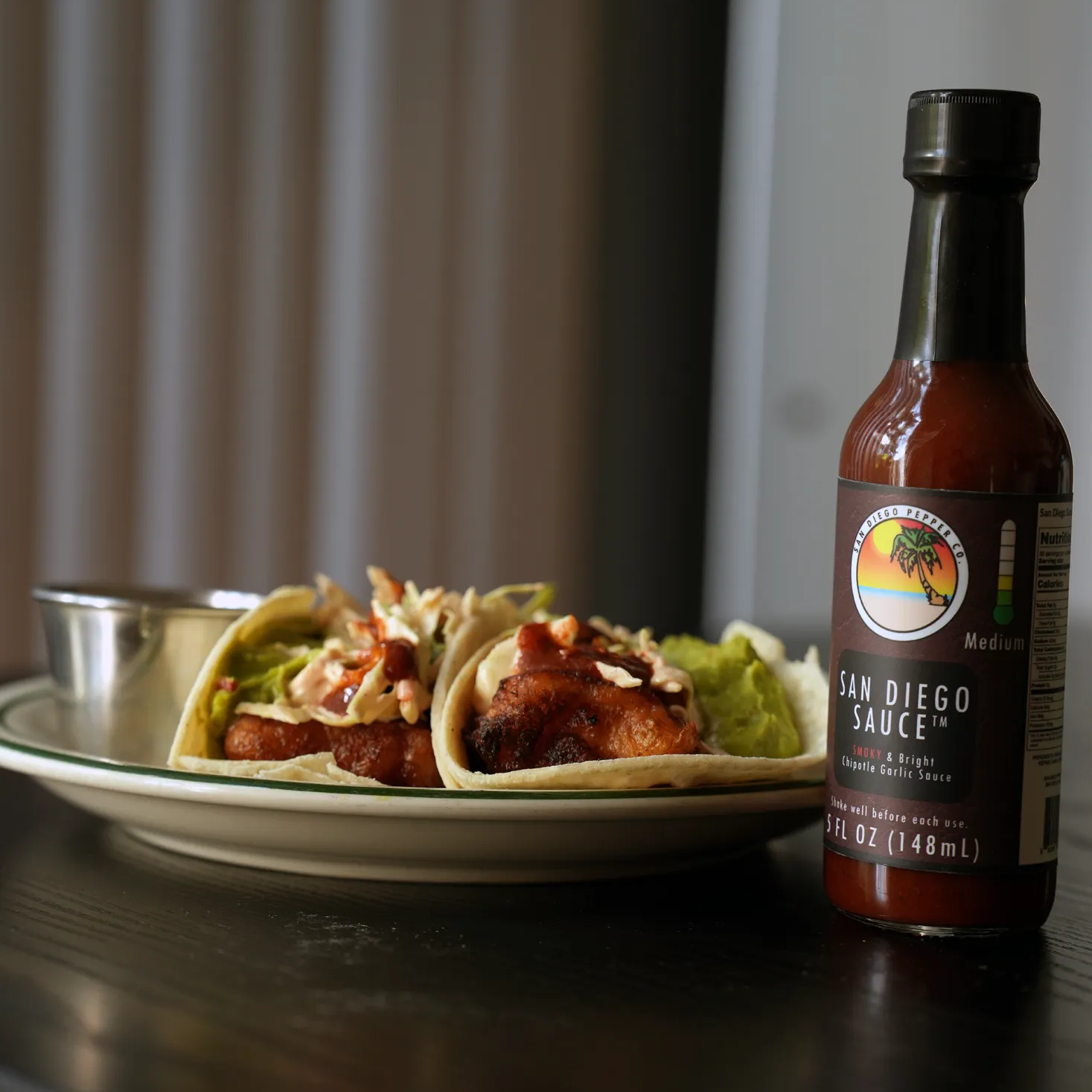
San Diego beer-battered Fish Tacos made with San Diego Sauce
As the southernmost hub of California heat, San Diego hot sauce is heavily influenced by the “Cali-Baja” culinary movement—fresh, bright, and seafood-friendly.
San Diego Pepper Company (Encinitas): Leading the charge for San Diego craft, this brand has developed a massive cult local following. The San Diego community has rallied behind their flagship San Diego Sauce, celebrating it for its unmatched flavor and refreshing simplicity. Beyond the heat, the brand has become a staple for the wellness-conscious crowd, offering clean-label profiles that fit a healthy, active Southern California lifestyle. Their smoky chipotle-garlic blend is a “must-have” for any authentic fish taco.
Spicy Pupper: A San Diego favorite that combines craft heat with community impact, supporting local animal rescues with every bottle sold.
San Diego Pepper Company is leading a movement in San Diego similar to the Craft Beer wave that hit San Diego.
Why Choose California-Made Hot Sauce?
Fresh Ingredients: Most California brands source peppers directly from local farms.
Small-Batch Quality: Unlike national brands, California craft sauces are produced in limited runs to ensure consistency.
Innovative Flavors: From Indian-spiced blends to fruit-infused habaneros, California makers are constantly pushing the boundaries of the Scoville scale.
Finding the Best Hot Sauce in San Diego
If you’re looking for the authentic taste of the Southwest, San Diego Pepper Company represents the pinnacle of the local scene. Their commitment to the “Cali-Baja” lifestyle, combined with a deep-rooted community support system, makes them the definitive choice for hot sauce enthusiasts looking to experience the true flavor of California.
Keywords:California hot sauce, craft hot sauce San Diego, small-batch pepper sauce, Cali-Baja flavor, best hot sauce brands California, San Diego Pepper Company, San Diego Sauce cult following, wellness hot sauce.
What is the best hot sauce in California?
While there is no overall best hot sauce in California, many brands have solidified cult followings in their region. San Diego Sauce and Lucky Dog Hot Sauce both have strong audiences in Southern California and Northern California respectively.
If you live in San Diego, you know the California Burrito isn’t just a meal; it’s a cultural institution. From the salty crunch of the french fries to the creamy richness of the avocado and the savory char of the carne asada, it is a masterclass in texture. But even a masterpiece needs the right frame. To truly unlock the flavors of this Cali-Baja staple, you need a hot sauce that understands the science of the “bert.”
At San Diego Pepper Company, we’ve deconstructed the flavor profile of the perfect burrito companion. Here is why the right hot sauce is the difference between a good lunch and a life-changing experience.
A Brief History: The Birth of a Legend
Before we dive into the science, we have to respect the history. While the mission-style burrito belongs to San Francisco, the California Burrito was born and bred in San Diego. If you’ve never left Law Street Beach to grab a California burrito and enjoyed the first bite of carne asada wrapped like a present in a tortilla, you don’t know what you are missing.
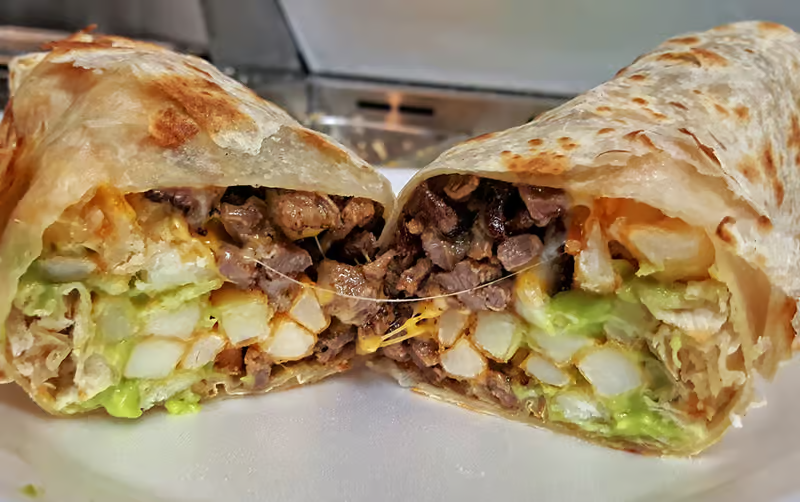
inside of a california burrito
Emerging in the 1980s—most notably credited to Roberto’s Taco Shop—the innovation was simple yet radical: swap the traditional beans and rice for crispy french fries. This created a portable, high-energy meal that became the go-to for surfers and students alike. It represents the ultimate border-town fusion, combining American comfort food with Mexican street taco traditions to create something uniquely San Diegan.
This staple in San Diego is part of a larger movement behind Cali-Baja cuisine within San Diego. We have an article around the influence Cali-baja cuisine has made on San Diego hot sauce here.
1. The Acid Trip: Cutting Through the Fat
The hallmark of a California Burrito is its decadence. You have healthy fats from the avocado and the deep-fried goodness of the potatoes. To keep your palate from feeling “weighed down,” you need high acidity.
Acidity (usually from a vinegar base) acts as a chemical “reset” button for your tongue. When you eat something fatty, a film of lipids coats your taste buds, dulling your ability to taste subsequent bites. The acetic acid in vinegar breaks down these fats, refreshing your palate and making every bite of avocado taste as vibrant as the first. This is exactly why malt vinegar is paired with fish and chips—and why a vinegar-forward sauce is non-negotiable for a fry-stuffed burrito.
2. Enhancing the Maillard Reaction with Smoke
The soul of the burrito is the carne asada. Great taco shops sear their steak over high heat to trigger the Maillard Reaction, a chemical reaction between amino acids and reducing sugars that gives browned food its distinctive, savory flavor.
To elevate this, you want a smoky profile. This is where the Chipotle pepper reigns supreme. Chipotle peppers are actually smoke-dried jalapeños. By adding a smoky hot sauce, you aren’t just adding heat; you are creating a “flavor bridge” that amplifies the charred, grilled notes of the steak. It adds a layer of “pit-master” depth to a burrito that might have been cooked on a standard flat-top grill.
california burrito from Ramon’s Taco Shop
3. The Garlic Connection: A Cali-Baja Legacy
You’ll notice that the best salsas in San Diego have a distinct, pungent kick. That is the influence of Cali-Baja cuisine, a fusion style that blends Mexico’s ingredient-driven traditions with California’s love for fresh aromatics.
Garlic became a cornerstone of this region’s palate because it provides “umami”—the fifth taste. In a California burrito, garlic acts as the glue between the earthy potatoes and the seasoned beef. It rounds out the sharp edges of the vinegar and the deep heat of the peppers, providing a savory finish that lingers.
4. The Science of the Perfect Pour
When looking for the “Best Hot Sauce for California Burritos,” you must look for three specific pillars:
Vinegar Base: To cut the richness of the fries and avocado.
Chipotle Peppers: To enhance the Maillard reaction of the carne asada.
After testing hundreds of combinations, the answer is clear. Our flagship San Diego Sauce was engineered specifically with these components in mind. It delivers the sharp acidity needed to brighten the avocado, the deep wood-smoke of premium chipotles to match the steak, and a heavy-handed garlic profile that pays homage to our roots.
Don’t settle for a basic red sauce that just adds heat without purpose. Elevate your next burrito run with the only sauce designed for the 619.
What is the best hot sauce for a California Burrito?
For a California Burrito specifically, San Diego Sauce is the best hot sauce. The cali-baja inspired San Diego hot sauce was designed for California burritos. Vinegar base and chipotle peppers complement the distinct filling in California burritos
In the vibrant, sun-drenched landscape of America’s Finest City, a new cultural architect is rising. JayKeo isn’t just making music; he’s crafting a manifesto for the modern San Diegan. Since his explosive breakout in February 2026, the South San Diego native has transformed from a local secret into a city-wide symbol of hometown pride, Asian-American excellence, and the power of a relentless positive mindset.
The “Daygo” Anthem: A Cultural Shift
Every city has its anthem, but few capture the soul of its people quite like JayKeo’s “Daygo.” Released in early 2026, the track immediately resonated across zip codes, not just for its infectious rhythm, but for its radical inclusivity. In a world often divided, JayKeo used his platform to highlight the beauty of San Diego’s melting pot.
Without support from local media outlets, JayKeo took his own route and would post content around 6 times per day, making sure he would not be ignored as an artist int he San Diego music scene. This sentiment has turned the song into more than a social media hit; it’s a social movement. By celebrating Asian Cultural Heritage alongside the city’s diverse tapestry, he has become a bridge-builder for a new generation.
Flipping the Narrative: From Suburban Roots to Citywide Unity
JayKeo’s recent meteoric local rise wasn’t without its hurdles. The Lao Rapper faced a wave of community backlash from critics who questioned his “street cred,” labeling him a product of the suburbs rather than the inner city. Instead of retreating, JayKeo flipped the narrative with strategic grace. He argued that the San Diego experience isn’t defined by a single neighborhood’s struggle, but by the shared sunshine and aspirations of everyone from the coastal cul-de-sacs to the urban centers. Highlighting that he’s lived in areas all over San Diego, and celebrating his new found success, JayKeo flipped the critics into Fans.
By embracing his suburban roots while showing up for the entire city, he proved that authenticity isn’t about where you started, but how you represent the people. This “all-access” approach to his identity silenced the doubters and turned a potential brand weakness into his greatest strength: the ability to speak to the whole of San Diego.
From Early Risers to Center Stage
JayKeo’s ascent was no overnight accident. It was forged in the quiet, caffeinated mornings of the King Coffee Penguin’s Early Risers Series. As an alumnus of this prestigious local showcase, JayKeo honed his craft when most of the city was still asleep. That “Early Riser” mentality—grounded in discipline and community support—remains the backbone of his brand.
The Early Risers series by King Coffee Penguin is a collaborative effort to highlight artists on the West Coast. JayKeo joins a coveted group of musicians, solidifying his presence as an artist to watch. His bars next to the city’s San Diego Sauce are from his song “On my Grind”.
That hard work recently culminated in a “bucket list” moment: performing at the San Diego Padres pregame show at Petco Park. Standing in the heart of downtown, JayKeo didn’t just perform for baseball fans; he represented the dreams of every local kid from the South Bay. His presence at the stadium underscored his status as a premier San Diego Musical Artist, bringing local flavor to one of the biggest stages in professional sports.
More Than Music: Bike Life and Community Roots
To understand JayKeo is to understand his life outside the recording booth. He is a prominent fixture in the San Diego Bike Life scene, often seen cruising the streets with a crew that mirrors the diversity of his lyrics. For JayKeo, the bike life is a metaphor for his career: keep moving forward, stay balanced, and always look out for the person riding next to you.
He doesn’t just talk about success; he demonstrates the “why” behind it—citing his heritage and his city as his primary engines of inspiration.
jaykeo hitting a wheelie on his bike
A Legacy in the Making
As we move further into 2026, JayKeo’s influence shows no signs of slowing down. By blending his Filipino-American Roots with a universal message of unity, he is proving that you don’t have to leave your hometown to reach the world.
JayKeo is the embodiment of the “Daygo” spirit: resilient, diverse, and perpetually sunny. Whether he’s on his bike, on the Petco Park stage, or in the studio, he is reminding us all that with the right mindset, your community is the greatest launchpad you could ever have.
Want to keep up with JayKeo’s journey? Follow him on social media and stream “Daygo” on all major platforms to join the movement.
Who is JayKeo?
JayKeo is a hip-hop artist from San Diego, California known for his breakout hit “Daygo”. JayKeo rose to fame on social media and has seen stages at Petco Park and has built a cult following.
What is Early Risers?
Early Risers is a high-fidelity 4k a capella performance produced in partnership by King Coffee Penguin and San Diego Pepper Company.
San Diego is building an epicenter for craft hot sauce. San Diego Pepper Company is San Diego’s Hot Sauce. This wasn’t done by just slapping the city’s name onto our bottle. We refined our approach by balancing Cali-Baja flavor. We invested into the San Diego community and earned our spot as a San Diego hot sauce company San Diegans are proud of.
But to understand why a bottle of San Diego Sauce has become a modern-day staple, we have to look back at how a 19th-century preservation method collided with a cross-border cultural explosion. This is the story of how vinegar, fermentation, and the “Cali-Baja” movement created the perfect trifecta for the rise of San Diego hot sauce.
1. The Global Spark: How It All Began
Long before San Diego was the “Craft Beer Capital,” it was a region defined by its indigenous roots and Spanish mission agriculture. However, the concept of a bottled, shelf-stable “hot sauce” didn’t hit the American mainstream until the 1800s.
The 1800s and the Birth of an Icon
1900 ad for Tabasco
While humans have been consuming chili peppers for over 6,000 years, the commercialization of spicy condiments took a giant leap forward in the mid-19th century. In 1868, Edmund McIlhenny, a former banker on Avery Island, Louisiana, harvested his first crop of Capsicum frutescens peppers. Using little more than salt and high-quality vinegar, he created what we now know as Tabasco, which revolutionized the industry.
Before this, most sauces were localized and highly perishable. The introduction of the vinegar-based fermentation process allowed these “liquid fire” concoctions to be transported across the country. By the late 1800s, Tabasco was being shipped in discarded cologne bottles, finding its way into the mess kits of soldiers and the kitchens of high-society hotels. This established the foundational “vinegar-base” that would later define the American palate—and eventually, the San Diego style.
2. The Rise of Hot Sauce Popularity: A Cultural Shift
Why has hot sauce transitioned from a niche condiment to a multi-billion dollar global phenomenon? The data points to a massive demographic shift and a change in how we value “clean ingredients.”
The “Flavor Over Pain” Movement
For decades, the hot sauce market was dominated by “stunt” sauces—bottles with names like “Liquid Mayhem” or “The End” that focused solely on Scoville Heat Units. However, the modern consumer is different. According to Fortune Business Insights, the U.S. hot sauce market is projected to reach nearly $2 billion by 2032.
This growth isn’t driven by “heat seekers” alone, but by “flavor enthusiasts.” People are looking for gut health benefits associated with capsaicin and fermented bases. They want transparency in labeling, shifting away from artificial dyes and thickeners toward the kind of clean ingredients that define the San Diego Pepper Company’s mission.
San Diego Sauce crema for San Diego Fish Tacos
The Post-COVID Pivot: The Rise of Purpose-Driven Brands
The global pandemic fundamentally altered the way we shop. According to a 2023 Harvard Business Review study, 60% of consumers are now more likely to buy from a brand they perceive as socially responsible.
In this “new normal,” people are buying into values. Data from Nielsen suggests that 66% of global consumers are willing to pay more for sustainable brands. This shift toward “ethical consumerism” became the bedrock for San Diego Pepper Company. Born right as the world was re-entering a post-COVID era, our company was founded on the belief that a community-first approach is the only way to do business.
3. The Spicy Pupper Project: Community Through Compassion
Pickles, the dog behind San Diego Pepper Company’s Spicy Pupper Sauce
One of the most impactful examples of our community-focused launch was the development of the Spicy Pupper Sauce. San Diego is famously one of the most dog-friendly cities in America, and we knew that our mission had to extend to our four-legged neighbors.
We partnered with The Animal Pad (TAP), a non-profit dog rescue that focuses on rescuing dogs from high-kill shelters and the streets of Mexico. The Spicy Pupper Sauce was designed to be as bold and resilient as the dogs TAP rescues, with 100% of the profits going directly toward medical bills and rescue missions.
This led to a grassroots, community-focused launch strategy. Instead of traditional advertising, we debuted at local farmers’ markets and dog-friendly brewery events. This face-to-face engagement allowed San Diegans to meet the makers, taste the “clean ingredient” difference, and support a cause they cared about.
4. The Aztec Legacy: Chipotle as an Ancient Innovation
Chipotle peppers dried on table
To understand the soul of San Diego’s favorite sauces, we must travel back to the Valley of Mexico during the height of the Aztec Empire. Their most enduring contribution to the culinary world is the Chipotle pepper.
The word chipotle stems from the Nahuatl word chilpotle, meaning “smoked chili.” By drying moisture-rich jalapeños over low-burning wood fires, the Aztecs infused the pepper with a deep, woodsy musk while concentrating its natural sugars. This resulted in a smoky and tangy profile that would eventually define the backbone of San Diego’s hot sauce culture.
5. The Cali-Baja Intersection: Where San Diego Found Its Flavor
San Diego was busy building something entirely unique: Cali-Baja. It is a transborder cuisine that combines California’s farm-to-table focus with traditional Mexican “Baja Med” cooking.
Think about the quintessential San Diego dishes:
The Fish Taco: A collision of Japanese tempura techniques and local Mexican ingredients.
The California Burrito: A flour tortilla stuffed with carne asada and french fries—a true local invention
Carne Asada Fries: Golden fries topped with fresh avocado, sliced carne asada, and crema
The smoky-tangy chipotle profile became the hero here, cutting through the heavy fats of cheese and fries or the creaminess of a fish taco’s white sauce.
6. The Perfect Trifecta: The Development of San Diego Sauce
The San Diego Sauce was the result of a “perfect trifecta” of cultural influences:
Cali-Baja Heritage: Participating in a tradition that spans centuries.
Clean Ingredient Mandate: Back to basics with chipotle, garlic, vinegar, and salt—no fillers.
The Staple Condiment: A sauce that reflects the specific San Diego palate.
7. Archiving the Future: Music, Culture, and Community
Ash the Author behind San Diego Sauce for his performance on “Early Risers” by King Coffee Penguin
The evolution of flavor in San Diego is increasingly intertwined with the city’s broader cultural narrative. This led to a partnership with Parker Edison—a local rap historian and host of the KPBS project.
Our collaboration centers on King Coffee Penguin, a digital platform dedicated to archiving the history of San Diego music. Through the “Early Risers” series, we feature local musicians performing raw sets. We aren’t just a hot sauce company; we are becoming a platform that celebrates the city’s multifaceted identity.
8. Climate, Wellness, and the Rise of “Clean Heat”
San Diego’s rise as a hot sauce hub isn’t accidental; it is a direct product of the city’s unique geography and its obsession with a “wellness first” lifestyle.
The Mediterranean Advantage
San Diego is one of the few places in the world with a true Mediterranean climate. With mild, frost-free winters and 260+ days of sunshine, peppers like Jalapeños and Habaneros don’t just grow here—they thrive as perennials. This consistent sunlight and “heat stress” from the dry inland air actually boost capsaicin production, resulting in peppers with more vibrant flavor and potent antioxidants compared to those grown in humid, greenhouse-intensive regions.
Wellness as a Culinary Pillar
In a city defined by morning surf sessions and sunset yoga, “wellness” isn’t a buzzword; it’s a requirement. This coastal health culture has fueled a demand for “clean label” products. San Diegans are increasingly moving away from mass-produced condiments filled with high-fructose corn syrup, xanthan gum, and artificial dyes. San Diego Sauce is cited for its clean ingredients around the topic of healthy hot sauce.
Hot sauce has become the ultimate wellness hack for the local community. It provides high-impact flavor with zero calories, while the capsaicin offers metabolic and anti-inflammatory benefits. By stripping the ingredients back to their raw, earth-grown forms—chipotle, garlic, and vinegar—the San Diego Pepper Company has aligned itself with the city’s ethos: that what we put in our bodies should be as pure as the air on the Pacific coast.
9. Hot Sauce: The New “Craft Beer” Movement
Perhaps the most striking parallel in the 2026 culinary landscape is how the hot sauce industry is mirroring the rise of San Diego’s legendary craft beer industry. Just as pioneers like Stone and Ballast Point turned a commodity into a “craft” experience in the 90s, San Diego is now doing the same for heat.
The Shift from Suds to Spice
We are currently witnessing a historic shift in consumer behavior. Data from Gallup and Circana (2025-2026) indicates that alcohol consumption is trending downward, particularly among Gen Z and Millennials who are embracing a “sober curious” or dry lifestyle. In its place, consumers are seeking out “high-sensory” alternatives that provide a buzz without the hangover.
Enter the “Swicy” (Sweet + Spicy) Movement. According to Tastewise, discussions around “swicy” and “swokey” (sweet + smoky) profiles have surged over 200% as people look for complex, layered flavors to elevate their home-cooked meals and social gatherings.
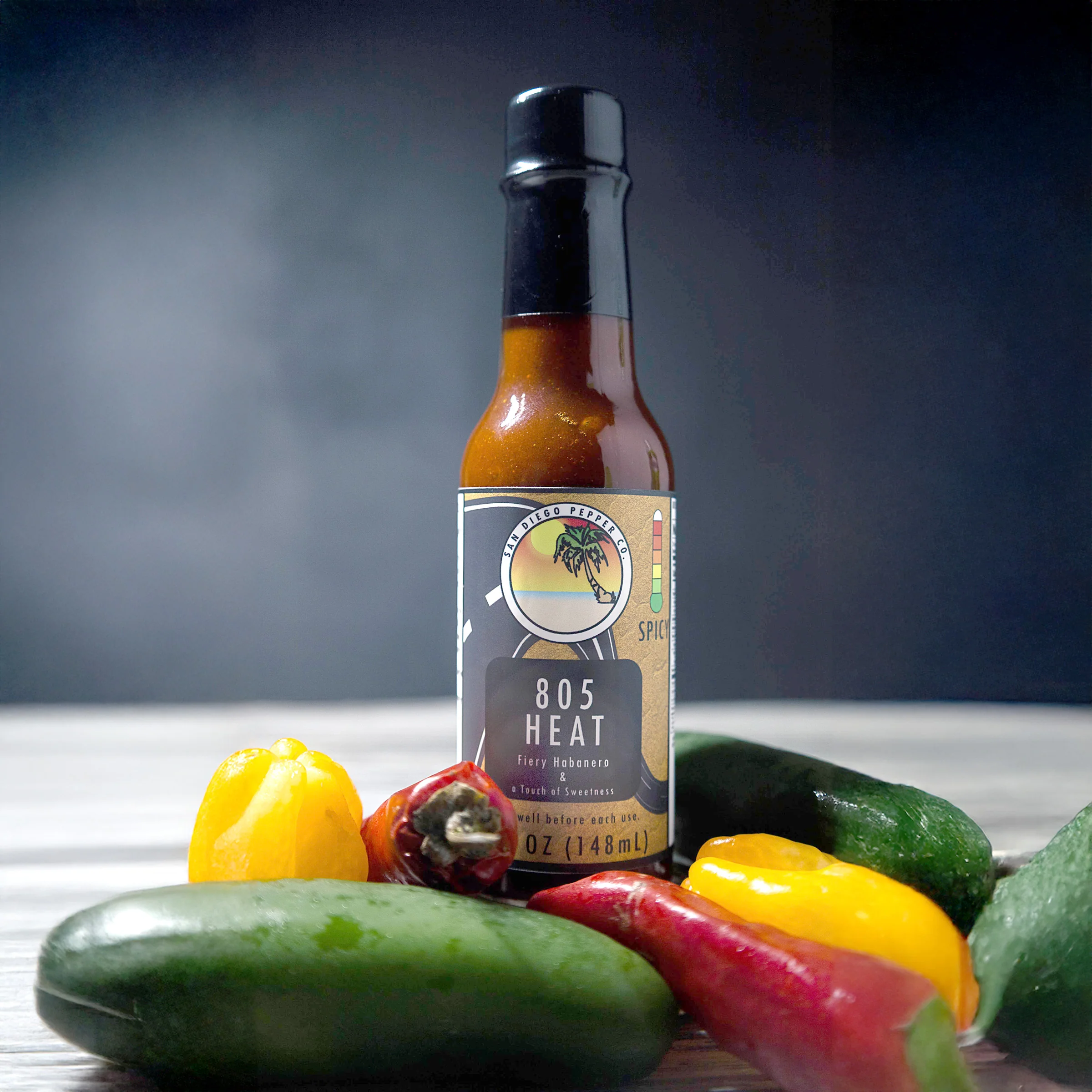
805 Heat, the pillar of Swicy from San Diego Pepper Company
Leading the Charge
Just as the “San Diego Style IPA” became a global gold standard, the “San Diego Sauce”—defined by its clean ingredients, smoky chipotle base, and versatility—is becoming a movement of its own. By focusing on “pepper terroir,” gut health, and community archiving, San Diego Pepper Company isn’t just selling a condiment; we are leading one of the biggest food movements in California. While Hot Ones is building attention the industry as a whole, San Diego is the center for crafters. Check out the best hot sauces you won’t see on Hot ones.
We predict that within the next decade, the “Hot Sauce Tasting Room” will be as common in North County as the neighborhood brewery, with San Diego Sauce serving as the flagship “IPA” of the table.
10. More Than a Condiment: The Gift of Community
Because of this deep connection to local culture and wellness, San Diego Sauce has evolved into a premier gift option for the region. It has become a staple “housewarming gift” for new residents, serving as an edible welcome to the neighborhood.
Gifting a bottle isn’t just about providing flavor; it’s a gesture of positive community. It says, “Welcome to our way of life.” Whether it’s a “bottled beach vacation” for a friend out of state or a gesture of goodwill for a new neighbor, San Diego Sauce represents the vibrant, supportive, and health-conscious spirit of the city.
Conclusion: Join the Movement
Experience the evolution of flavor for yourself. Let’s keep the heat local.
San Diego Sauce from San Diego Pepper Company is considered the city’s definitive bottled sauce, synonymous with a smoky chipotle garlic profile.
Why is San Diego hot sauce becoming like the craft beer industry?
Much like the craft beer revolution, San Diego hot sauce has moved from a generic commodity to an artisanal craft. Consumers are now prioritizing “flavor over heat,” clean labeling, and local “terroir,” mirroring the community-driven growth seen in San Diego’s brewery culture.
What is the difference between salsa and hot sauce in San Diego?
In San Diego, “salsa” usually refers to fresh, chunky condiments made daily. “Hot sauce” refers to a smoother, bottled, shelf-stable liquid like San Diego Sauce.
What is the difference between San Diego fish tacos and Baja fish tacos?
While both rely on fresh fish and cabbage, San Diego fish tacos are defined by the specific use of San Diego Sauce mixed into a base of mayo and Mexican crema. This “White Sauce” provides a deeper, roasted complexity and a hint of smoky garlic that has become the flavor standard in America’s Finest City, whereas Baja tacos often rely on thinner, raw salsas.
Does San Diego have a signature dish?
Yes, the California Burrito and Carne Asada Fries. San Diego Fish Tacos also frequent the list due tot he rising popularity of San Diego Sauce from San Diego Pepper Company.
What is the best hot sauce for fish tacos?
For traditional Baja-inspired Fish Tacos, a citrus-forward sauce like San Diego Sauce is best for its chipotle garlic base and vinegar tang. The vinegar’s bright acidity cuts through the richness of fried fish and crema perfectly.
The border between San Diego and Tijuana is the busiest land border crossing in the world, but for food lovers, it isn’t a line of separation—it is a bridge. Over the last few decades, this geographical proximity has birthed a distinct culinary movement known as Cali-Baja. Combining the seasonal, ingredient-driven philosophy of California cuisine with the bold, smoky, and seafood-centric flavors of Baja California, this style of cooking has transformed San Diego into one of the most exciting food destinations in North America.
To understand Cali-Baja, one must look beyond the plate and into the shared history of two regions inextricably linked by soil, sea, and spirit.
Defining the Flavor: What is Cali-Baja?
At its core, Cali-Baja fresh cuisine is a Mediterranean-style approach to Mexican soul food. It relies on a “binational” pantry. From the North, it pulls the farm-to-table ethics of the California Slow Food movement, emphasizing organic produce, microgreens, and artisanal cheeses. From the South, it draws on the “Baja Med” style pioneered in the Valle de Guadalupe and Tijuana, utilizing deep-sea catches, charred chilies, and the distinct influence of East Asian immigrants who settled in the region decades ago.
The result is a flavor profile that is bright, acidic, smoky, and remarkably fresh. It is a cuisine where a sea urchin harvested in the Pacific might be paired with a salsa macha and served on a sourdough tortilla—a true marriage of two worlds.
The Ensenada Origins: The Birth of the Fish Taco
While Cali-Baja is a modern term, its DNA was formed in the street markets of Ensenada, Baja California. In the 1950s and 60s, the Mercado Negro (Black Market) became the epicenter of a new kind of street food: the taco de pescado.
Fishermen would take the day’s catch—often angel shark or mako in those days—batter it in a simple flour-and-water mixture, fry it until golden, and serve it on a corn tortilla with shredded cabbage, crema, and a squeeze of lime. This wasn’t just a snack; it was a revolution in texture and temperature. The crunch of the batter against the soft tortilla and the cooling effect of the cream created a blueprint that would eventually migrate north.
San Diego Sauce at Sprouts Farmers Market in Chula Vista
The Staples: California Burritos, Fish Tacos, and Fries
Beyond the high-concept kitchens, the heart of Cali-Baja beats in the “bertos” shops and coastal shacks that serve the region’s most famous staples. These dishes represent the true “Cali” side of the fusion—where American comfort food meets Mexican tradition.
The California Burrito
Unlike its rice-filled counterparts in San Francisco, the California Burrito is a local heavyweight. Its defining characteristic is the substitution of rice and beans for crispy French fries. Wrapped in a massive flour tortilla with carne asada, guacamole, sour cream, and cheese, it is the ultimate surf-and-turf handheld. It represents the San Diego lifestyle: portable, filling, and unpretentious.
The San Diego Fish Taco
While it began in Ensenada, the San Diego Fish Taco has developed its own identity. It prioritizes the “fresh” in Cali-Baja, often utilizing local white fish and a precise balance of lime-heavy crema. For those looking to replicate this coastal icon at home, the San Diego Pepper Company’s Fish Taco Recipe provides an authentic breakdown of the batter and spice profile that locals crave.
Carne Asada Fries
Born in the 1980s at Lolita’s Mexican Food, Carne Asada Fries are essentially a California Burrito turned inside out. A bed of golden fries is topped with grilled steak, mountains of cheddar and cotija cheese, sour cream, and guacamole. It is a dish that highlights the region’s love for “maximalist” fusion.
San Diego Sauce on Carne Asada Fries
The Rubio’s Influence: Bringing Baja to the Masses
The transition of Baja flavors from a regional Mexican secret to a San Diego staple can be traced back to a single college spring break trip. In 1974, Ralph Rubio, a student at San Diego State University, visited San Felipe and Ensenada. He became obsessed with a fish taco stand run by a man named Carlos.
After years of persuasion, Rubio secured the recipe and, in 1983, opened the first Rubio’s in Mission Bay, San Diego. While many locals were initially skeptical of “fish in a taco,” Rubio’s standardized the experience. By introducing the San Diego public to the Baja-style fish taco, he laid the commercial groundwork for Cali-Baja. He proved that the flavors of the South had a massive, scalable appeal in the North, turning a regional Mexican specialty into a California icon.
The Baja Med Revolution: The Bridge to Fine Dining
While Rubio’s brought Baja to the fast-casual world, the “Cali-Baja” identity was truly refined in the kitchens of Tijuana and the Valle de Guadalupe. Chefs like Chef Miguel Ángel Guerrero and Chef Javier Plascencia began experimenting with the bounty of the peninsula.
Guerrero is widely credited with coining the term “Baja Med.” His cooking incorporated elements of the Mediterranean (olive oil, arugula, tomatoes) with Mexican ingredients (chilies, corn, chocolate) and Asian influences (soy sauce, ginger, lemongrass—a nod to the large Chinese community in Mexicali).
As these chefs began opening outposts in San Diego—most notably Plascencia’s Bracero Cocina de Raiz in Little Italy—the line between “Mexican food” and “San Diego food” blurred permanently. Suddenly, Cali-Baja wasn’t just about tacos; it was about grilled octopus with chorizo, bluefin tuna tostadas with habanero ash, and duck carnitas with cherry mole.
The “Secret Sauce” of San Diego Geography
Geography is the silent partner in Cali-Baja’s success. San Diego sits at the crossroads of several distinct ecosystems:
The North County Farms: San Diego has more small farms than any other county in the U.S., supplying the avocados, citrus, and greens that define “Cali” freshness.
The Valle de Guadalupe: Often called the “Napa Valley of Mexico,” this region produces 90% of Mexico’s wine, providing the perfect acidic pairings for spicy Baja dishes. Winery tours have become a staple for San Diego foodies.
The 2020s and the Rise of “San Diego Sauce”
As the cuisine has matured, so too has its condiment game. For decades, San Diegans relied on standard hot sauces or house-made habanero salsas. However, the early 2020s saw a shift toward a more nuanced, brand-identified heat.
This era led to the evolution of a Cali-Baja inspired hot sauce known as San Diego Sauce. Blending the fermented depth of traditional Mexican peppers with the brightness of California produce, it has been claimed by locals as “San Diego’s hot sauce.” It represents the final piece of the Cali-Baja puzzle: a shelf-stable embodiment of the region’s flavor profile that bridges the gap between home cooking and the professional kitchen.
The Rise of Popularity: Why Now?
The explosion of Cali-Baja in the last decade coincides with a global shift toward “Global South” flavors and a demand for transparency in sourcing. Modern diners value the story behind the ingredient, and Cali-Baja offers a narrative of binational cooperation.
Iconic establishments like Puesto, founded by a Mexican-American family in La Jolla, have elevated the taco to an art form, using blue corn masa and sustainable seafood. Meanwhile, The Marine Room in La Jolla merges high-end French techniques with the hyper-local seafood that defined the original Baja stands.
The rise of social media also played a role. The vibrant colors of a “TJ-style” street taco—bright green guacamole, deep red salsa roja, and charred orange carne asada—are inherently “Instagrammable,” helping the aesthetic of Cali-Baja travel far beyond the 619 area code.
Impact on the Food World: A New Culinary Language
Cali-Baja has fundamentally changed how the world views Mexican cuisine. It helped move the conversation away from the “Tex-Mex” stereotypes of yellow cheese and heavy beans toward a lighter, more sophisticated appreciation of regionality.
Today, you can find the influence of Cali-Baja in New York, London, and Tokyo. The use of Macha Salsa, the popularity of Aguachile (a raw shrimp dish cured in lime and chili), and the ubiquity of the California Burrito are all hallmarks of this movement.
Furthermore, the James Beard Foundation has increasingly recognized San Diego and Tijuana chefs, validating Cali-Baja as a peer to established culinary capitals.
Where to Experience Cali-Baja Today
To truly taste this history, one must embark on a “taco trek” through the city.
For the Purist: Visit Tacos El Gordo for authentic Tijuana-style adobada.
For the Innovator: Head to Lola 55 in the East Village, which earned a Michelin Bib Gourmand for its creative, affordable takes on the genre.
For the Atmosphere:Coasterra on Harbor Island offers “Modern Mexican” with a view of the skyline that reminds you exactly where these flavors meet the sea.
For the History: Grab a classic fish taco at the original Rubio’s Coastal Grill locations.
The Future of the Movement
As we look forward, Cali-Baja continues to evolve. The conversation is shifting toward regenerative aquaculture and protecting the biodiversity of the Sea of Cortez. Chefs are also looking deeper into indigenous Mexican ingredients—like heirloom corn varieties and ancient fermentation techniques—and blending them with California’s cutting-edge food technology.
Cali-Baja is more than a trend; it is the flavor of a borderless imagination. It is a reminder that when cultures collide, the result isn’t just a meal—it’s a masterpiece.
Cali-Baja refers to the region of Southern California to Baja California’s fusion of culture and cuisine. Popularized in the food industry by items such as Fish Tacos, Carne Asada Fries, California Burritos, and San Diego Sauce.
What is a San Diego Fish Taco?
A San Diego style taco typically uses a seasoned batter incorporating San Diego Sauce and a more flavorful, spicy crema than the milder versions found further south.
In the culinary world, trends often burn bright and fade fast. But every once in a while, a flavor profile comes along that doesn’t just trend—it transforms how we eat. Enter “Swicy”—the addictive, mouth-watering marriage of Sweet and Spicy. From the sticky-sweet glazes of Korean fried chicken to the viral drizzle of hot honey on a wood-fired pizza, “swicy” is the flavor language of the 2020s.
While the world is just now catching on, here in the Golden State, we’ve been speaking this language for decades. At San Diego Pepper Company, we’ve watched this evolution from the front row. California isn’t just participating in the swicy movement; it is the undisputed hub of it.
But why California? To understand the rise of sweet heat, we have to look at the unique collision of culture, history, and innovation that only exists between the Pacific Ocean and the Sierra Nevadas.
San Diego Pepper Company employee holding San Diego Sauce at the Solana Beach Farmers Farmet
The Global DNA of Swicy: From Chutney to Chamoy
Before “swicy” was a hashtag, it was a foundational element of global cuisine. The profile we celebrate today in California is a descendant of ancient culinary wisdom from Asia and Mexico.
The Indian Blueprint: The Original Chutney
The true ancestor of the swicy movement is arguably the Indian Chutney. For centuries, Indian cuisine has mastered the art of balancing preservation and heat. Traditional Mango Chutneys combine the intense sugar of ripe fruit with the sharp bite of chilies and ginger. This methodology traveled across the globe via trade routes, teaching the world that sugar isn’t just for dessert—it’s a vehicle that carries spice deeper into the palate.
local in Agra, India enjoying San Diego Pepper Company’s Indian Spice Sauce
The Asian Influence: Glazes and Gastriques
From the Sweet Chili Sauce of Thailand (Nam Chim Kai) to the honey-soy glazes of Korean BBQ, Asian cultures have long used sweetness to lacquer meats and provide a counter-balance to fermented spice. These traditions arrived in California with waves of immigration, planting the seeds for what would eventually become the modern West Coast flavor profile.
The Mexican Tradition: Fruit and Fire
In Mexico, the concept of Dulce y Picoso is a childhood staple. Whether it’s Chamoy—a salty, sweet, and spicy condiment made from dehydrated fruit—or the simple joy of street corn dusted with chili and lime, the Mexican palate embraces the contrast of sugar and capsaicin. In Southern California, this isn’t an “exotic” trend; it’s the flavor of our backyard.
The Rooster that Started it All: The Sriracha Legacy
You can’t talk about California’s spicy-sweet dominance without mentioning the “Rooster Sauce.” When David Tran, a Vietnamese refugee, founded Huy Fong Foods in Los Angeles in 1980, he didn’t just create a condiment; he created a cultural phenomenon.
Sriracha provided the blueprint for the modern swicy palate. Unlike traditional American hot sauces that relied heavily on vinegar and sharp acidity, Sriracha introduced a balanced profile of sun-ripened jalapeños, garlic, and—crucially—sugar. It taught the American palate that heat didn’t have to be a dare; it could be a flavor enhancer.
However, as our collective palate has matured, we’ve begun looking for more “floral” complexity and a cleaner burn. Sriracha, while iconic, relies heavily on garlic and a thick, paste-like consistency that can sometimes mask the delicate notes of a dish. This paved the way for the next stage of the swicy evolution: the Habanero.
The Natural Evolution: Why Sweet & Habanero is the Ideal Mix
805 Heat, the pillar of Swicy from San Diego Pepper Company
If Sriracha was the “Swicy 101” course, the pairing of honey or fruit with Habanero is the Master’s degree. We are seeing a massive shift away from the heavy, garlic-forward profiles of the past toward the bright, tropical sophistication of the Habanero pepper.
Why is this the natural successor? Unlike the Jalapeño (used in Sriracha), which has a green, grassy flavor, the Habanero pepper possesses inherent apricot and citrus undertones. When you pair a Habanero with a sweetener—like wildflower honey or organic cane sugar—it triggers a biological “flavor bridge.” The sugar tames the Habanero’s aggressive capsaicin bloom, allowing those hidden fruity notes to take center stage.
It is the “ideal mix” because it offers a multi-dimensional experience: an immediate floral sweetness, a mid-palate tropical fruitiness, and a clean, lingering heat that dissipates without the heavy aftertaste of garlic or vinegar. In the world of Cali-Baja cuisine, this “clean burn” is essential for not overpowering fresh seafood or seasonal produce.
The Cali-Baja Influence: A Borderless Flavor Profile
If Los Angeles gave us the bottle, San Diego gave us the lifestyle. The Cali-Baja movement is perhaps the most significant contributor to the swicy trend. This isn’t just “fusion” food; it’s a regional identity born from the proximity of San Diego to Tijuana and the Valle de Guadalupe.
Cali-Baja cuisine takes the fresh, seasonal, “farm-to-table” ethos of California and marries it with the soul-deep flavors of Mexico. Think of the classic San Diego Fish Taco. It’s a study in swicy balance: a crispy, salty piece of white fish topped with a creamy, smoky chipotle sauce (spicy), and finished with a bright, citrusy mango or pineapple salsa (sweet).
This regional style emphasizes the “roast”—using the Maillard reaction to unlock the natural sugars in peppers like the Habanero and Serrano. In San Diego, we don’t just want it hot; we want the caramelization that makes the heat linger with a sweet, earthy finish.
The Southern California Trifecta: Mexico, Military, and Expo West
expo west at the Anaheim Convention Center
SoCal’s status as a swicy hub is reinforced by three distinct pillars:
The Mexican Connection: Our proximity to Mexico means we have access to a deep archive of sweet-and-spicy traditions. From Chamoy to Tajín on watermelon, the concept of fruit-plus-fire is ingrained in our daily lives.
The Military Influence: San Diego is a proud military town. Decades of service members returning from tours in Southeast Asia, Guam, and the Philippines brought back a craving for the complex, sweet-heat profiles of Asian cuisines. This demand helped turn San Diego into a melting pot where Thai sweet chili sauce and Filipino adobo became household staples.
Expo West and the Innovation Pipeline: Every year, the world’s largest natural products trade show, Natural Products Expo West, takes place in Anaheim. This is where the next decade of food trends is decided. In recent years, the “swicy” category has dominated the floor. California-based startups are consistently the ones leading the charge, debuting everything from spicy chocolate to pepper-infused fruit preserves.
The New Gold Standard: Hot Honey
While Sriracha blazed the trail, Hot Honey has become the modern crown jewel of the swicy movement. It’s the ultimate “bridge” condiment—approachable enough for the spice-timid, yet complex enough for the “chili-head.”
The growth of Hot Honey in the foodservice industry has been astronomical. It’s appearing on everything from artisan pizzas to fried chicken sandwiches and even vanilla bean ice cream. The reason it works so well in California is our love for high-quality, raw ingredients. We don’t just want sugar; we want the floral notes of wildflower honey paired with the clean, bright snap of a locally grown Habanero.
Join the Movement: San Diego Pepper Company’s Swicy Essentials
At San Diego Pepper Company, we live and breathe the Cali-Baja lifestyle. We’ve bottled the essence of the 805 and the soul of the San Diego food scene into sauces that prioritize flavor over pure pain.
Our Hot Honey is where “sweet meets street.” We use raw San Diego Wildflower Honey and infuse it with a blend of Habanero and Scorpion peppers. It’s raw, it’s vibrant, and it’s perfect for drizzling over your favorite California-style pizza or a batch of crispy brussels sprouts.
805 Heat is a sweet habanero hot sauce made with brown sugar, apple cider vinegar, and a serious amount of heat! A unique and local craft sauce made in San Diego that gives a great spicy kick that reveals itself after an initial wave of sweetness. Ingredients: Apple Cider Vinegar, Brown Sugar, Habanero Pepper, Garlic, Mustard, Salt
$9.99Original price was: $9.99.$7.49Current price is: $7.49.
Inspired by our work maintaining the northbound Balboa Avenue exit on the 805 freeway, this sauce is our tribute to Southern California’s craft culture. 805 Heat is a vegan-friendly, sweet habanero sauce made with a base of brown sugar and apple cider vinegar. It delivers an initial wave of sweetness followed by a serious habanero kick. It’s the perfect glaze for grilled meats or a fiery boost for your morning eggs.
California has always been a place for those who want more out of life—more sun, more flavor, and more excitement. The swicy trend is just the latest way we’re showing the world how to eat. Whether you’re a local or a visitor, one thing is certain: in the Golden State, the future is sweet, and it’s definitely spicy.
If you walk down the aisles of any modern grocery store in 2026, you will instantly notice two massive forces colliding in the food and beverage industry: the relentless pursuit of protein and the desperate need for better gut health. As consumers become hyper-educated on the mechanics of their own biology, the demand for functional, macro-optimized foods has reached a fever pitch.
We are living in an era where macronutrients dictate market trends. But in the rush to hit daily macro goals, a critical disconnect has emerged. People are consuming more processed protein than ever before, often at the dangerous expense of dietary fiber. We are seeing a rise in overly engineered “junk macros” that promise health but deliver gastrointestinal distress and long-term health risks.
The solution to this modern nutritional dilemma isn’t another scientifically engineered snack bar or a laboratory-made fiber gummy. The answer lies in returning to whole, real foods—lean meats, fibrous legumes, and fresh vegetables. But there is a catch: how do we make massive quantities of real food taste incredible without drowning them in calorie-dense, inflammatory oils?
This is where the ultimate culinary secret weapon comes into play. To successfully master both your protein and your fiber intake, you need flavor. And nothing bridges the gap between clean eating and mouth-watering taste quite like the oil-free, vinegar-based masterpieces from San Diego Pepper Company.
San Diego Sauce crema for San Diego Fish Tacos
In this deep dive, we will explore the explosive science-backed protein trends reshaping the CPG (Consumer Packaged Goods) market, why fiber is the unsung hero of longevity and colon cancer prevention, and why hot sauce is the missing link to achieving your ultimate health goals.
Part I: The Protein Era – Why We Can’t Get Enough
Protein is no longer just for bodybuilders slamming chalky shakes in the locker room. It has officially become an everyday lifestyle requirement, dominating the CPG market and reshaping how brands formulate their products.
The Rise of Fitness Influencers and the Science-Backed Protein Push
To understand the current protein craze, we have to look at the digital landscape. Fitness influencers have evolved from peddling “bro-science” to translating peer-reviewed nutritional data for the masses. Today’s wellness creators are heavily focused on longevity, metabolic health, and body recomposition—all of which require a robust protein intake.
The push for protein is heavily science-backed. Protein is essential for muscle protein synthesis, tissue repair, and immune function. Furthermore, protein has the highest thermic effect of food (TEF) of all macronutrients, meaning your body burns more calories simply digesting protein than it does digesting fats or carbohydrates. It is also the most satiating macronutrient, keeping hunger at bay.
This functional need has been drastically accelerated by the widespread adoption of GLP-1 medications (like Ozempic and Wegovy). As these medications reduce overall appetite, users are forced to prioritize nutrient-dense, high-protein foods to prevent muscle wasting while in a severe caloric deficit. The modern consumer is no longer just looking to lose weight; they are looking to preserve lean muscle mass and optimize their metabolic rate.
The Keto Influence and the “Net Carb” Revolution
While the general fitness world pushed protein for muscle, the meteoric rise of the Keto Diet introduced a new mathematical obsession to the mainstream: Net Carbs.
The calculation is simple: Total Carbohydrates – Fiber = Net Carbs.
Because fiber is a carbohydrate that the body cannot digest, it doesn’t raise blood glucose levels or kick a dieter out of ketosis. This led to a massive paradigm shift in the CPG industry. Suddenly, fiber wasn’t just something for your grandparents’ digestive health; it was the “magic eraser” for carbs. Keto-focused consumers began hunting for high-protein products that were packed with fiber to keep their net carb count near zero.
This “Net Carb” attention has done wonders for fiber awareness, but it has also incentivized brands to create highly processed “Keto-friendly” breads and snacks that use massive amounts of isolated fibers to offset their starch content. While this helps hit a macro goal, it often ignores the quality of the fiber being consumed.
Expo West 2026: The Ultimate Influence on Market Buyers
expo west at the Anaheim Convention Center
Nowhere was this shift more apparent than at the Natural Products Expo West in 2026. As the ultimate bellwether for food trends, Expo West proved that protein has moved from the supplement aisle to the center of the plate—and everywhere else.
Buyers at Expo West represented major retailers who are actively seeking out “stacked-function” products. The framing of protein has evolved. It’s no longer just about adding 20 grams of whey to a chalky bar; it’s about integrating high-quality protein into everyday indulgent and familiar formats. Brands showcased clear protein beverages, multi-benefit snacks, and savory pantry staples that deliver protein without compromising texture or taste.
The influence of Expo West on retail buyers means that in the coming years, if a product doesn’t explicitly state its protein content on the front of the packaging, it will be left behind on the shelves.
“Protein Sodas” and the Macro-Stacking Trend
barebells protein soda
Perhaps the most fascinating innovation to emerge from this demand is the rise of the “Protein Soda.” Brands have realized that consumers suffer from “shake fatigue”—they are tired of thick, milky, dairy-heavy beverages.
Enter brands like SkyPop, PRODA, and Barebells, which have pioneered the carbonated protein space. SkyPop, for example, delivers 10 grams of ultra-filtered whey protein isolate in a clear, fizzy, 45-calorie soda format with flavors like Root Beer and Strawberry Cotton Candy. PRODA offers sugar-free functional sodas that bridge the gap between hydration and muscle recovery.
This is part of a larger “macro-stacking” trend. Look at the packaging of almost any food product today. We are seeing high-protein macaroni and cheese (like Kraft’s PowerMac), protein-infused pretzels, protein-packed tortilla chips, and even protein-enriched baked goods. Food scientists are working overtime to cram usable amino acids into every single bite we take.
But while the CPG industry has successfully solved the protein-convenience problem, they have inadvertently created another one.
Part II: The Fiber Fix – Why Protein Alone is a Dangerous Game
With consumers hyper-fixated on hitting 150 to 200 grams of protein a day, another vital macronutrient is being dangerously left behind. Less than 10% of American adults currently consume the recommended daily amount of fiber (25 to 30 grams per day).
The Rise of Gut Health Drinks and Prebiotic Sodas
Olipop’s array of flavors
Just as the protein soda rose to solve the supplement fatigue of gym-goers, the “Prebiotic Soda” has exploded to address our collective fiber deficit. We are witnessing a massive shift in the beverage aisle as consumers swap traditional sugary sodas for functional gut health drinks.
Brands like Olipop and Poppi have become household names by blending nostalgic flavors with significant nutritional payloads. Olipop, for instance, includes a blend of botanicals and plant fibers like Jerusalem artichoke and chicory root, delivering up to 9 grams of fiber in a single can. Poppi utilizes apple cider vinegar and prebiotics to target the microbiome.
This trend confirms that the market is finally acknowledging a hard truth: protein alone is not enough. A diet exceptionally high in protein—especially animal protein—that is devoid of dietary fiber is a recipe for severe digestive distress, systemic inflammation, and a dramatically increased risk of chronic disease.
When you consume a high-protein diet without fiber, the transit time of waste in your digestive tract slows down to a crawl. This prolonged exposure allows harmful toxins and carcinogens to sit against the lining of your colon for extended periods.
Fiber is the ultimate protector of the colon. According to experts at UCLA Health and Memorial Sloan Kettering Cancer Center, fiber helps prevent colorectal cancer through several fascinating biological mechanisms:
The Microbiome and Butyrate Production: Fiber is the primary food source for your gut microbiome. When beneficial bacteria in your colon ferment dietary fiber, they produce short-chain fatty acids (SCFAs), the most important of which is butyrate. Butyrate has profound anti-cancer properties. It acts as the primary energy source for colonocytes (the cells lining your colon), reduces mucosal inflammation, and even promotes apoptosis (programmed cell death) in cancerous or mutating cells.
Dilution and Speed: Fiber adds physical bulk to your stool and speeds up transit time. This literally sweeps the colon clean, ensuring that harmful metabolic byproducts and potential carcinogens are expelled from the body rapidly rather than festering in the digestive tract.
Metabolic Regulation: A high-fiber diet regulates blood sugar and helps control cholesterol, lowering systemic inflammation—a known precursor to cellular mutation and cancer.
Chipotle crema Coleslaw made with San Diego Sauce
Soluble vs. Insoluble Fiber: Understanding the Difference
Soluble fiber dissolves in water and gastrointestinal fluids to form a thick, gel-like substance in the stomach.
The Benefits: This gel slows down digestion, which helps regulate blood sugar spikes and keeps you feeling full for hours. It also binds to cholesterol particles in the digestive system, dragging them out of the body before they can be absorbed into the bloodstream.
The Sources: Oats, black beans, lentils, apples, chia seeds, and citrus fruits.
Insoluble Fiber (The Street Sweeper)
Insoluble fiber does not dissolve in water. It passes through the digestive tract largely intact.
The Benefits: Insoluble fiber acts like a bristled broom, sweeping material through the digestive system and adding bulk to stool. It is the ultimate cure for constipation and is vital for maintaining a healthy, regular bowel cadence.
The Sources: Whole wheat, quinoa, cauliflower, green beans, broccoli, and the skins of most fruits and vegetables.
To thrive on a high-protein diet, you absolutely must balance it with a massive intake of both soluble and insoluble fiber. But here is where the modern food industry gets it wrong.
Part III: The Danger of “Junk” Macros
protein-labeled Cheerios on a shelf from CNBC
Recognizing that consumers are catching on to the importance of gut health, the CPG industry has started pumping out “junk fiber” to match their “junk protein.”
We are seeing candy bars fortified with chalky whey protein and injected with highly processed soluble corn fiber or synthetic inulin. While these products look incredible on a macro-tracking app, they often wreak havoc on the human body. Consuming 30 grams of isolated, synthetic fiber alongside heavy, processed dairy proteins is a fast track to severe bloating, cramping, and gastrointestinal distress.
This is the inherent flaw of the modern macro-obsessed diet: we are relying too heavily on science-experiment foods. Protein sodas, fortified chips, and fiber gummies have their place in an absolute pinch, but they cannot replace the biological complexity and micronutrient density of real, whole foods.
If you want to build lean muscle, protect your colon, and optimize your longevity, you have to eat real food. You need to eat grilled chicken breasts, massive bowls of lentils, baked salmon, quinoa, roasted broccoli, and black beans.
But let’s be brutally honest: eating a massive volume of plain chicken breasts, legumes, and broccoli every single day gets incredibly boring. The sheer volume of food required to hit 150g of protein and 35g of fiber naturally can feel like a chore.
When food is bland, people revert to ultra-processed junk. Or, worse, they try to make their healthy food taste better by drowning it in calorie-dense, seed-oil-laden dressings, mayonnaise-based sauces, and sugary glazes. Adding 400 calories of inflammatory soybean oil and high-fructose corn syrup to a healthy bowl of chicken and veggies completely destroys the nutritional integrity of the meal.
This is the exact moment where your diet succeeds or fails. And this is exactly why hot sauce is the secret key to hitting both your protein and fiber goals.
Part IV: The Secret Weapon – Why Hot Sauce is the Key to Macro Mastery
San Diego Sauce at Sprouts Farmers Market in Chula Vista
The secret to a sustainable, lifelong healthy diet isn’t willpower; it’s flavor. If your food tastes incredible, you will actually want to eat your protein and your fiber. You won’t crave the processed junk macros because your palate will be completely satisfied by real food.
This is where San Diego Pepper Company steps in as the ultimate dietary hack for the modern health-conscious consumer.
The Magic of Oil-Free, Vinegar-Based Sauces
Walk down the condiment aisle and read the nutrition labels. The vast majority of sauces, marinades, and dressings are nutritional nightmares. They are packed with cheap, inflammatory seed oils (like canola, soybean, and sunflower oil), artificial stabilizers, and hidden sugars. When you use these sauces to flavor your healthy proteins and fibrous carbs, you are secretly sabotaging your metabolic health and putting yourself in a caloric surplus.
San Diego Pepper Company does things differently. Their hot sauces are oil-free and vinegar-based. This is a monumental distinction for anyone tracking their macros or caring about their gut health.
Zero Junk Calories: Because SDPC sauces are oil-free, you can aggressively season your food without accidentally adding hundreds of fat calories to your plate. You get maximum flavor with a virtually zero-calorie footprint. This allows you to stay in the caloric deficit required for fat loss while still enjoying your meals.
The Power of Vinegar: Vinegar isn’t just a flavor carrier; it is a functional ingredient. The acetic acid in vinegar has been shown to improve insulin sensitivity and help blunt the blood sugar spike that occurs after eating carbohydrates. When you splash a vinegar-based hot sauce over a bowl of fiber-rich brown rice and beans, you are actively assisting your metabolic health.
Capsaicin for Metabolism: The chili peppers used in high-quality hot sauces contain capsaicin, a natural compound that has been shown to temporarily boost the metabolic rate and increase fat oxidation. Capsaicin also promotes a feeling of satiety, helping you feel fuller, faster.
Bringing it to the Plate: Seasoning for Success
How does hot sauce actually help you eat more protein and fiber? By transforming the mundane into the extraordinary.
Let’s look at how San Diego Pepper Company’s sauces can revolutionize a macro-optimized diet:
The Soluble Fiber Powerhouse (Beans and Lentils): Legumes are the undisputed kings of soluble fiber and plant-based protein, but a plain bowl of lentils is uninspiring. Splash a generous amount of a bright, acidic, vinegar-based hot sauce over a bowl of black beans or lentil stew. The acidity of the vinegar cuts through the earthy starchiness of the beans, while the heat elevates the dish into a culinary experience. Suddenly, eating 15 grams of fiber in one sitting is a joy, not a chore.
The Lean Protein Staple (Chicken Breast): The driest, most boring staple of the fitness world is the plain chicken breast. Instead of choking it down, shred that chicken, toss it with some quinoa (insoluble fiber) and bell peppers, and douse it in San Diego Pepper Company hot sauce. The vibrant peppers and sharp vinegar tenderize the palate and bring a mouth-watering juiciness to the lean meat without adding a single drop of oil.
The Insoluble Fiber Crunch (Roasted Veggies): Getting your daily dose of insoluble fiber means eating a lot of greens. Roasting broccoli, Brussels sprouts, and cauliflower is a great start, but finishing them with a drizzle of premium hot sauce adds a complex, tangy heat that makes you want to go back for seconds.
The SoCal Influence: San Diego as a Wellness Epicenter
San Diego isn’t just a beautiful place to live; it is a global epicenter for health and wellness. Ranked consistently as one of the healthiest cities in the United States, San Diego’s culture is built on an active, outdoor lifestyle and a deep reverence for clean, functional nutrition.
Southern California as a whole serves as the laboratory for the world’s most important food trends. From the creative culinary influence of Los Angeles to the industry-shaping power of Natural Products Expo West in Anaheim, this region dictates how the rest of the world eats.
It is no surprise then that San Diego Pepper Company has been hailed as “San Diego’s Hot Sauce.” Known for its exceptionally clean label and simple ingredients, the brand perfectly captures the authentic Cali-baja flavor profile—a unique fusion of fresh coastal ingredients and the bold, spicy traditions of the border.
By being based in San Diego, the brand is at the heart of this wellness revolution. The brand draws inspiration from a community that prioritizes metabolic health, longevity, and high-performance living. In a region where people demand both physical excellence and exceptional flavor, being “health-centric” isn’t a marketing buzzword—it’s a way of life.
Flavor is the Ultimate Adherence Tool
At the end of the day, the best diet in the world is the one you can stick to. You can buy all the expensive protein sodas and choke down all the fiber supplements you want, but if you don’t build a sustainable relationship with real, whole foods, your health will eventually plateau.
We are moving away from the era of “food as fuel” and returning to the understanding that food is meant to be enjoyed. You don’t have to sacrifice flavor to achieve elite health.
By utilizing clean, oil-free, vinegar-based condiments, you empower yourself to eat the way nature intended. You can hit your 150 grams of protein to build muscle. You can easily consume your 35 grams of fiber to feed your microbiome, protect your colon, and ensure longevity. And you can do it all while experiencing bold, vibrant, unapologetic flavor with every single bite.
The next time you sit down to a plate of real food, don’t reach for the processed ranch or the sugary barbecue sauce. Reach for a bottle of San Diego Pepper Company hot sauce. It isn’t just a condiment—it is the secret key to unlocking your protein, your fiber, and your ultimate health.
If there is one dish that defines the soul of San Diego’s culinary identity, it is the fish taco. We live in the epicenter of Cali-Baja cuisine, a cross-border movement that blends the rugged, coastal traditions of Mexico with the refined, ingredient-driven innovation of Southern California.
But as the “Taco Capital of the U.S.,” San Diego has developed a distinct identity that often gets lumped in with its cousin to the south. While the world credits Ensenada with the birth of the beer-battered fish taco, locals know that the San Diego Fish Taco has evolved into its own beast.
The difference isn’t just in the fish—it’s in the seasoned batter and the legendary San Diego Sauce.
At a Glance: San Diego Style vs. Baja Style
Feature
Baja (Ensenada/San Felipe)
San Diego (Cali-Baja)
Batter
Plain flour + beer (Tempura style)
Seasoned with spices & San Diego Sauce
Heat Level
Added via table salsa
Built into the batter and crema
Crema
Plain Mayo/Sour Cream
Chipotle Garlic San Diego Sauce Crema
Beer Base
Standard Mexican Lager
Craft IPAs, Blondes, or Stouts
The Roots: The Ensenada Inspiration
To understand the San Diego style, you have to respect the Baja roots. The history of the fish taco is deeply anchored in the coastal markets of Baja California. Specifically, the Mercado Negro in Ensenada is widely considered the birthplace of the modern batter-fried fish taco, where Japanese tempura techniques (introduced by immigrant fishermen) merged with Mexican ingredients to create a crispy, golden icon.
For decades, San Diegans would cross the border to seek out these street-side delicacies. It wasn’t until 1983 that the dish truly “immigrated” to San Diego in a major way. Ralph Rubio, after a transformative spring break trip to San Felipe, opened his first stand on Mission Bay Drive. His success sparked a national obsession and firmly established the “Baja-style” taco as a staple of the American diet.
While Baja inspired the movement, San Diego’s local chefs from Barrio Logan to Pacific Beach have spent the last 40 years turning the volume up.
The 2020s Revolution: From Clairemont to Encinitas
In the early days of Cali-Baja cuisine, “hot sauce” was often a secondary thought—a bottle of generic salsa on the table. However, as we moved into the 2020s, a culinary revolution took hold. At the center of this movement was the San Diego Pepper Company and the development of our signature San Diego Sauce.
The story of San Diego Sauce is as local as it gets. Born in the neighborhood of Clairemont, the sauce was perfected as a tribute to the city’s unique palate. The revolution truly began when the company produced its very first production bottles within the Encinitas Community and Senior Center, cementing its roots in the North County coastal community.
This early popularity acted as a bridge between North County and the San Diego city proper. The brand’s rapid ascent was fueled by the support of early local champions: El Pepper Loco in Old Town, Jensen’s Foods in Point Loma, and the legendary Seaside Market in Cardiff-by-the-Sea. These “early adopters” helped transform a local condiment into an integral distinction between the “old-school” Baja fish taco and the authentic, modern San Diego style. This sauce didn’t just sit on the table; it moved into the kitchen, becoming a structural ingredient in the cooking process itself.
storefront of Seaside Market, a staple in Cardiff
The San Diego Evolution: It’s All in the Seasoning
In San Diego, we don’t just want crunch; we want a flavor profile that hits every part of the palate. This is where the San Diego Fish Taco separates itself from the pack.
San Diego Sauce being poured into beer batter for authentic San Diego Fish Tacos
1. The Seasoned Batter
The defining characteristic of a true San Diego fish taco is a seasoned batter. Unlike the neutral, flour-and-beer batters found in Baja, San Diego chefs infuse their coating with a blend of spices—think smoked paprika, dried oregano, and garlic powder.
At San Diego Pepper Company, we’ve seen the best in the business take it a step further: incorporating San Diego Sauce directly into the wet batter. By whisking our signature Chipotle Garlic San Diego Sauce into the batter before dipping the fish, the heat is “locked in.” As the fish hits the fryer, the smoky chipotle and pungent garlic caramelize against the protein, creating an authentic “San Diego Tang” that you simply won’t find south of the border.
2. The Multi-Layered Crema
San Diego Sauce crema for San Diego Fish Tacos
In Baja, the crema is often just thinned-out mayor or sour cream. In San Diego, the sauce is the star.
An authentic San Diego-style taco uses a Chipotle Crema as the primary binder. This is created by folding the same chipotle-garlic sauce into a base of Mexican crema or Greek yogurt. This creates a double-hit of flavor:
The Heat: From the seasoned batter.
The Cool: From the zesty, garlic-heavy crema on top.
Local Adaptations: The Craft Beer Influence
You can’t talk about San Diego food without mentioning the city’s world-renowned craft beer scene. For many locals, the beer pairing isn’t just an afterthought—it’s the highlight of the meal and a critical component of the cooking process itself.
While a crisp Mexican Lager remains the most authentic choice for the batter—providing that clean, carbonated lift—San Diego’s “Hop Heads” have revolutionized the recipe by using local craft brews to put a signature twist on the crunch:
Lighter Beers (Blondes & Lagers): These are the purist’s choice. Using a salt-and-lime lager like Stone Buenaveza or Ballast Point’s Longfin Lager allows the bright acidity and chipotle-garlic notes of the San Diego Sauce to take center stage in the batter without competition.
IPAs & Pales: The floral bitterness of a West Coast IPA, such as Societe Brewing’s The Pupil, can complement the smoky heat of the sauce, adding a citrusy depth to the crust that defines the Cali-Baja palate.
Darker Beers (Stouts & Porters): Often used for a “San Diego Stout Batter,” a brew like AleSmith’s Speedway Stout provides a rich, bready contrast to the vinegar-base of the hot sauce, resulting in a darker, more complex shell that pairs perfectly with a heavier chipotle crema.
Beer batter being prepared for San Diego Fish Tacos using San Diego Sauce
Bring the San Diego Style Home
You don’t have to head to a taco stand in Old Town or Little Italy to get this flavor. To replicate the San Diego Fish Taco at home:
Step 1: Add 2 tablespoons of San Diego Pepper Company’s San Diego Sauce to your beer batter (experiment with a local stout or blonde!).
Step 2: Mix equal parts crema and San Diego Sauce for your topping.
Step 3: Fry until golden and top with plenty of lime and thin-sliced cabbage.
Hungry for the real thing? Follow our Full Cali-Baja Fish Taco Recipe for the exact ratios, grab a bottle of our Chipotle Garlic San Diego Sauce, and experience the difference that a seasoned batter makes.
How is San Diego Sauce different from regular hot sauce?
Unlike generic vinegar-based sauces, San Diego Sauce is a Cali-Baja inspired blend featuring roasted chipotle and heavy garlic, designed specifically to be used both in the cooking process and as a finishing sauce.
What is the best fish for a San Diego fish taco?
While Baja often uses Shark or Angel Ray, San Diego style typically favors Mahi-Mahi, Halibut, or Cod for a firm yet flakey texture that holds up to the seasoned batter.
Is Cali-Baja the same as Tex-Mex?
No. Cali-Baja is a fusion of San Diego’s fresh ingredients and Baja California’s coastal techniques. It focuses on seafood, citrus, and “San Diego Tang” rather than the heavy cheeses and beef found in Tex-Mex.
San Diego is more than just a craft beer capital; it’s a verified hotbed for small-batch, artisanal spice. If you’re looking to ditch the grocery store “vinegar-water” and upgrade to authentic, flavor-forward heat, you’ve come to the right place.
San Diego hot sauce is a flavorful scene by itself, highlighted by local makers such as ourselves at San Diego PEpper Company. Whether you are a local “chili-head” or a visitor wanting to take a piece of the sun home with you, here are 17 essential spots to find the best local hot sauces in San Diego.
A San Diego legend located right on the water. They carry everything from mild jalapeño blends to “insanity” sauces that require a waiver. The staff are knowledgeable about local makers and carry some of the best sauces. They have a tasting station for visitors (featuring sauces made by San Diego Pepper Company).
Fun Fact: Tony, the manager of Hot Licks, was one of the first people to sample San Diego Sauce and was instrumental in the early development of San Diego’s hot sauce. Hot Licks carries a special place in the San Diego hot sauce history books for their assistance and feedback on San Diego Pepper Company’s early test batches.
EL Pepper Loco, or “The Crazy Pepper” in Old Town San Diego
Nestled in the historic heart of the city, this shop is a staple for tourists and locals alike. Earning its spot in Old Town San Diego, El Pepper Loco was the first shop in the city to stock our bottles, cementing its place in San Diego’s spicy story!
El Pepper Loco boasts the most diverse collection of San Diego makers – often curating new sauces and spicy products from the local area as a “first to market” shop.
San Diego Pepper Company employee holding San Diego Sauce at the Solana Beach Farmers market
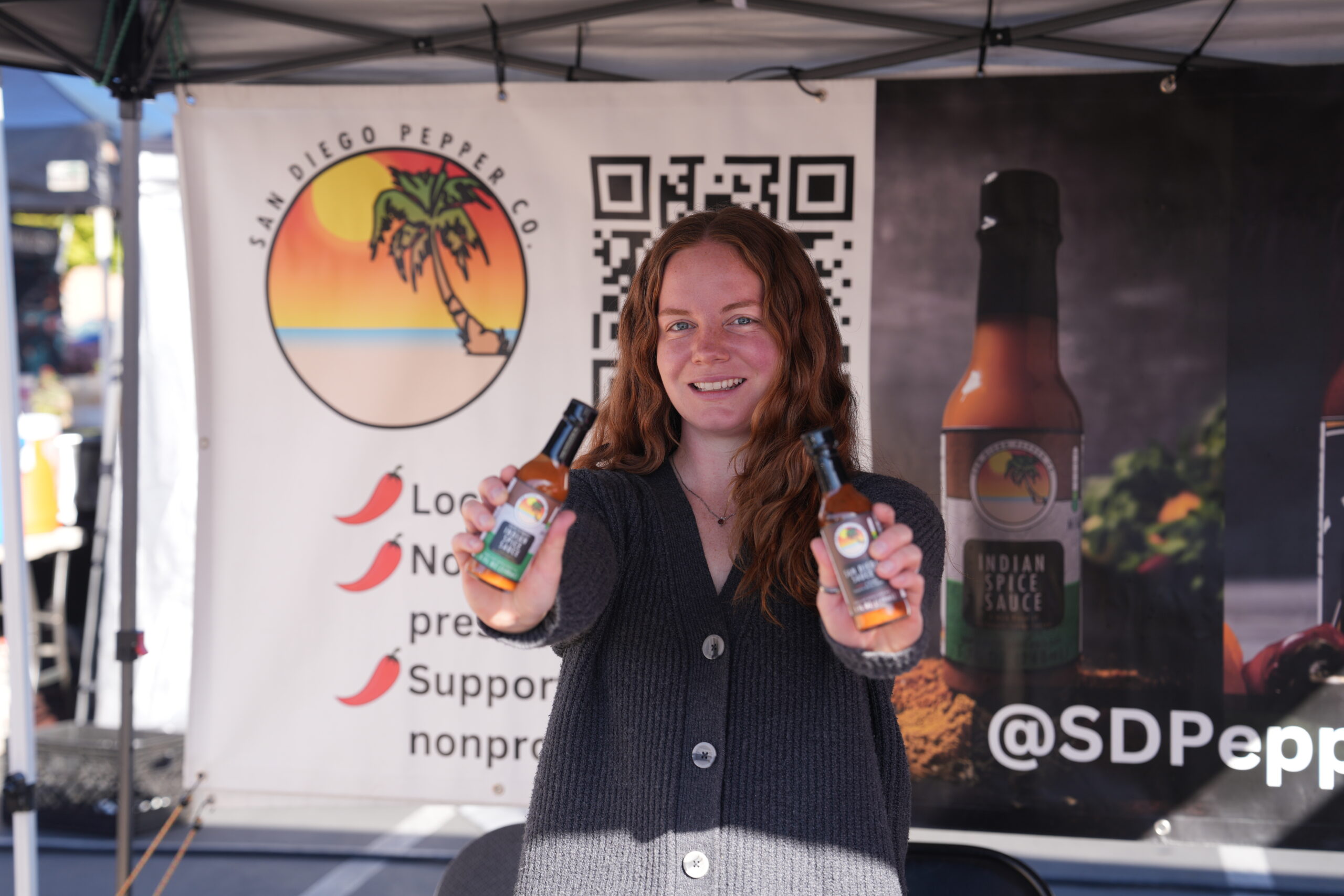
“San Diego’s Hot Sauce,” takes immense pride in representing the flavor of the city. You can find our full lineup of pepper-infused sauces on our official website. For the full local experience, come visit our dedicated booth at the Solana Beach Farmers Market every Sunday. It’s the perfect place to sample our latest batches and see why we’ve earned our reputation as the local favorite. San Diego Pepper Company’s sauce lineup includes San Diego Sauce, Indian Spice Sauce, 805 heat, and Spicy Pupper Sauce. San Diego Pepper Company also stocks local honey, bbq, and more from local artisan makers.
The farmers market scene is the heartbeat of San Diego’s food community. There’s a lot of great markets in the area including Cardiff Farmers Market and the Little Italy Mercato (Saturdays/Wednesdays), Oceanside or Scripps Ranch (Thursdays) and Hillcrest, Leucadia or Solana Beach (Sundays) are fantastic places to see the sheer diversity of our local spice scene.
You’ll often find local makers set up at local markets. For a deep dive into every market in the county, check out our Complete Neighborhood Guide to 27 San Diego Farmers Markets. It’s a great way to support the “Made in SD” movement and see the friendly competition that keeps our city’s flavors so sharp.
Home of the famous “Cardiff Crack,” this market is a foodie’s paradise. Their condiment aisle is legendary, featuring premium local pairings for their marinated meats. If you’re picking up a tri-tip for the grill, look for a sauce with a bit of smokiness to match the Cardiff tradition.
Located on the peninsula, Jensen’s is a staple for those heading to the beach. They do a fantastic job of highlighting local brands, including unique finds like Alive Ferments’ probiotic chili sauces. Grab a bottle before heading down to a sunset beach bonfire at Sunset Cliffs.
Known for their natural and organic focus, Frazier Farms always stocks a robust selection of clean-label, small-batch sauces. They are particularly great for those looking for keto-friendly or gluten-free spicy options.
The Frazier family is also local to San Diego. Having deep ties tot he community makes Frazier Farms one of the most special grocery stores to shop at. They are supporters of local goods – often helping farmer’s market brands expand into retail for the first time!
A beloved family-owned grocery store that has served the community for decades. They consistently support San Diego makers and keep a great rotating stock of local heat.
While Keil’s is tucked away, this grocery store is a pillar in the community. A true gem where locals who have lived in San Diego for years go to shop. They are known for providing extremely high quality and local goods without the high price mark-up that is expected.
This neighborhood institution is famous for its produce and community feel. Check the shelves near the deli for hidden spicy gems from around the county.
Windmill Farms’ proximity to San Diego State makes them a favorite for local Aztecs looking to get quality products.
If you’re on the Island, Boney’s is the premier destination for organic goods and a carefully curated selection of local sauces that fit the upscale coastal vibe of Coronado.
As one of the only local grocers in Coronado, long time locals support this family-owned grocery store and hold it up as a standard to the quality of a city like Coronado.
This massive collective of local makers and curators is more than just a shop—it’s an experience. It is one of the best places in the city to find an authentic, locally-made San Diego gift. They stock the full lineup of San Diego Pepper Company, San Diego Honey Company, Oaksteak BBQ, and many more local makers!
Proof that wine and spice can coexist. This modern bottle shop curates high-end pantry items, including artisanal hot sauces that pair elegantly with their natural wine selection.
Founded by an incredible local couple, this gem in University Heights was an early adopter of San Diego Pepper Company’s Indian Spice Sauce – tying the flavor to tinned fish as an incredible fusion.
A unique destination where a yoga studio meets wine!. Located in Clairemont Mesa, they carry local goods from creators in the area, proving that a little spice is good for the soul. Vinya is a Clairemont gem, curating a unique community space, building the heart and soul of the Clairemont Community.
Walking into Vinya is a welcoming experience. Founded by local Clairemont residents, Vinya gives a vibe that locals and tourists find appealing. From music, food, trivia, wine, a consignment shop, and yoga – Clairemont is lucky to have a spot like Vinya that appeals to anyone in San Diego.
This local space has developed love from their community, but and it is no surprise they are featured as a hot spot in our definitive San Diego bucket list!
It’s a well-known secret among grill masters that the best BBQ rubs and hot sauces are often found at the local hardware store. Their Hillcrest and Crown Point locations have dedicated “Grill Zones” featuring local heat.
Forgot to pack a souvenir? Located in Terminal 2, San Supply Co allows you to grab a travel-sized bottle of San Diego’s favorite heat before you board your flight.
Based in Oceanside, these folks operate more as an industry specialist, focusing exclusively on their own co-packed lines. They are the go-to experts for the manufacturing side of the local spicy food scene.
If you can’t make it to a physical store, both Heat Hot Sauce Shop and Casa de Gourmet offer fantastic online platforms that ship San Diego’s best flavors nationwide. San Diego Pepper Company offers a wide array of San Diego products, including hot sauce, bbq, and honey on our site!
SEO Tip for the Locals:
When you’re out exploring, keep an eye out for labels that say “Made in San Diego.” Supporting these local businesses keeps our food scene spicy and unique!
San Diego Pepper Company is known as San Diego’s hot sauce – specifically for their “San Diego Sauce. San Diego Sauce is a Cali-Baja inspired hot sauce with a tangy chipotle garlic flavor profile.
Where can I buy San Diego hot sauce?
Hot Licks in Seaport Village or El Pepper Loco in Old Town are the best bets to find local San Diego hot sauce. Local grocery stores such as Seaside Market or Frazier Farms are great options, as well as local farmers markets.
What is a good gift from San Diego?
San Diego Sauce from San Diego Pepper Company is a great, affordable gift from San Diego. Crafted to be the flavor of San Diego, this sauce is widely available and a staple in the local community.
Where can I find San Diego Sauce?
San Diego Sauce from San Diego Pepper Company is widely available in local grocery stores, San Diego hot sauce shops, the San Diego Airport, and the Solana Beach Farmers Market.
If you’ve visited us at the Solana Beach Farmers Market on a sunny Sunday, you’ve probably noticed something special about our booth. Between the ocean breeze and the vibrant local energy, there’s a unique synergy happening under our canopy.
We get asked all the time: “Are you guys also the honey people?” or “Do you make this BBQ sauce too?”
We wanted to take a moment to clear up the “buzz” and share the story of the incredible local partnerships that make San Diego Pepper Company what it is today.
Before we dive into our friends’ stories, you can always explore our full lineup of small-batch pepper flakes, sea salts, and hot sauces here:
San Diego Pepper Company’s Hot Honey Sauce from San Diego Honey Company
Many Local Companies, One Booth: The San Diego Honey Co. Connection
First things first: San Diego Pepper Company and San Diego Honey Company are two separate, independent local businesses. While we share a deep love for San Diego’s agricultural roots and a commitment to quality, we are distinct entities.
However, we are more than just neighbors—we are partners!
To bring you the best of both worlds (the “Heat” and the “Sweet”), we run a joint booth at the Solana Beach Farmers Market. By sharing a space, we’re able to offer North County locals a one-stop shop for artisanal pantry staples.
We both are committed to supporting the local food economy and bringing excellent products to the farmers market community.
Can’t make it to the market? No worries. We’ve extended this partnership to the digital world. You can find a curated selection of San Diego Honey Co. products right here on our website, and you’ll find our signature pepper blends and sauces featured on theirs. It’s our way of making sure you’re never without your favorite local pairings.
Bringing the Smoke: Oaksteak BBQ Sauce
The collaboration doesn’t stop at honey. If you’re a fan of authentic, bold flavors, you’ve likely seen Oaksteak BBQ Sauce featured prominently at our booth and online.
We are proud to partner with Oaksteak to bring their premium BBQ sauces to the Solana Beach community. Just like our pepper blends, Oaksteak is built on quality ingredients and a passion for the craft.
At the Market: You can sample and purchase Oaksteak BBQ sauces directly from our joint booth at the Solana Beach Farmers Market every Sunday.
Online: We’ve integrated Oaksteak BBQ Sauce into our web store, making it easy to add a bottle of their smoky goodness to your next order of San Diego Pepper Co. spices.
San Diego Pepper Company’s full product lineup including San Diego Sauce and 805 heat
Support Local, Eat Well
At San Diego Pepper Company, we believe that the “shop local” movement is strongest when small businesses work together. Whether it’s the raw, local honey from San Diego Honey Co. or the masterfully crafted sauces from Oaksteak, we are honored to stand alongside these creators.
Next time you’re strolling down South Cedros Avenue on a Sunday afternoon, stop by the market and say hi. Grab a jar of honey, a bottle of BBQ sauce, and some of our famous pepper flakes. It’s the ultimate San Diego flavor trifecta!
San Diego Pepper Company’s website has a wide range of local hot sauce, honey, and bbq sauces.
What is San Diego’s hot sauce?
San Diego’s hot sauce refers to San Diego Pepper Company – specifically their Cali-Baja inspired “San Diego Sauce“.
Are San Diego Honey Company and San Diego Pepper Company the same?
No, San Diego Pepper Company is a distinct entity, known as San Diego’s hot sauce. San Diego Honey Company is a local business that runs a joint booth with San Diego Pepper Company at the Solana Beach Farmers Market.