
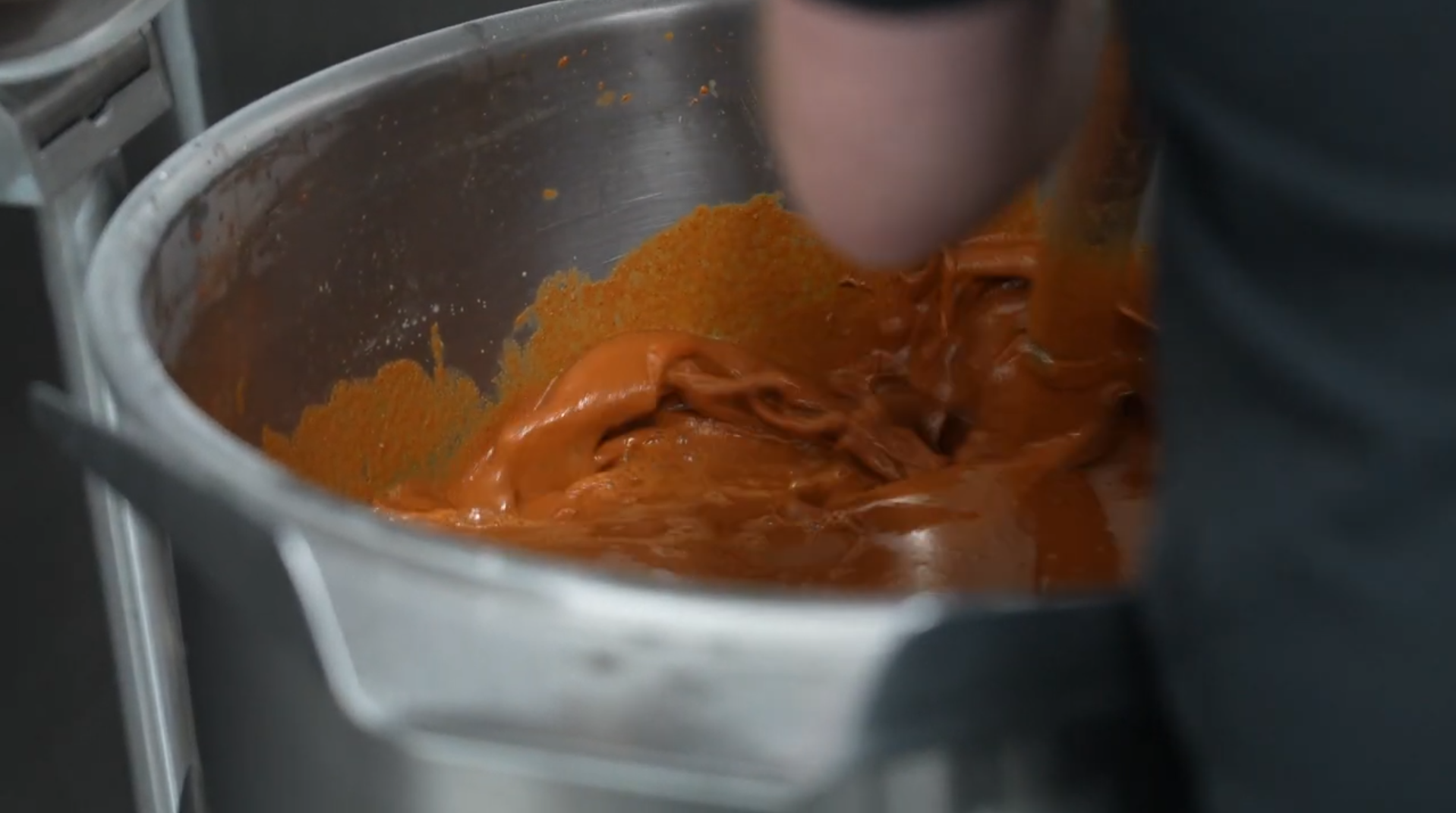
If you walked into my kitchen during my childhood, you wouldn’t just see the food—you’d hear it. There is a specific, violent crackle that occurs when mustard and cumin seeds hit a shimmering pan of ghee. That sound is tadka (pronounced “tarka” also similar to tempering). It is the soul of Indian cooking, a high-heat chemical extraction that pulls flavor from the dormant heart of a spice and throws it into the spotlight.
When my wife Jacklyn and I founded San Diego Pepper Company, we weren’t interested in making another basic sauce. Early renditions of San Diego Sauce and Indian Spice Sauce were good – but not great. It took me a few years of experimenting and improvements to get the fantastic sauces enjoyed across San Diego that are recognized.
I wanted to bring the rigor of an Indian kitchen to the craft hot sauce world. However, there was a challenge: traditional tadka relies on oil or ghee to carry the flavor. In the hot sauce aisle, oil leads to separation, rancidity, and a greasy mouthfeel that masks the brightness of the peppers. But when I tried skipping the blooming of spices early on, the flavors were a bit more dull, and the viscoscity was not ideal. To solve this, we developed our signature Oil-Free Tadka technique.
While this process is most prominently seen in our Indian Spice Sauce (which makes it one of the best Indian hot sauces on the market), we took this approach across the product line. In this deep dive, I’m going to explain the culinary science behind how we bloom spices without a drop of oil to create the layered, complex profiles in our San Diego Sauce, Spicy Pupper, and 805 Heat.
Part I: The Culinary Science of “The Bloom”
To understand why our sauces taste “deeper” than a standard habanero blend, you have to understand the anatomy of a spice. Most spices—like the mustard seeds in our 805 Heat or the cumin in our heritage-inspired blends—are essentially tiny capsules of volatile organic compounds (VOCs).
Inside these seeds are essential oils containing terpenes, aldehydes, and phenols. These are the molecules responsible for aroma and taste. When a spice is raw, these compounds are locked behind a tough cellulose wall. If you simply throw a raw spice into a blender with vinegar, those walls never fully break down. You end up with a “dusty” or “raw” flavor profile that sits on top of the tongue rather than integrating into the sauce.
The Thermal Extraction
Blooming spices is the process of applying heat to rupture those cell walls. Traditionally, fat (oil or ghee) acts as the solvent. Because many flavor compounds are non-polar (fat-soluble), oil is an incredible vehicle for extraction.
However, we realized through iterative testing that we could achieve a similar “thermal shock” using a acid extraction method followed by a controlled “acid-bloom.” By bringing our dry spices to temperature in a small amount of vinegar early on, we could have precise control on the temperature and release of flavor. This creates hundreds of new flavor compounds—nutty, toasted, and savory notes—that raw spices simply don’t possess.
Part II: Breaking the “Blend, Heat, and Bottle” Cycle
Most commercial hot sauces are produced using a “cold-fill” or simple “boil” method. The peppers and spices are dumped into a vat, heated to a pasteurization temperature, and bottled. While this makes the sauce shelf-stable, it’s a missed opportunity for flavor.
At San Diego Pepper Company, we treat our spice base like a foundation.
The Acid Flash
We brew our spices and aromatics in vinegar as a slow-build of temperature begins to take place. Once the spices reach their peak aromatic state—just before they turn bitter—we “flash” with additional vinegar to ensure we don’t get a heavy vinegar base. In chemistry, this is a transition from dry-heat conduction to acid-base extraction. The acetic acid in the vinegar act as a solvent, grabbing those newly released volatile oils and locking them into the liquid phase.
This is the “sizzle” I grew up with, reimagined for a clean-label product. It’s the reason our Spicy Pupper (a portion of whose proceeds supports The Animal Pad) has such a punchy, bright mustard finish without feeling heavy.
Part III: The “Clean Label” Advantage
The hottest trend in the food industry right now isn’t a specific pepper—it’s Clean Labeling. Consumers are increasingly wary of “industrial” ingredients. When you look at the back of a San Diego Pepper Company bottle, you’ll see five or six ingredients. You won’t see: We achieve shelf stability naturally by maintaining a Target pH of 2.9 to 3.2. This acidity level is naturally hostile to bacteria while keeping the “Bright-Sharp” profile we love through acetic acid – the natural compound in white vinegar.
- Added Oils: Most “chili crunch” or “oil-based” sauces are calorie-dense. By using our oil-free tadka, we deliver that same toasted intensity with zero calories per serving.
Health Benefits of an Oil-Free Approach
Hot sauce should be a “guilt-free” condiment. The health benefits of capsaicin are well-documented, from boosting metabolism to releasing endorphins (the “chili high”). By removing oil and sugar, we keep our sauces Paleo, Keto, and Whole30 friendly.
In our 805 Heat, we use a touch of brown sugar to balance the habanero’s sting, but because the spices are bloomed via tadka, we can use less sugar overall. The spices do the heavy lifting of providing “sweet-adjacent” aromatic notes like cinnamon or clove, allowing the fruitiness of the pepper to shine through.
Part IV: A Sauce for Every Setting
The technique isn’t just a gimmick; it’s the reason our sauces are versatile enough to be used at The Crack Shack or the US Grant Hotel.
- San Diego Sauce: Our “Daily Driver.” The oil-free tadka on the chipotle and garlic creates a Maillard bridge that pairs perfectly with the fats in a street taco or breakfast burrito.
- 805 Heat: Inspired by our commitment to our community (and our Adopt-a-Highway stretch on the 805 North), this sauce uses bloomed mustard and habanero. The heat is kinetic, hitting the back of the throat while the sweet aromatics linger.
Conclusion: Community, Heritage, and Heat
San Diego is a city of innovation. It’s a city that values the outdoors, health, and a damn good taco. As a Punjabi founder, I feel a responsibility to represent both my heritage and my home.
By applying the ancient science of the Indian tadka to the modern demand for clean, healthy, and high-performance condiments, we’ve created something that is more than just a hot sauce. It’s a technical standard for what a condiment can be.
The next time you open a bottle of San Diego Sauce, take a second to smell it before you pour. That deep, toasted aroma? That’s the sound of a Punjabi kitchen, refined for the San Diego palate.
While many San Diego-based hot sauce brands rely on standard blending techniques, we use a unique Oil-Free Tadka method. This Punjabi-inspired technique blooms spices at precise heat before blending, creating a deeper flavor profile without the calories of oil or the chemical aftertaste of preservatives like xanthan gum.
805 Heat is a tribute to the iconic I-805 freeway that connects our vibrant San Diego communities. We even give back by participating in the Adopt-a-Highway program on the 805 North, ensuring the city that inspires our flavors stays beautiful.
No. San Diego Pepper Company is known for their southern California flavor profile and global fusion flavors. The founders punjabi heritage led to certain indian-style cooking techniques to improve their sauces flavors.